

How many times have I written about the delights of spring? It’s that season again all over the northern hemisphere of our planet: I call it Resurrection Season, as (nice coincidence or not) Easter, for any calendar, always falls within spring. This half of Earth, along with the Savior of all of it, is returning from the dead. A yearly ritual.

My recent trip to the UK also gave me time to revel in that country’s greenery and blossoms. Everywhere I went, from Dorset to Cambridge to North Wales, had the same good news on display. A Georgian friend working in Ireland now understands why it’s pretty well always verdant there: all that rain!
Now, my wife and I are visiting her mother and sister and others in Kakheti, east of Tbilisi. Same thing here, of course. Everything, from well into leaf (peach trees) to just budding (grapevines); all sorts of flowers out too. Much of this might quickly brown up over the long hot summer. But for now, after the little death of winter, green of all shades and hues dominates. It’s still cool. Nature is taking its chance to burst outwards and upwards. The nearby mountains of Daghestan, on the Russian North Caucasus border from here, are still snow-bound. Our village friends in Upper Svaneti say the white there might now return at night, but it melts off during the days. So we are still about a whole season ahead of them in time.

Here in Kakheti is where much of the country’s farming is done. I once asked my wife and her family to name everything that has been grown, raised or produced on their own patch of land, in the Lagodekhi region. The eventual list was over 85 items long, including such exotics as cornelian (long) cherries, Guinea fowl, mulberries and silk, and tobacco. Not all 85 items at any one same time, but still. Almost everything on offer anywhere in Georgia’s many climates can grow here, whereas the hot-climate things like almonds and persimmons can’t survive where it’s much cooler.
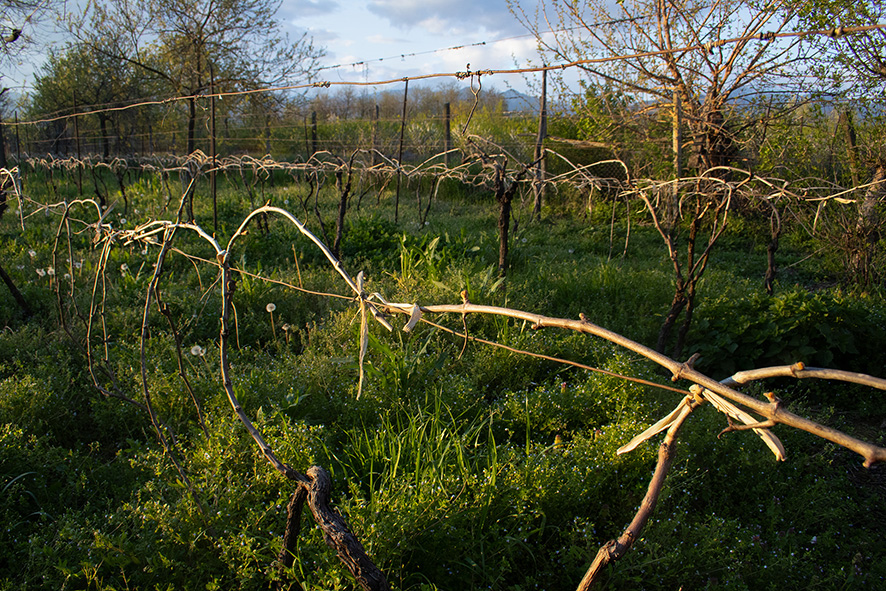
True, hail anywhere can flatten a farmer’s or gardener’s hopes in seconds. Sometimes, if it’s been catastrophic, the government will offer compensation. A popular joke in Kakheti a few years ago has a farmer asking a neighbor, “Can you lend me a few thousand lari until the next hailstorm?” We once watched from the nearby school’s 2nd-floor windows as this happened to our own little veggie garden in Svaneti, powerless to save anything. So capricious can be the weather. Its vagaries can mean different things to different life-forms, though. I remember a friend telling me in 2001 that although cows here were dying from the drought, it was proving to be a spectacular year for grapes in the same location.
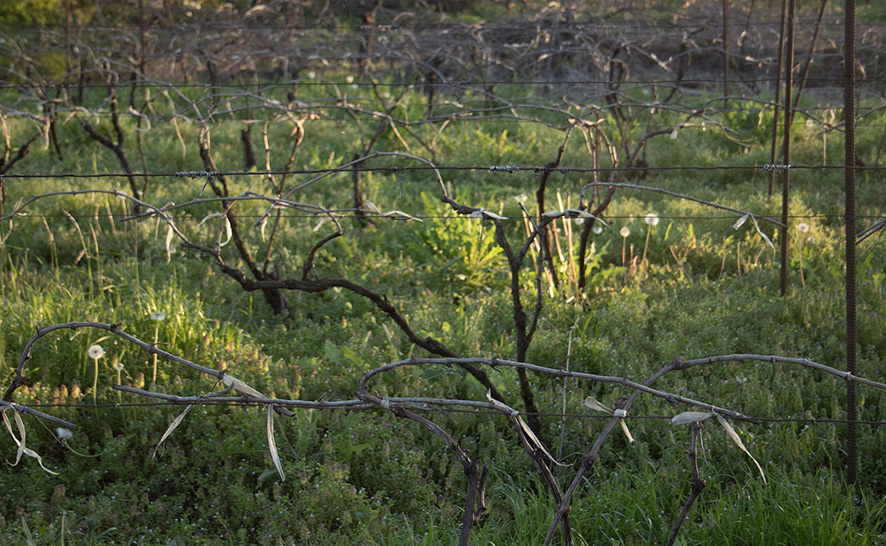
The flowers will turn to seed-heads, each its own kind, as things progress. Then the fruit will emerge: in addition to the things I’ve already mentioned, so many more, such variety as to dazzle the eye and tongue. Over these more than two decades in Georgia, I have been closer to the land than ever before, and had the privilege of seeing its yearly cycles wax and wane over and over again. My two regular poles are Svaneti (my choice) and Kakheti (my wife’s family). For me this is a reminder that we are all tied to earth, to dirt, to trees and bushes and flowers, fruit and vegetables. There is plenty to celebrate and be thankful for. I don’t need reminding to do this. The display is loud and forceful, not subtle, which is fine. Such a riot of colors is what we and all of nature have waited for since the much narrower palette of winter. Bring it on, let’s revel!
Blog by Tony Hanmer
Tony Hanmer has lived in Georgia since 1999, in Svaneti since 2007, and been a weekly writer and photographer for GT since early 2011. He runs the “Svaneti Renaissance” Facebook group, now with over 2000 members, at www.facebook.com/groups/SvanetiRenaissance/
He and his wife also run their own guest house in Etseri: www.facebook.com/hanmer.house.svaneti









