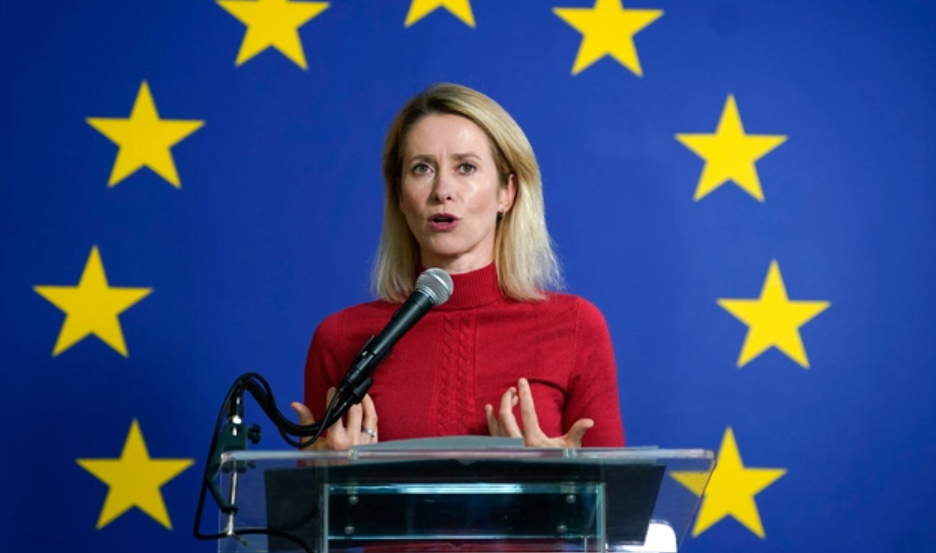
EU High Representative for Foreign Affairs and Security Policy Kaja Kallas has said that while the European Union is working to advance regional connectivity, concerns remain over Georgia’s current political trajectory, which she described as moving “in the wrong direction.”
Speaking in Yerevan during the 8th Summit of the European Political Community, Kallas highlighted the strategic importance of the South Caucasus, particularly amid rising regional tensions.
“The summit taking place here in Yerevan is showing how important the Caucasus is, especially now when there’s a war in Iran. We are talking about connectivity, but also resilience to the threats that we are facing,” she said.
Kallas stressed that Europe is defined not only by geography but by shared values and principles, highlighting the broader political dimension of the gathering. She also welcomed the participation of Canada in the EPC format, noting the importance of discussing key global and regional challenges collectively.
Addressing questions on the so-called Middle Corridor — a key trade and transit route linking Europe and Asia via the South Caucasus — Kallas said the initiative has gained renewed importance amid instability in the Middle East.
“The Middle Corridor is very important. Given what is happening in the Middle East, everyone is also looking at how to diversify trade routes and reduce the risks of a single route being closed. That’s why connectivity and these routes are extremely significant,” she noted, adding that the EU continues to assess potential partners in this effort.
However, Kallas signaled growing frustration in Brussels over Georgia’s domestic and foreign policy course.
“We do have issues with Georgia, considering that the government has not taken the necessary steps, despite declaring its desire to join the European Union. It appears they are moving in the wrong direction, which also limits our ability to support them with funding,” she said.
The remarks come amid ongoing discussions within the EU on the future of its engagement with Georgia, as well as broader efforts to strengthen connectivity and resilience across the South Caucasus region.