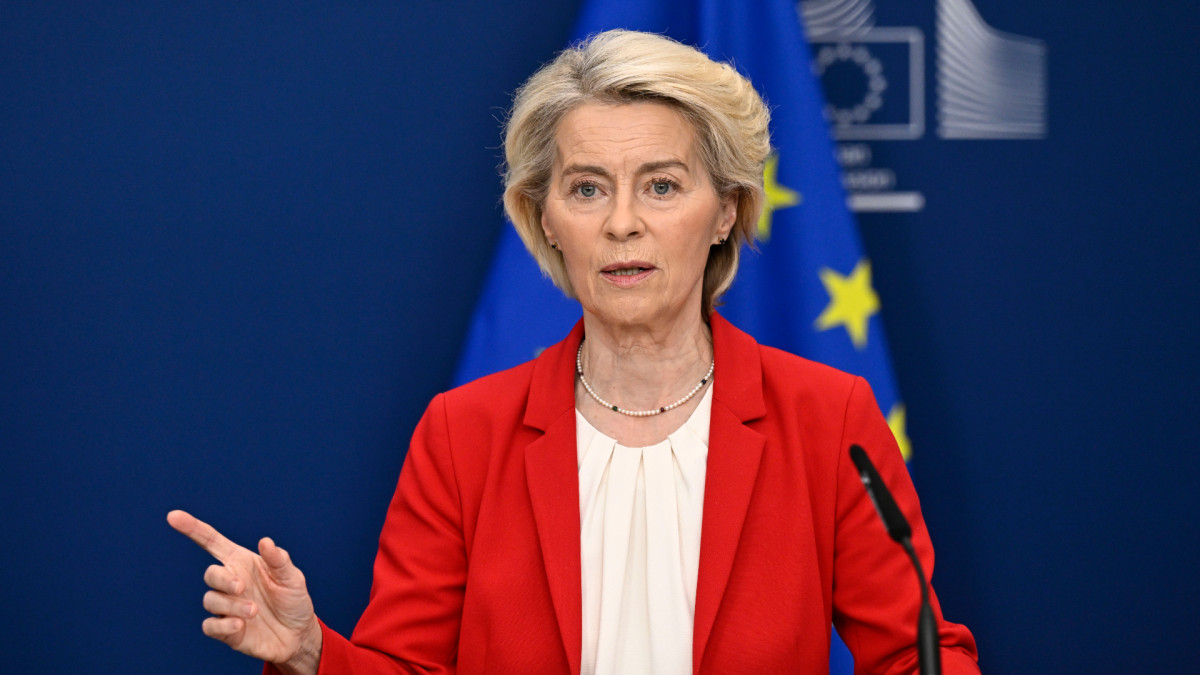
The European Commission has presented its 21st package of sanctions against Russia, targeting key sectors including energy, financial services and cryptocurrency trading, while also introducing restrictions on the fishing industry for the first time.
The proposed measures would further tighten pressure on Moscow’s economy and its ability to circumvent existing sanctions imposed over Russia’s war against Ukraine.
European Commission President Ursula von der Leyen said the new package aims to maintain pressure on Russia despite recent disruptions to global energy markets caused by tensions in the Middle East.
“The conflict in the Middle East and disruptions to global energy supply chains have somewhat reduced pressure on Russia. We want to maintain the full intensity of sanctions,” von der Leyen said.
The proposal includes extending pressure on Russia’s so-called “shadow fleet” by adding 30 more vessels to the sanctions list, bringing the total number of sanctioned ships to more than 660. The measures would also target vessels and infrastructure supporting the shadow fleet, including ports, airports and oil refineries involved in handling Russian oil.
The Commission is additionally proposing restrictions on the sale of liquefied natural gas (LNG) tankers to Russia, similar to measures already imposed on oil tankers.
Under the new package, the EU would expand transaction bans to cover an additional 31 Russian banks as well as 20 banks, crypto firms, trading platforms and oil traders in third countries accused of assisting sanctioned Russian entities or helping them evade EU restrictions.
For the first time, the EU is also proposing the possibility of imposing a full ban on crypto-asset services provided from third countries.
“This will be a powerful deterrent for countries hosting platforms that help Russia circumvent sanctions,” von der Leyen said.
The package further introduces export restrictions on metals and alloys used in the aerospace and defense industries. New restrictions are also proposed on equipment used to support, launch and control drones. In addition, the Commission wants to ban imports of goods worth approximately €60 million, including certain metals, metal ores and automotive parts.
Trade restrictions related to the fishing sector would also be extended to Belarus to prevent it from serving as a backdoor for Russian trade.
The proposed package additionally includes a ban on former Russian military personnel entering the European Union.
Alongside the sanctions announcement, von der Leyen reiterated the EU’s support for Ukraine, stating that nearly €3 billion had been transferred through the Ukraine Facility and that the first disbursement from the €90 billion loan package allocated to Ukraine would be made later this month.
“By the end of the month, we will provide Ukraine with €6 billion for drones and more than €3 billion in macro-financial assistance,” she said.
Von der Leyen also said Ukraine had fulfilled its obligations despite the ongoing war and stressed that the EU should now do its part.
“We have a historic opportunity. In the coming days, we will open the first cluster of accession negotiations with Ukraine and Moldova,” she said.
The formal opening of the first cluster of EU accession talks with Ukraine and Moldova is planned for June 15, although the decision still requires final approval by EU member states.