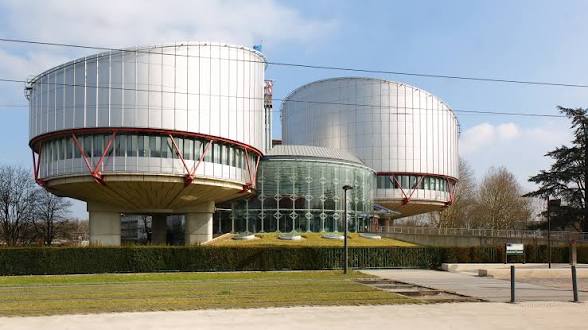
The European Court of Human Rights has ruled that offensive, degrading, and obscene statements made publicly against public officials fall outside the protections afforded by freedom of expression, according to Georgia’s Ministry of Justice of Georgia.
In a statement, the Ministry said the ruling came in the case of Miladze v. Georgia, in which the Strasbourg Court upheld the position of the Georgian government.
Ministry says the case concerned a video posted on the social media platform TikTok in 2022 by civil activist Irakli Miladze, in which he allegedly used obscene and offensive language directed at Kakha Kaladze, employees of Tbilisi City Hall, and police officers. Georgian courts subsequently imposed the minimum legal penalty — a GEL 500 fine.
The Ministry stated that the European Court unanimously found that the applicant’s remarks did not amount to political criticism or expression on a matter of public interest. Instead, the Court concluded that the language used was intended to humiliate and insult public officials.
According to the Ministry, the Strasbourg Court also endorsed the reasoning of Georgia’s national courts, finding that they had appropriately distinguished between sharp political criticism and personal insult. Particular emphasis was placed on the proportionality of the sanction, with the Court noting that only the minimum fine prescribed by law had been imposed.
“The ruling reaffirms that freedom of expression remains a cornerstone of democratic society and protects even strong criticism. However, it does not extend to degrading or personally humiliating others, including public officials and civil servants,” the Ministry said.
The Ministry further argued that the judgment confirms the state’s right to protect political officeholders and public servants from unwarranted verbal abuse in order to enable them to carry out their duties in an environment free from dignity-diminishing pressure.