By Sally White for Investor.ge
Bit by bit, Georgia is taming its wilderness. The beauty of its forests, steppes, mountains and valleys is being monetized as space for roads, new airports, energy production, resorts, hotels and spas, and rural residences are carved out and put up for tender. Ruins are being put back into use for leisure events, and ancient rough trails are being paved to smooth the way for tourism. Significant moves to modernize motor access to remote mountain areas have also been announced.
As SlowTravelNews comments on mountain road developments, joining in other travel agency warnings, visitors should “go now” if they want to enjoy the untouched environment that made regions such as Tusheti unique: “This is great news for accessibility, but it also means the region will likely develop (and change) at a more rapid pace from here on in.”
The country faces what seems to be a dichotomy: a choice between prioritizing preservation of its rural beauty, rural livelihoods, and ecological conservation versus adopting modern infrastructure and industries for economic growth. The core tension is between the potential economic benefits and the potential loss of environmental heritage that could result from the current trend in infrastructure investment. While there are few significant environmental issues that cannot be either totally prevented or adequately mitigated, this does not always happen.
Ruins are being put back into use for leisure events, and ancient rough trails are being paved to smooth the way for tourism
Even a couple of years ago, the World Bank warned that analysis of the costs of environmental degradation (CoED) pointed to “trends of unsustainable resource use in Georgia.” It added that the CoED on agriculture and forest land, air quality, lead exposure, and Georgia’s coastal zone indicated “negative effects on the country’s economy with costs that include both direct costs and the lost economic opportunities from compromised future resource production potential.” For example, back in 2018, before the major developments along the Black Sea coast, the World Bank put the cost of coastal degradation in the eight coastal municipalities at 5% of their regional GDP.

However, the economic reward for the growth in tourism and consumer spending that has come from exploiting Georgia’s considerable natural assets is indisputably impressive, although only tourism figures are available to give numerical clues. Visitor numbers (which include Georgia’s cities) returned to pre-Covid levels last year, and on 5.1 million visits, spending reached $4.4 billion: up 7.3% on the previous year. In H1 2025, visitor numbers reached 2.3 million, a 6.9% rise on the same time in 2024, and by the end of Q3, 2025 revenue was showing a 5.1% rise at $3.6 billion, although, again a significant part of this was in Tbilisi and Batumi.
The World Bank describes tourism as having “underpinned” Georgia’s economy and its importance as a growth driver; this is also emphasized by the Asian Development Bank, IMF, and the EBRD. According to Geostat, the tourism sector contributes in total around 7% to the country’s GDP.
No numbers are available for spending by those migrating to occupy new rural luxury developments as cities and towns eat up neighboring fields and forests, turning them into the new suburbs. Mtskheta and Saguramo now house thousands of daily Tbilisi commuters. Overall, according to Geostat, the real estate sector, including urban development, contributed 9.9% to Georgia’s GDP in 2024.
Development plans
Two growing trends described by property magazine Tbilisi Property to its foreign investor subscribers are: “Resort real estate development in Georgian resort towns such as Batumi, Gudauri, and Bakuriani are actively developing, which contributes to the growth of real estate prices in these locations. Investors are increasingly buying apartments for rent to tourists…and…. Due to changes in lifestyle and the desire of residents of large cities to move closer to nature, interest in houses in the suburbs of Tbilisi and in the regions is growing.”
Nor are there impact numbers of future development for green energy, land-hungry solar in particular. “If Georgia is to increase its energy security and reduce its reliance on energy imports, there is an urgent need to explore indigenous sources of energy supply, and take advantage of its abundant renewable energy resource potential. The government is planning to double generation capacity by 2034, prioritizing hydropower, but also targeting expansions in wind and solar,” states a paper published by Germany’s Friedrich Ebert Stiftung economic foundation.

Forecast numbers that are available are for the growth in Georgia’s economy helped by tourism and rising consumer spending. The International Monetary Fund gives a figure of $49 billion for Georgian GDP by 2030, and economic intelligence platform Statista has $45 billion, against $34 billion last year.
Tusheti, Khevsureti, and Svaneti are all areas set to see development projects, alongside the ribbon of construction along the Black Sea coast. The alarm has been raised among environmentalists by the completion of two now navigable roads to one of the most beautiful and remote regions of Georgia: Svaneti – and news of another, to even more remote Tusheti.
Georgia’s national parks saw a 20% increase in visitors compared to the same period in 2024, with 662,205 people visiting protected areas between January and July. Of these, 54% were foreign nationals
In Svaneti, in the foothills of the Upper Caucasus, a new hard-surfaced road between Mestia and Ushguli makes that journey faster and safer, while concrete roads in many of the smaller valleys means the villages in between are now accessible to non-hikers, states online travel site SlowTravelNews. A final piece of the puzzle, a now-paved road from Lentekhi to Ushguli, means travelers can drive a loop through Svaneti with no 4WD required.
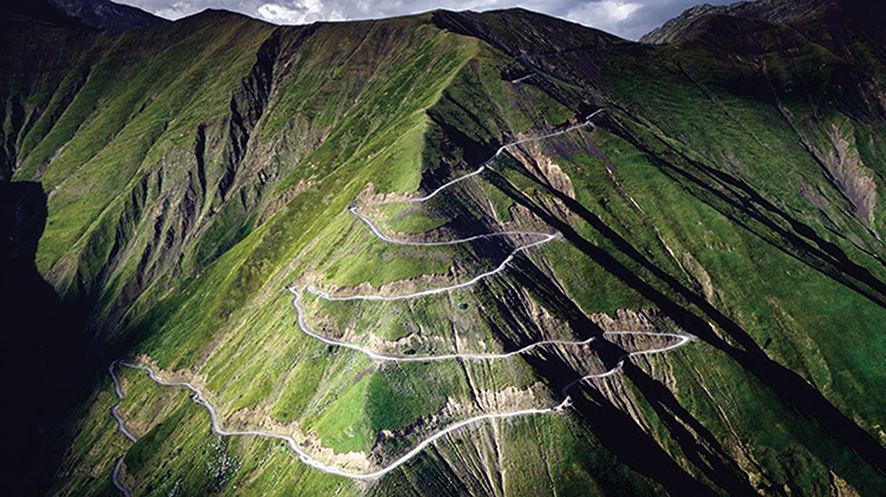
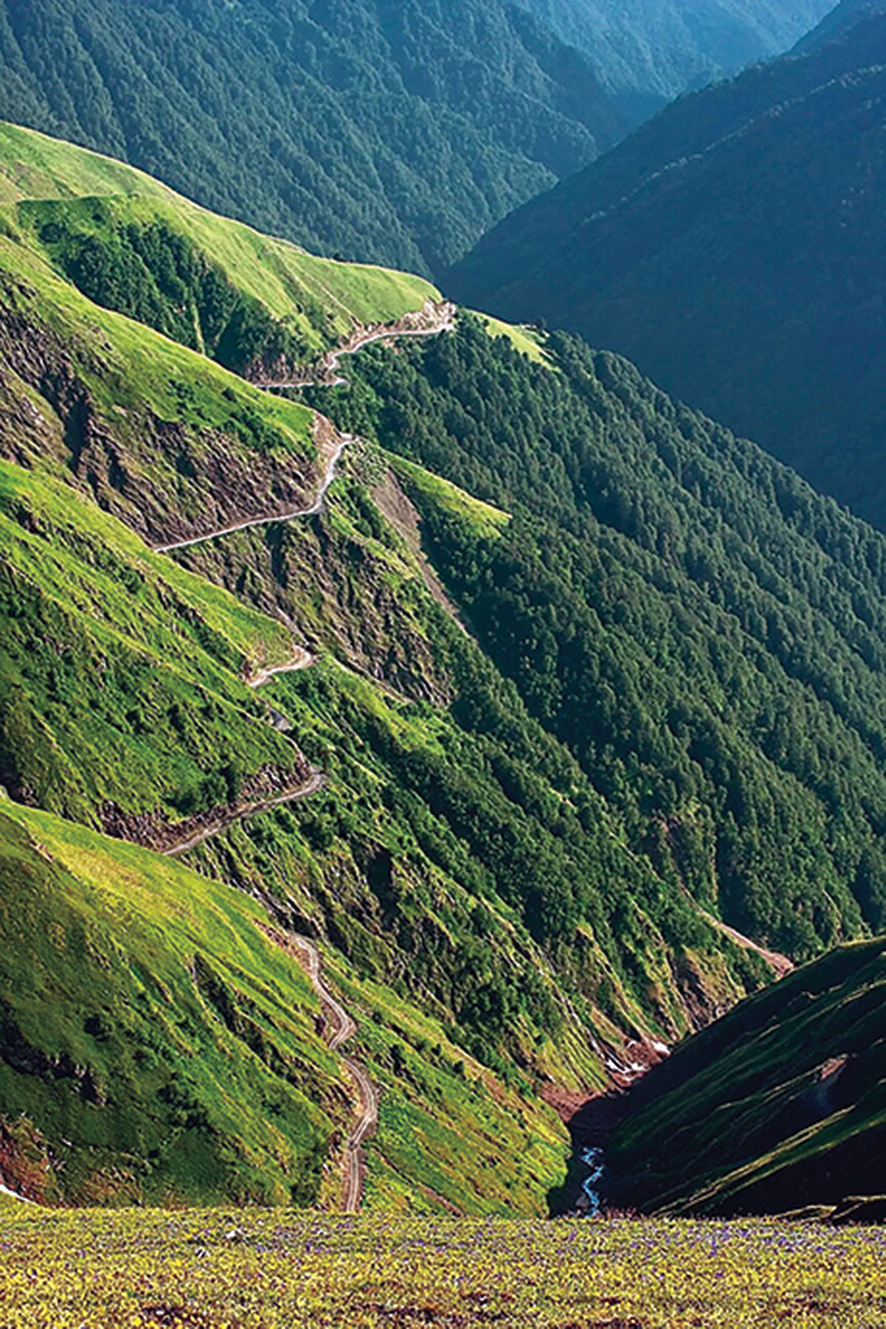
A tender for rehabilitation of the final section of the 50-year-old Pshaveli-Abano-Omalo road, which traverses the Abano Pass at an altitude of 2,950 meters and is the only way into Tusheti, was announced in October. Removing the logistic obstacles to access created by the precipitous and harrowing drives will open up the way to increased and all-year-round tourism. However, some refer to this development not as progress, but the “loss of sentinels” that protected the stillness and culture of this ancient kingdom within a time capsule.
Hundreds of hectares of luxury hotel and residential development are in early phases along the Black Sea coast. The remote hillsides of Upper Adjara and Guria are tempting developers of both summer and winter resorts. Taming of the wilderness around Chutkharo on the borders of Lechkhumi, Racha Kvemo Svaneti would seem an inevitable result of the planned 92 hectare ski resort with ski-lift infrastructure and winter and summer tourist facilities. Tens of hectares in Borjomi-Kharagauli protected area and around Likani are being offered for hospitality and residential development. In the forests and hills around Tbilisi, new luxury residential projects are planned that will also eat up hundreds of hectares. For Kakheti, developers’ drawing boards are covered with new resorts, spas, and residential projects, as well as expansion of existing ones.
Environmental considerations
Georgia’s environment is already fragile. After recent tragedies, no one can claim to be unaware of the threat from climate change. As a Bank of Georgia report outlined: “The country of Georgia faces a bigger threat due to climate change than other countries – because of its geographical location and natural conditions such as its mountainous terrain and Black Sea coast. An estimated 70% of the country lies in geological zones more prone to risk of natural disasters such as landslides and mudslides.” Natural disasters, such as the 2023 melting of hillside permafrost at Shovi, have shown the perils all too clearly.
Sources such as the IMF and Germany’s GIZ warn that climate change poses significant costs to Georgia, potentially costing $10 to $12 billion in adaptation costs between 2021 and 2030; and without proper measures, IFIs project negative GDP change of up to 34.2 billion GEL over a longer period. These costs stem from the high vulnerability of the country’s geography to disasters like landslides, droughts, and floods, which threaten agriculture, infrastructure, and public health, with impacts on key sectors like hydropower and tourism.
An online search shows limited concern about over-tourism, with the exception of local complaints of “overcrowding” in Svaneti, but a lot about low-spending tourists and sustainability. Acknowledging the need to conserve the country’s environment and resources, the Ministry of Tourism’s report Georgia Tourism 2025 focuses on the need to increase numbers of high-spending tourists as opposed to those from local spending in neighboring countries. As it infers, by encouraging higher spending and longer stays, tourism becomes more sustainable. This would contribute “more meaningfully to local economies rather than allowing the continued growth of low-value mass tourism that may strain infrastructure and the environment.”
Several initiatives have been undertaken to protect the country’s environment and natural resources, focusing on climate change mitigation, sustainable waste management, forest protection, and biodiversity conservation. Georgia has significantly expanded its network of national parks and protected areas, with their size nearly tripling to cover over 13% of the country’s territory, according to the UNDP and the Ministry of Environment. The authorities have committed to increasing protected areas to 30% by 2030.
This is paying off in terms of tourism. Georgia’s national parks saw a 20% increase in visitors compared to the same period in 2024, with 662,205 people visiting protected areas between January and July. Of these, 54% were foreign nationals. However, these numbers are driving concern about the volume of new infrastructure they might attract.
Georgia gets both praise and criticism in the latest UNDP report on protected areas: “Georgia is one of the few countries globally where protected areas are a national priority. Significant progress has been made to expand the protected areas network in the past decades, supported by legislative-institutional reforms…” However, it adds: “Despite progress, threats to globally significant biodiversity in Georgia from socio-economic development and climate change are exacerbated by ineffective implementation and enforcement of legislation and policies on Protected Areas.”

To address critical issues, the government is promoting sustainable tourism and environmental protection (though effectiveness in controlling large-scale projects is debated). Green Economy projects like GRETA (Green Economy: Sustainable Mountain Tourism and Organic Agriculture) aim to support sustainable tourism and organic agriculture in Georgia’s mountain regions by improving the business environment and creating new income opportunities. In 2021, the government launched a ten-year eco-tourism strategy aimed at safeguarding the environment and sustainably managing natural resources.
Georgia is, of course, far from being alone in facing severe challenges to the incursion of urban expansion and infrastructure development into its environment. France has been driven to legislate to enforce zero net increase in artificial surfaces by 2050, with a mid-term objective of halving land take by 2030 to restrict the spatial distribution of new developments. The EU Nature Restoration Law, adopted in mid-2024, requires member states to develop national plans by mid-2026 to restore at least 20% of the EU’s land and sea by 2030, and all ecosystems needing restoration by 2050. Regions like the European Alps have long had restrictions on second homes to control resort expansion and preserve landscapes.
As of yet, Georgia has no long-term economic strategy that will protect the country’s wildernesses, or control development generally. However, the government has just announced that it is working on one that will be nationwide and economically all-encompassing. As far as the urban creep into the countryside is concerned, Georgia’s urbanization rate stands, says a Business & Technical University report, at 61% – between the 80% of the population often seen in developed countries and the under-60% of many developing ones. According to projections, by 2050, the urban population will reach 70%, meaning that Georgia’s urban infrastructure will face even greater pressure, pushing even more residential developments’ incursions into the countryside.
By Sally White for Investor.ge