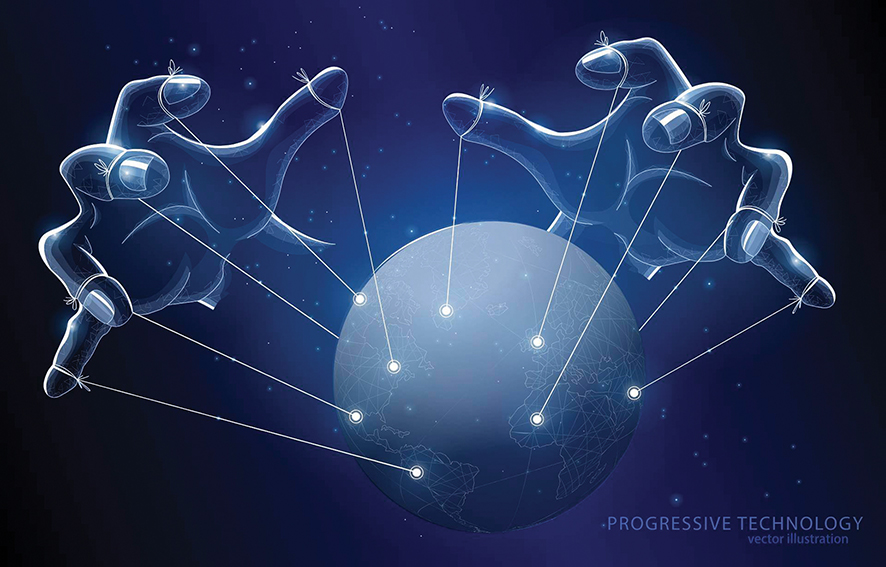
In our diabolically interconnected modern world, scientific-technological jumps have an effect of a double-edged sword, equally providing for both, ease and distress, simultaneously granting us a wonderful sense of significant comfort, and serving as a brutal cause of lessened good, rather than an immediate common engine of happiness.
Tech progress guarantees access to unlimited information, connection, and efficiency, while imposing on us social isolation, over-anxiety, and the elimination of genuine, person-to-person interaction. So, why is technological progress good? Nobody suggests whether it is good or bad. This is just what we actually have and are willing to live with because we can’t do otherwise.
Isn’t it astounding that the rapport between lore and bliss happens to be a multifaceted composite with formidable benefits for us as well as a heavy burden, eternally pressing on our fragile mind, often unsettling our essence? Then, why do we take it all for granted? Because scientific and technological progresve has managed to drastically improve countless specific facets of our life, such as: enhanced connectivity, convenience of everyday life, greater efficiency of human behavior, automation of almost everything around, unlimited instant access to information, empowerment of almost every human action, increased life satisfaction, introduction of beneficial activities, augmentation of educational opportunities with enlightenment accessible to billions, easier handling of health problems, growth of life expectancy, reduced poverty and hunger, new tools for connecting the world instantly, sophisticated modern surgery, electricity, antibiotics, clean water systems, computers, internet, airplanes, expansion of human freedom, improvement of well-being, and what not.
OK, granted! But what about regular plain human happiness and humane interaction, which is better, stronger, and more valuable than anything else in life, recognized at every historical stage of development, starting from Neanderthals and ending with scientifically savvy and technologically over-equipped modern humans?
We could easily make the case against technology as a source of unhappiness if it made any sense to do so. Yet, it might be a moderately useful reminder that we should not allow technology to make literal robots out of ourselves, again, if this is possible at all. Well, being a little more pensive about the subject will not hurt. Just think about current mental health issues, meaning over-dependence on digital devices, undue anxiety, depression, and poor sleep quality, gradual erosion of self-esteem, supplanting of actual life, letting the screen time replace activities linked to tangible happiness like face-to-face contact, sleep, and physical exercise, distraction and overload, created by constant notifications and the pressure to be connected around the clock, insurmountable stress, perpetual burnout, and inability to concentrate on meaningful tasks.
Deliberating on those pros and cons, a natural question pops up: Eventually, is scientific and technological progress a source of happiness or rather a reason for human misery and degradation?
Ultimately, true happiness usually comes from human mental connection and physical interaction, which, ideally, should be propped up by technological ways and means rather than substituted by them. Where, if not here, in our moderately developed little Sakartvelo, is this seen, felt, and understood, where, thank God, human emotionalism still counts?
Weirdly enough, technological progress has a proven proclivity to create new forms of misery, which might be more difficult to cope with than learning how to handle the newly created hi-tech tools.
If we listen to geniuses like Jean-Jacques Rousseau and Martin Heidegger, their arguments might seem to be an even harder recognition that technological civilization alienates human beings, pointing to several problems like dire psychological effects.
In modern terms, this might sound like mass manipulation through media, technological unemployment, extreme economic inequality, civilizational dangers like nuclear and biological weapons, the ensuing ecological destruction, surveillance societies, machine guns, concentration camps, propaganda, etc.
Even in literature this kind of thought prevails sometimes. For instance, in The Magic Mountain by Thomas Mann, where scientific rationalism and modern civilization coexist with spiritual illness and moral confusion. On the other hand, there might exist the deeper truth that technology amplifies human nature. Many modern philosophers would argue a middle position: technology itself is neutral, merely magnifying whatever values humans already have.
Another question is if human wisdom and morality are progressing as fast as our technology? One of Albert Einstein’s famous insights might clarify this nebulous theme, summarizing the dilemma beautifully: “It has become appallingly obvious that our technology has exceeded our humanity.”
That’s exactly why the topic has triggered my journalistic determination at this moment, believing that scientific and technological progress increases the power of humanity, but power does not automatically produce happiness, which mainly depends on ethical wisdom, social justice, cultural meaning, spiritual balance, freedom, mystery, spirituality.
Without those, technology can easily turn from liberator into master. Incidentally, philosopher Hannah Arendt once noted that modern society risks producing people who are technically competent but morally thoughtless. Isn’t this awful? But you know, there are so many buts and how-comes to react to!
Op-Ed by Nugzar B. Ruhadze