More than 20 members of the Parliamentary Assembly of the Council of Europe (PACE) have submitted a written question to the Committee of Ministers and the Secretary General of the Council of Europe regarding the alleged use of a prohibited chemical substance against protesters in Georgia.
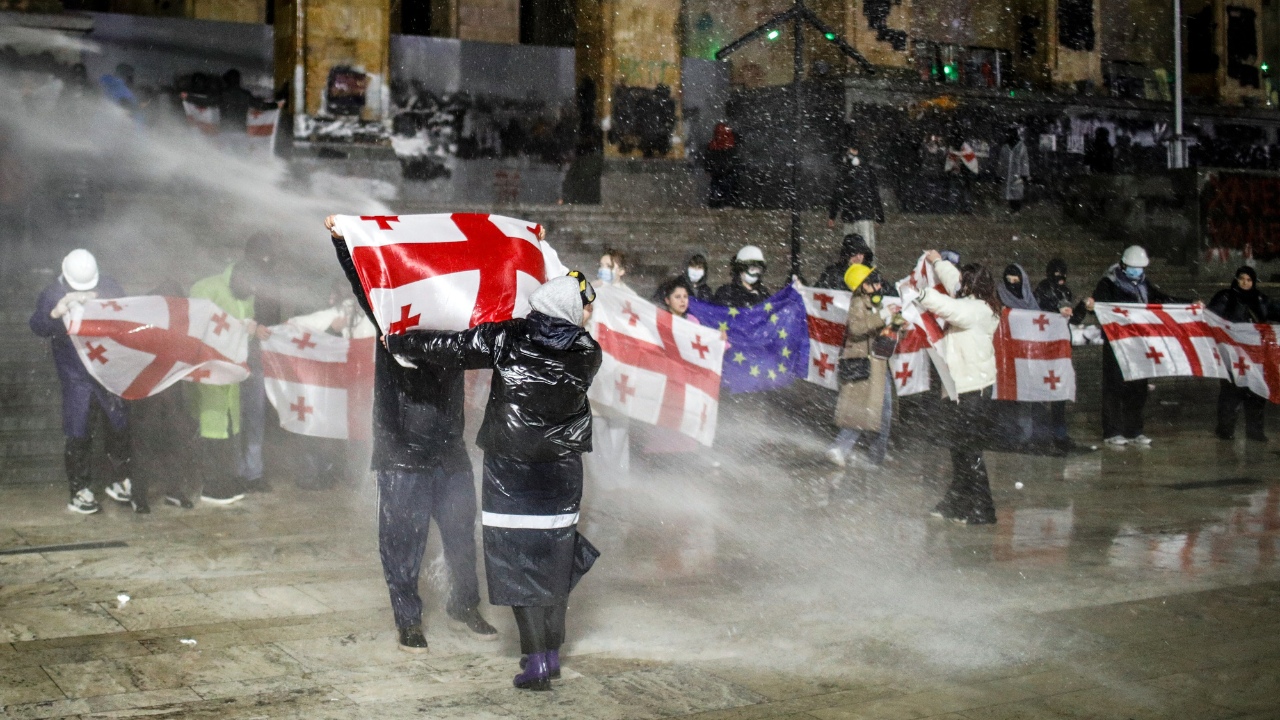
Based on a statement by the MPs, a BBC Eye investigation, citing chemical weapons experts, whistleblowers from Georgia’s special forces, and medical professionals, suggested that a substance known as bromobenzyl cyanide, also referred to as “camite,” may have been used during the early days of pro-European demonstrations that began on November 28, 2024.
The substance was reportedly first used during World War I and later withdrawn from use by 1930 due to its harmful effects.
The PACE members referenced a recent letter sent by the Council of Europe’s Commissioner for Human Rights to Georgia’s Prosecutor General, Giorgi Gvarakidze, which stressed that the alleged use of chemical irritants in water cannons should be examined within the framework of the ongoing investigation into law enforcement actions during the November–December 2024 protests. According to the Commissioner, such practices raise serious concerns regarding legality, necessity, and proportionality.
In their written submission, the MPs posed several questions to the Committee of Ministers, including what measures have been taken to ensure that the Georgian authorities conduct a thorough, effective, and impartial investigation into the allegations. They also inquired whether the Secretary General might invoke Article 52 of the European Convention on Human Rights to request formal explanations from the Georgian government.
Article 52 grants the Secretary General the authority to require any member state to provide information on how its domestic legislation ensures the effective implementation of rights guaranteed under the Convention.
The Council of Europe, distinct from the European Union, is a human rights organization of which Georgia is a member. Its framework includes the European Court of Human Rights, where Georgian citizens may bring cases if they believe their rights have been violated domestically and no remedy was provided. The Council also operates the Venice Commission, which advises Georgia on legislative reforms, including electoral and judicial matters.
Based on the evidence cited by the BBC investigation, Georgian authorities allegedly used a World War I-era chemical agent against anti-government demonstrators last year. The ruling party, Georgian Dream, has dismissed the claims as “absurd” and has threatened legal action against the BBC.
Georgia’s State Security Service has launched an investigation under two articles of the Criminal Code: abuse of official authority and assistance to a foreign organization in hostile activities. As part of the inquiry, doctors whose research was referenced in the BBC investigation have reportedly been summoned for questioning.
The issue has also drawn international attention. Georgia’s fifth president, Salome Zurabishvili, appealed to the Organization for the Prohibition of Chemical Weapons (OPCW), the United Nations, and Council of Europe human rights bodies to examine the alleged use of chemical agents during the November–December 2024 protests.
Meanwhile, Georgia’s third president, Mikheil Saakashvili, has reportedly addressed the Office of the Prosecutor of the International Criminal Court in The Hague, urging it to pay attention to what he described as possible violations of international humanitarian law during the same period.
Georgian authorities continue to deny the allegations, while calls for an independent and comprehensive investigation remain ongoing.
Image: Netgazeti