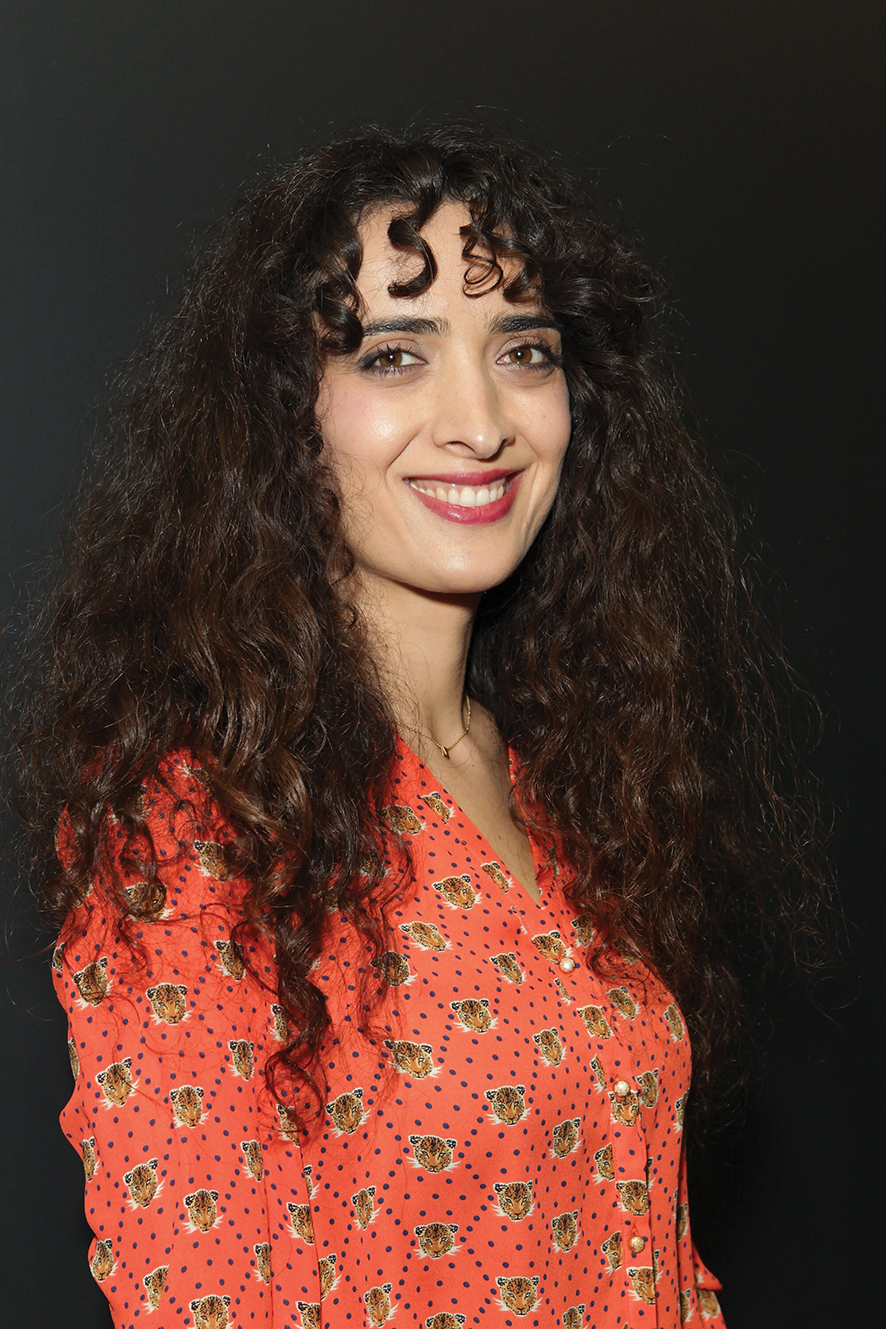
Exclusive Interview by Guest Writer Shiva Akhavan Rad.
Georgian filmmaker and writer Nana Ekvtimishvili explores the quiet struggles behind women’s search for independence, the weight of patriarchal expectations, and the social realities shaping contemporary Georgia. In this conversation, she reflects on ‘My Happy Family’ and ‘In Bloom,’ her collaborative filmmaking practice, the influence of Georgian literature and cinema, and the challenges facing women and younger generations today. She also discusses Iranian cinema, the writers and filmmakers who have shaped her worldview, and the themes of women’s empowerment and social change that inform her forthcoming work.
“I was born in Tbilisi, then part of Soviet Georgia,” Ekvtimishvili tells us. “I grew up in the capital with my mother and sister and began writing in early childhood. In Tbilisi, I graduated from a school focused on journalism and initially began studying philosophy. Soon after, I moved to Germany, where I studied screenwriting and dramaturgy at a film school.”
The character of Manana (My Happy Family) is often met with confusion and criticism from her family because she does not articulate a clear reason for leaving, which challenges the societal expectation that women must have a justifiable reason for seeking independence. We began our interview by asking how she had approached this aspect of the narrative to underscore the societal pressures on women and the lack of understanding for their desire for independence.
“There are two sides to this,” Ekvtimishvili says. “One is what society expects of a woman, explanations, reasons, or even proof to justify her right to seek independence. The other side is the woman herself, her access to her own inner voice. It is not always easy to speak up after enduring normalized oppression or to act independently. Many factors come into play. I was interested in a character who carries a desire for liberation within herself and follows it, not necessarily in a woman’s visible success, which is understandably celebrated in society, but in the silent fighters as well.”
How do the cultural and religious influences, particularly those exerted by the Patriarch of the Georgian Orthodox Church, shape the lives of women in Georgia, especially in terms of the expectations that women should sacrifice their own happiness for the family?
Christian culture often portrays suffering as a legitimate path. In our culture, many figures are celebrated for sacrificing themselves for a cause. Georgian culture, in particular, has placed this expectation of self-sacrifice on women: the mother must ensure the children’s well-being, and the woman must endure everything for the sake of the family. The Soviet era did not diminish these cultural traits; on the contrary, it brought Georgia to a standstill. During this time, women were encouraged to work, and the Soviet state opened numerous kindergartens to support this. However, this was not about women’s rights, the Soviets simply aimed to increase the workforce. In this stagnant environment, the issue of women’s rights remained unspoken for decades.
You have collaborated closely with your husband, Simon Groß, on several projects. What is the dynamic like when co-directing, and how do you divide responsibilities and creative decisions in your filmmaking process?
This is a process that’s difficult to go through with just anyone. You do it because your life is deeply connected to this person. Your partner, family member, sibling, or perhaps a very close friend could handle this kind of collaboration. We did everything together, from preparation and casting to filming.
During filming, we were always on the same page. We shot long takes, and at the end of each one, before reshooting, we almost always had the same approach. A shared perception, taste in films, and values made this collaboration possible.
You have mentioned the importance of finding natural and authentic performances from your actors, such as in the case of Ia Shugliashvili in “My Happy Family” and the young actresses in “In Bloom.” What is your approach to casting, and how do you help your actors bring their characters to life?
Casting is an essential part of the process. During casting, our goal is to understand everything important for the work on set. It’s not even necessary to know the entire script or to have rehearsed every scene, but rather to know each other. Casting is about the director and actors discovering the possibilities within their own work and understanding the range in which they’ll be operating. This is also a key step in achieving authentic performances.
The cinematography in “My Happy Family” is notable for its use of long takes and naturalistic settings. How did you and your co-director, Simon Groß, decide on this visual approach, and what influences did you draw from other cinematic traditions, such as Romanian cinema, which has been mentioned in reviews?
The camera’s closeness to the character was an essential part of our concept. Rather than observing from a distance, the camera was meant to be right in the middle of things. The story naturally called for this approach. Long shots also enhance the actors’ presence and authenticity. While shot-reverse-shot techniques interrupt actors and disrupt the flow of performance, the moving camera and long takes allow the actors to exist on their own. Other dynamics come into play, which, I believe, can be felt on screen. The actors, and thus the characters, begin to breathe. In this sense, the directors don’t interfere.
We also asked ourselves: What kind of world did we want to portray cinematically? Long takes allow for a subtle, in-depth exploration of the social backdrop and the post-Soviet world, which remains unfamiliar to much of the outside world, and even to us, who know it well but not through cinema. This unfamiliarity impacts the characters, making it crucial to portray the background as well.
How is the younger generation in Georgia working to challenge gender stereotypes? Are they migrating frequently?
Right now, regardless of age, we are fighting against a pro-Russian government and completely rigged elections, struggling for the survival of our state as a young democracy. Women, in particular, are yearning for justice and democracy. The old patriarchal image is often reinforced by the Church, as well as by right-wing and pro-Russian politicians. Cases of femicide are frequent, and minorities face discrimination. Not long ago, one of Georgia’s most successful transgender women, Kesaria Abramidze, was killed by her partner, just one day after the state passed a so-called anti-LGBTQ propaganda law. In these circumstances, more and more people want to leave the country.
What is the best book or movie that has changed your perspective on life?
I was a teenager when I read Kafka’s The Trial, and it changed me. After reading it, I realized that I could write about anything, any feelings, any confusions. Even without much life experience, I felt I had enough to say.
Shota Rustaveli’s The Knight in the Panther’s Skin, the most important poem in Georgian literature, was something I studied in school, and it probably influenced me. But as I go through life, I continue to discover how the poem’s philosophy is crucial to my identity and has shaped my consciousness. Vazha Pshavela, another Georgian poet and great humanist of the 19th century, also influenced me. Georgian poetry has certainly shaped me.
In film, Italian neorealism and the French New Wave were highly influential. I saw Fellini’s La Strada as a teenager, and it made a strong impact on me, as did Truffaut’s 400 Blows. Discovering Yasujiro Ozu’s films was absolutely liberating. My favorite Georgian director is Lana Gogoberidze, who continues to make movies and write books at the age of 96. My favorite movie is Some Interviews on Personal Matters (1978).
How familiar are you with Iranian cinema? What are some of your favorite films?
Fortunately, we continue to see the great contributions of Iranian cinema at major film festivals, with directors like Asghar Farhadi, Jafar Panahi, and Mohammad Rasoulof. I love films like A Separation and Offside. I love Abbas Kiarostami’s films, especially Taste of Cherry.
Are there any upcoming projects or themes you’re working on that further explore the narrative of women’s empowerment and social change?
I am currently writing my second novel, which also explores this topic, and my next film is entirely dedicated to it.
Exclusive Interview by Guest Writer Shiva Akhavan Rad