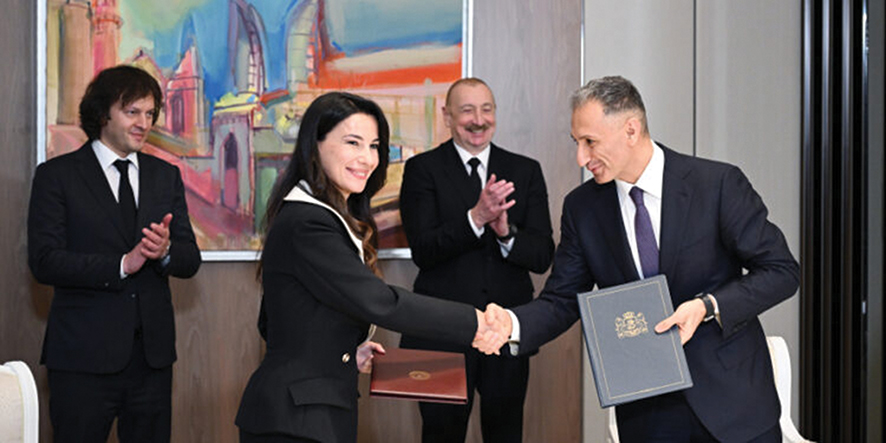
The recent visits by Georgia’s leadership to Kyrgyzstan, Tajikistan, Kazakhstan as well as the visits of Uzbek and Turkmen presidents to Georgia mark an important evolution in Tbilisi’s foreign policy. While Georgia in the past traditionally concentrated its diplomatic efforts more on the European Union, the United States and its immediate neighborhood, the decision to intensify engagement with Central Asia reflects a broader strategic recalibration driven by changing geopolitical and economic realities. The visits signal Georgia’s ambition to position itself as an indispensable Eurasian transit and logistics hub at the western end of the Middle Corridor.
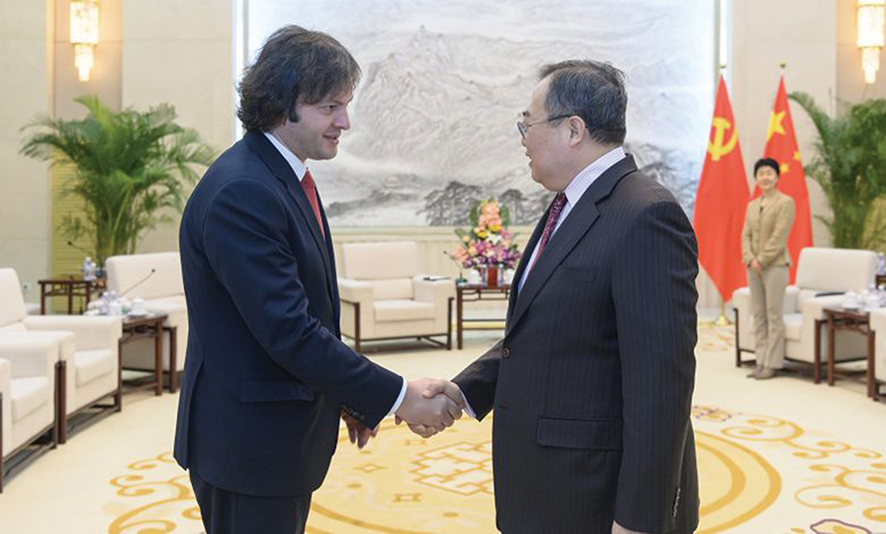
The visits should therefore be viewed as part of Georgia’s approach to capitalize on the transformation of Eurasian trade routes following Russia’s invasion of Ukraine and the ongoing war in Iran. The disruption of the traditional Northern Corridor has fundamentally altered the strategic geography of Eurasian commerce. As companies and governments seek additional options (routes) that reduce dependence on Russia, the Trans-Caspian International Transport Route (TITR), or Middle Corridor, has emerged as one of the most promising alternatives linking China and Central Asia with Europe through the Caspian Sea, the South Caucasus and Türkiye.
Geography has always been one of Georgia’s principal strategic assets, but today’s international environment has substantially increased its value. If the Middle Corridor continues to expand, Georgia will entrench its position as a logistical gateway connecting European markets with Central Asia. Strengthening political relations with Central Asian governments is therefore an essential prerequisite for ensuring that future trade flows continue to move through Georgian territory.
Although Kazakhstan and Uzbekistan, the largest economies of Central Asia, generate the biggest transport volumes, Kyrgyzstan and Tajikistan have become increasingly relevant as both countries seek to diversify their external economic partnerships and reduce excessive dependence on traditional transit routes. Their growing exports of minerals, agricultural products, textiles and manufactured goods create opportunities for expanding east-west trade, while both governments have demonstrated increasing interest in participating more actively in regional connectivity initiatives.
Georgia’s outreach reflects an understanding that successful transport corridors are built as much through political coordination as through physical infrastructure. High-level diplomacy helps institutionalize cooperation on customs procedures, digital trade platforms, investment protection, border management and logistics standards. In this respect, the visits represent an effort to build the political architecture necessary for the long-term success of the Middle Corridor.
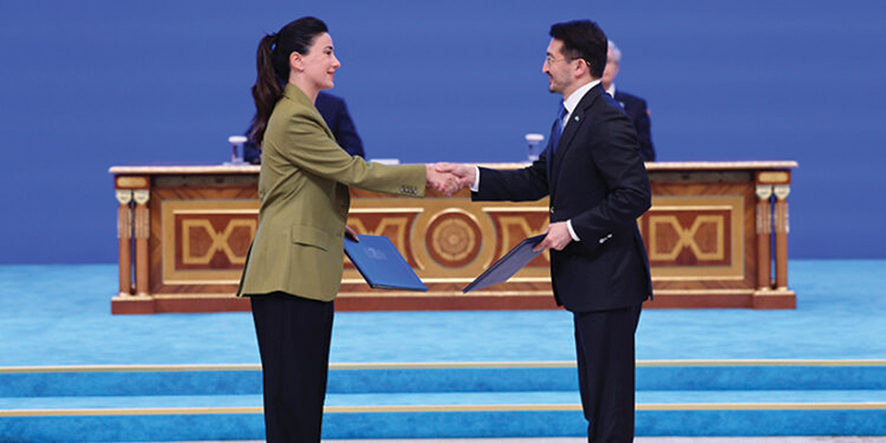
Economic considerations remain at the heart of Georgia’s approach. Tbilisi seeks to expand bilateral trade, attract investment and position itself as a regional services hub for Central Asian companies. Georgia’s liberal trade regime, efficient customs administration, competitive banking sector and free industrial zones provide attractive conditions for businesses seeking access to European markets. Combined with Georgia’s free trade agreements, these advantages allow Georgia to market itself as a commercial bridge between multiple economic regions.
The emphasis on Kyrgyzstan and Tajikistan also reflects Georgia’s policy of diversifying its external portfolio. While European integration remains the country’s declared strategic objective, successive governments have pursued economic engagement across Asia and the Gulf in order to reduce dependence on any single market or political partner. This diversification has become particularly important as global trade patterns fragment and geopolitical competition reshapes international supply chains.
The visits also carry important geopolitical implications. Central Asia has become an arena of growing competition among major powers. Unlike Russia, China, or the EU, Georgia approaches Central Asia without geopolitical ambitions or security agendas. Its comparative advantage lies in providing infrastructure, logistics services and access to international markets. This relatively neutral profile makes Georgia an attractive partner for Central Asian governments pursuing multi-vector foreign policies aimed at balancing relations among Russia, China, Türkiye, the European Union and other external actors.
The strategic importance of these visits also extends to the broader South Caucasus. By strengthening ties with Central Asia, Georgia reinforces its role as the western anchor of the Middle Corridor. The effectiveness of the corridor depends on coordinated investment and policy alignment among Kazakhstan, Azerbaijan, Georgia and Türkiye, but wider participation from Kyrgyzstan and Tajikistan increases cargo diversification and enhances the corridor’s long-term commercial sustainability.
From China’s perspective, Georgia’s expanding engagement with Central Asia complements Beijing’s own efforts to strengthen alternative Eurasian transport routes. Beijing increasingly prioritizes supply-chain resilience and route diversification rather than dependence on any single corridor. Georgia-Central Asia cooperation therefore aligns with China’s broader connectivity agenda as well as the European Union’s objective of expanding east-west transport links that circumvent the Russian territory.

Looking ahead, the visits are part of a broader strategic shift in Georgia’s regional diplomacy. Georgia increasingly recognizes that its long-term geopolitical position will depend not only on its ties with the Western countries but also on its ability to look eastward where Central Asia has become indispensable.
If Georgia succeeds in translating political engagement into practical economic cooperation, strengthening institutional links with Kyrgyzstan and Tajikistan, and accelerating the development of the Middle Corridor, it stands to enhance both its economic resilience and its geopolitical influence.
Analysis by Emil Avdaliani
Emil Avdaliani is a professor of international relations at the European University in Tbilisi, Georgia, and a scholar of Silk Roads. He can be reached on Twitter/X at @emilavdaliani.