One of Georgia’s most recognizable buildings has begun a new chapter. The former Parliament building in Kutaisi has reopened as the country’s largest technology hub, transforming a landmark once built for politics into a center for startups, innovation, education and scientific research.
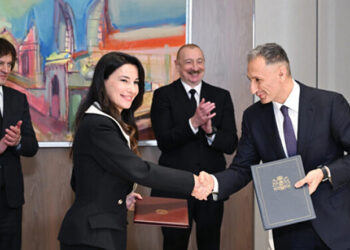
Prime Minister Irakli Kobakhidze and Economy Minister Mariam Kvrivishvili officially opened the Innovation and Technology Agency’s (GITA) new Kutaisi Technology Hub, describing it as a major step toward building a technology-driven economy.
Speaking at the opening ceremony, Kvrivishvili said the project reflects the government’s ambition to create more high-skilled, well-paid jobs.
“Artificial intelligence, digital technologies and the data-driven economy determine the competitiveness of countries and industries,” she said. “Georgia’s choice is clear: to be not only a user of new technologies, but also a country where knowledge is created, new ideas are born, and competitive technology businesses develop.”
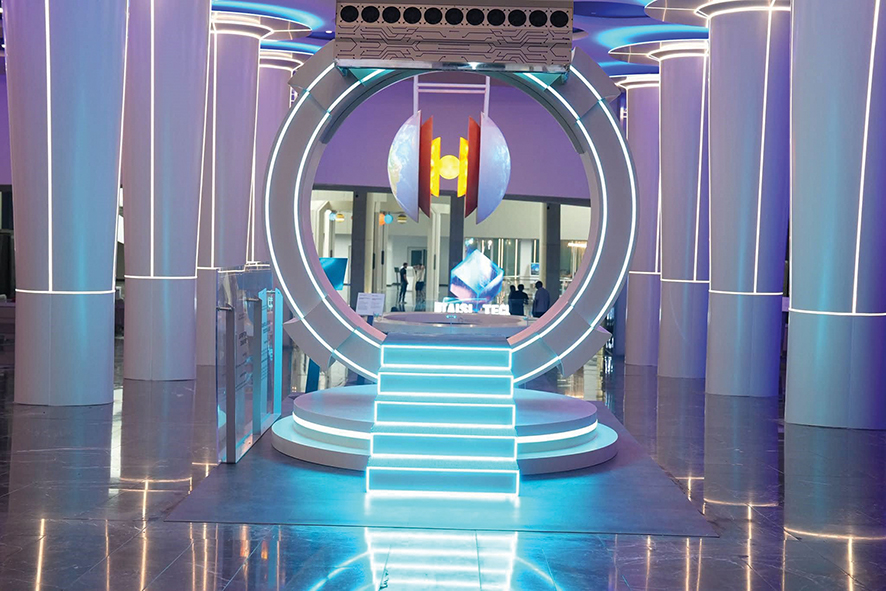
The hub brings together technology laboratories, startup workspaces, an interactive science and technology museum, an artificial intelligence computing center and a TUMO creative technologies education center for school students. It will also be home to Georgia’s largest technopark, hosting startup incubators, hackathons, innovation camps, workshops and training programs throughout the year.
Kobakhidze said the complex would become “a regional center of knowledge, innovation and technological development.”
“I am pleased that the building, which was a symbol of corruption under the previous government, will acquire an entirely new purpose starting today,” he said.
According to the prime minister, more than 300 government-supported technology startups have already generated over GEL 800 million in economic value and created more than 4,000 jobs.
Kvrivishvili said the project is especially significant for Kutaisi, pointing to the city’s growing role as an educational and innovation hub, supported by Kutaisi International University and Kutaisi International Airport.
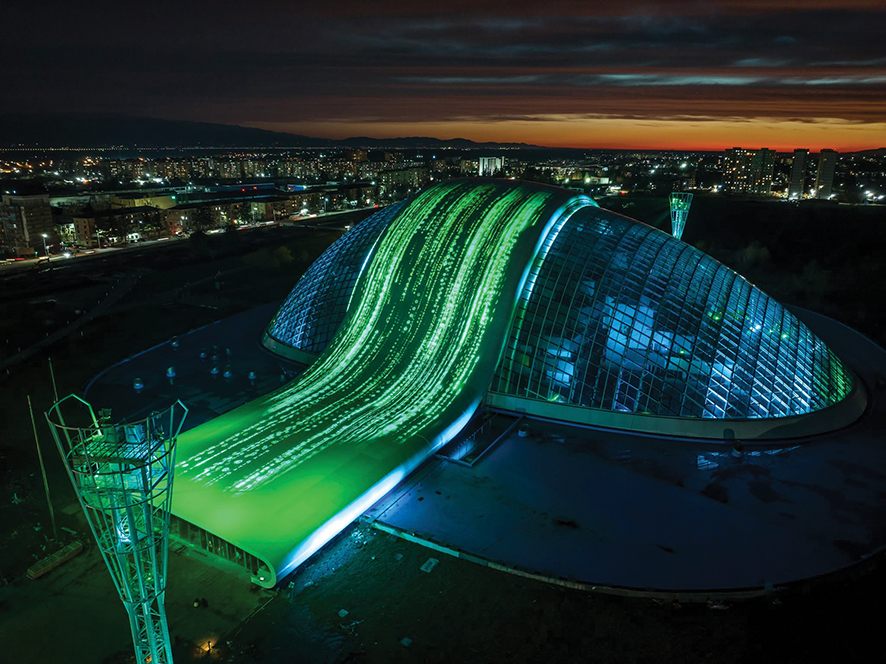
The transformation marks a dramatic change for a building that has had an eventful history. Opened in 2012 under then-President Mikheil Saakashvili, the futuristic glass-and-steel complex was built to house Georgia’s Parliament as part of a plan to shift political and economic activity toward western Georgia. Designed by Spanish firm CMD Ingenieros and architect Alberto Domingo Cabo, its distinctive glass dome quickly became one of Kutaisi’s best-known landmarks.
The move, however, remained controversial. Critics argued that separating Parliament from government ministries in Tbilisi made lawmaking less efficient and increased costs. After the change of government in 2012, lawmakers gradually returned to the capital, and by 2019, Parliament was once again permanently based in Tbilisi, leaving the striking building in Kutaisi without a long-term purpose.
Rather than leaving it empty, the government announced plans in 2022 to reinvent the complex as a technology and innovation center. Today, the building has been given a very different mission: helping develop Georgia’s next generation of entrepreneurs, engineers and researchers.
The transformation extends beyond the building’s interior. Ukrainian lighting design company Expolight has created what it describes as Georgia’s first interactive architectural façade and one of the world’s largest permanent 3D projection mapping installations. Fully integrated with the building’s architectural lighting, the system allows the former Parliament’s exterior to display changing artistic works, immersive audiovisual presentations and interactive experiences controlled through a dedicated mobile application.
According to Expolight, the installation includes three operating modes: a rotating series of artistic visual displays, a large-scale audiovisual show exploring the story of human development, and an interactive mode that enables visitors to engage directly with the building. The company said one of the project’s greatest technical challenges was transforming the building’s vast curved glass dome into a seamless digital canvas while preserving its architectural character.
The project also features four custom-designed, 29-meter-tall sculptural structures that conceal the projection equipment. Rather than simply housing the technology, the towers were designed as public artworks inspired by the idea of growth, symbolizing Kutaisi’s evolution into a center of knowledge, culture and technology.
In addition to supporting local startups, the Kutaisi Technology Hub is expected to attract international technology companies, host conferences and provide advanced facilities for fields including robotics, electronics, drones, virtual reality and artificial intelligence, making it one of the largest innovation centers in the South Caucasus.
By Team GT