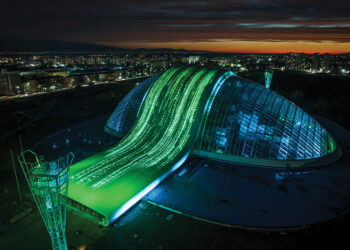
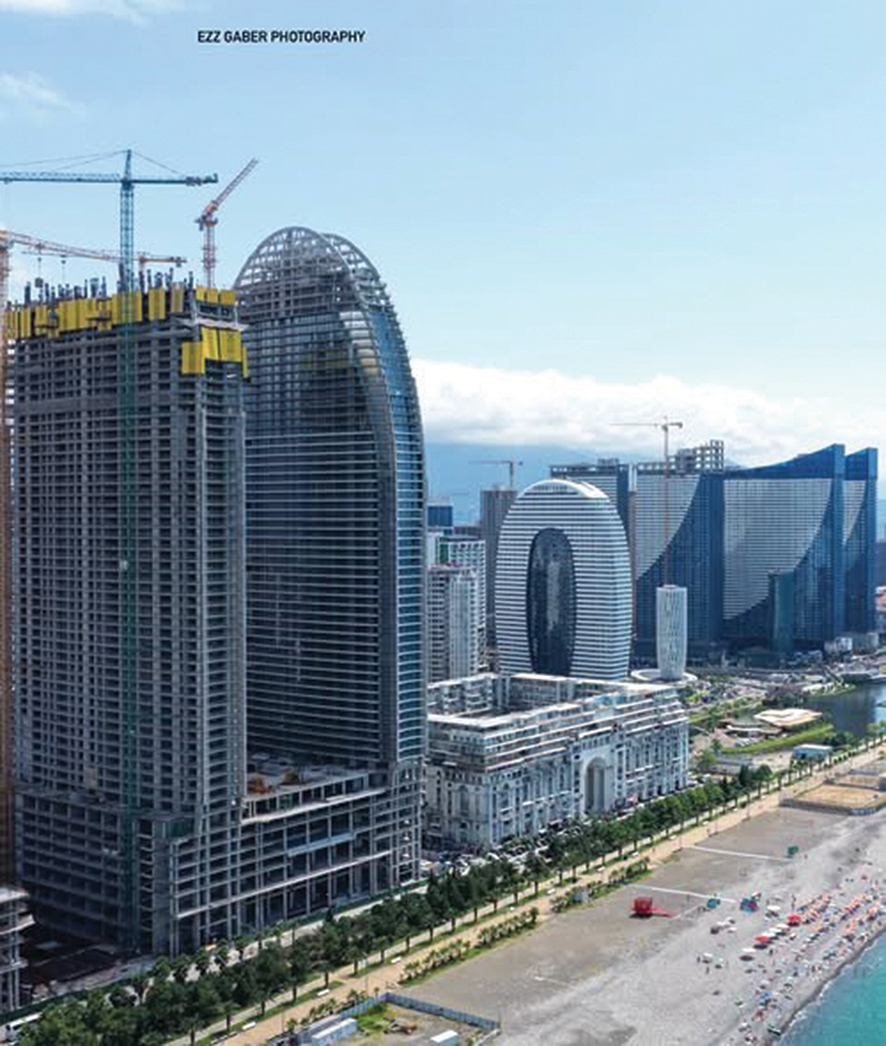
Batumi is changing at a remarkable pace. Tower cranes dominate the skyline, investment continues to pour in, and the city has become one of the fastest-growing destinations on the Black Sea. But alongside that growth, many have begun asking a different question: what happens to a city’s identity as it transforms?
In this three-part series, writer Mary Andersen explores the changing face of Batumi through the lens of culture, language and everyday life. The series begins by examining whether rapid development has come at the expense of the city’s unique Georgian character. The second article offers a personal reflection on living in a city where the Russian language and other outside influences have become increasingly visible. The final installment looks at the broader challenge of balancing economic growth, tourism and international openness with the preservation of Georgia’s cultural identity.
There was a time…
There was a time when an evening in Batumi felt unmistakably Georgian. You could walk along the boulevard, hear traditional music drifting from a nearby restaurant, sit down with friends over khinkali and a glass of local wine, and before long you’d inevitably be watching Georgian dancing or perhaps even joining in yourself. Visitors didn’t just come for the Black Sea: they came to experience Georgia.
Today, I worry that we’re slowly losing that.
Every time I come back to Batumi, there seems to be another hotel under construction. Another apartment tower rising above the skyline. Another luxury development promising investment opportunities and spectacular sea views. On paper, this is progress. More hotels mean more tourists. More tourists bring more money. Investment creates jobs, improves infrastructure and helps Georgia’s economy. No one is arguing against growth, but somewhere along the way, we’ve neglected to ask ourselves the simple question: what kind of Batumi are we building?
Finding a place to sleep has never been easier. Finding a place that truly feels Georgian? A little trickier.
Walk along the beachfront today and you’ll find plenty of modern bars, cafés and lounges. But where are the places filled with Georgian music? Where are the restaurants with regular traditional dance performances? Where are the venues serving authentic Adjarian food while local musicians play into the evening? Instead, too many places feel interchangeable. They could just as easily be in Dubai, Antalya or, dare I say it – Moscow.
Yet Georgia has one of the richest cultures anywhere in Europe. They have a language unlike any other, food people travel thousands of miles to taste. There are wine traditions stretching back over 8,000 years, and dances that leave visitors speechless. So why aren’t we putting these things front and center?
This conversation cannot ignore Georgia’s recent history. Twenty percent of this country remains under Russian occupation. This isn’t politics, this is reality.
Since Russia’s full-scale invasion of Ukraine, more than 100,000 Russian citizens are estimated to have settled in Georgia, while many more have visited or passed through. They came because Georgia’s borders remained open and the country offered safety, stability and opportunity. Their arrival has undoubtedly brought money to parts of the economy, but it has also brought consequences that ordinary Georgians live with every day.
Housing demand surged. Property prices increased dramatically. Rent climbed beyond what many local families could comfortably afford. The cost of everyday living rose while wages struggled to keep up. For many Georgians, Batumi and Tbilisi began feeling less affordable than ever before.
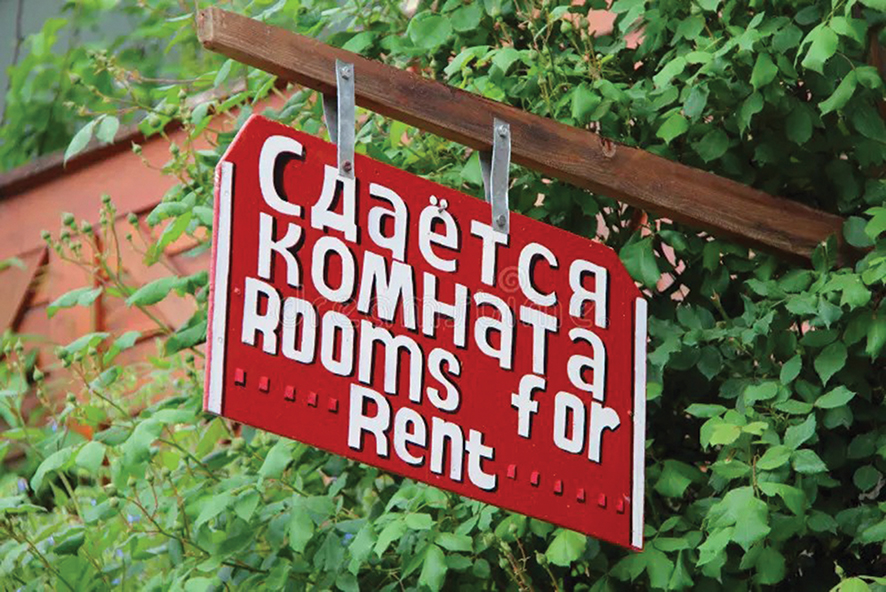
At the same time, and unlike Tbilisi, parts of Batumi appear to increasingly cater to Russian-speaking visitors and residents. Russian music is common in a lot of venues. Russian-language advertising and menus are increasingly visible. Some servers in local establishments are unable to converse in even basic Georgian. Businesses naturally follow demand, but many Georgians can’t help wondering whether their own language and culture are slowly being pushed into the background in their own country.
This is not about blaming individual Russians. Nor is it about suggesting Georgia should close itself off from the world. It’s about asking where the balance lies. Should parts of Georgia sacrifice the needs of its citizens to cater to tourists?
Visitors should experience Georgia. Georgia should not redesign itself for its visitors.These two things are not mutually exclusive. This principle applies whether tourists come from Russia, the Gulf, Europe or anywhere else. A confident nation welcomes guests; it does not slowly dilute its own identity to accommodate them. The greatest irony is that what makes Georgia popular isn’t the number of luxury apartments built, it’s everything that already existed long before the first crane appeared.
The hospitality, traditions, cuisine and music. The history and language. Georgia’s identity. Those are the reasons people fall in love with this country.
Hotels are important, as is investment and economic growth, but we should never lose sight of the fact that culture is what makes a destination unforgettable and makes people want to return. More hotels are not, by themselves, a tourism strategy; more apartments are not a substitute for atmosphere. A skyline filled with towers means very little if visitors struggle to find an authentic evening of Georgian music, dancing, food and conversation.
Batumi doesn’t need to become another anonymous international resort on the Black Sea, it should instead aspire to become the world’s greatest showcase of Georgian culture.
Because another apartment tower might fill a skyline, but only Georgian culture can fill people’s hearts.
If Batumi is going to keep building upward, we have a responsibility to make sure it doesn’t lose its soul.
Op-Ed by Mary Andersen