Georgia is continuing to expand its air connectivity during the 2026 summer season, with new international routes, increased flight frequencies, and growing passenger numbers reinforcing the country’s position as a regional aviation hub.
The latest developments include additional services from Armenia and Moldova, the launch of direct flights to Shanghai and Copenhagen, a new domestic connection between Tbilisi and Batumi, and an air services agreement with Argentina aimed at opening future long-haul opportunities.
Armenia and Moldova Increase Black Sea Services
As demand for travel to Georgia’s Black Sea coast rises during the summer months, regional carriers are expanding their operations to Batumi.
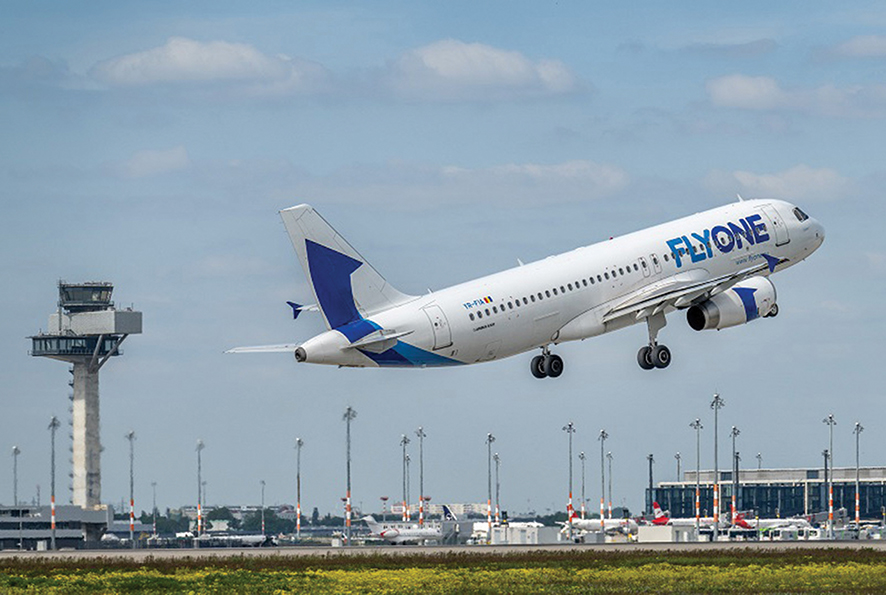
Armenian low-cost carrier FLYONE Armenia will increase flights between Yerevan and Batumi from three to six weekly services beginning 16 July. Under the updated schedule approved by Georgia’s Civil Aviation Agency (GCAA), flights operate every day except Sunday.
FLYONE Armenia entered the Georgian market in 2022 and also operates scheduled flights between Yerevan and Tbilisi.
Meanwhile, FLYONE Moldova has inaugurated direct flights between Chisinau and Batumi. The first Airbus A320 service arrived with 182 passengers and departed with 161 passengers on the return journey. The airline will operate the route three times a week during the summer season, with flights on Mondays, Thursdays, and Wednesdays.
Both routes are expected to support growing tourist flows from neighboring countries to Georgia’s Black Sea resorts.
China Connection Strengthens Asia Links
Georgia is also deepening its connectivity with Asia.
From 15 July, China Eastern Airlines began direct scheduled flights between Shanghai and Tbilisi, operating three times a week on Wednesdays, Fridays, and Sundays.
The carrier becomes the third Chinese airline to offer direct scheduled services between Georgia and China, joining Air China and China Southern Airlines.
The United Airports of Georgia says the new route is expected to strengthen tourism, trade, business cooperation, and broader economic relations. Combined with the existing visa-free regime between Georgia and China, officials believe the flights will make travel significantly more convenient for both business travelers and tourists.
China has become an increasingly important partner for Georgia in recent years, with bilateral trade, tourism, and transport cooperation all showing steady growth.
Scandinavian Carrier Enters Georgian Market
Georgia has also welcomed a new European airline.
Norwegian, Norway’s largest airline and Scandinavia’s second-largest carrier, has launched its first scheduled flights to Georgia, entering the country’s aviation market with twice-weekly services between Copenhagen and Tbilisi.
The route further expands Georgia’s links with Northern Europe, where demand for leisure travel to the country has grown steadily in recent years.
The Ministry of Economy says passenger traffic between Georgia and Europe continues to increase rapidly. During the first five months of 2026, 952,480 passengers traveled between Georgia and European destinations, representing an 18% year-on-year increase.
At the height of the 2026 summer aviation season, airlines are expected to operate 46 routes connecting Georgia with Europe, offering approximately 170 to 175 weekly flights.
Domestic Connectivity Boosted
Georgia’s national carrier, Georgian Airways, has also expanded domestic services.
The airline has launched regular flights between Tbilisi and Batumi, operating four times a week throughout the summer navigation season on Tuesdays, Thursdays, Saturdays, and Sundays.
The service provides an additional travel option between the capital and Georgia’s main Black Sea resort during one of the busiest periods of the year.
Looking Beyond Traditional Markets
Georgia is also laying the groundwork for future long-haul expansion.
The country has signed a Memorandum of Understanding on Air Services with Argentina, creating a legal framework that will allow designated airlines from both countries to operate scheduled services without restrictions on routes between any points in Georgia and Argentina.
The agreement also enables airlines to establish codeshare partnerships with each other and with third-country carriers, allowing passengers to book seamless single-ticket journeys even where direct flights are unavailable.
According to Georgia’s Civil Aviation Agency, the agreement supports the International Civil Aviation Organization’s strategy of liberalizing air transport, expanding market access, and improving global connectivity. Officials say such agreements are an important step in opening distant markets and strengthening future tourism and business links, even if direct flights are not introduced immediately.
By Team GT