As global trade patterns evolve, Georgia is working to strengthen its position as a gateway between Europe and Asia. Expanding ties with China and the Central Asian states of Kazakhstan and Uzbekistan are creating new opportunities in trade, logistics, and investment, while the country continues to deepen its longstanding economic relationship with Europe.
For centuries, Georgia’s strategic location at the crossroads of Europe and Asia has shaped its economic importance. Today, as businesses look for more resilient supply chains and alternative transport routes, the country is once again looking to turn geography into a competitive advantage.
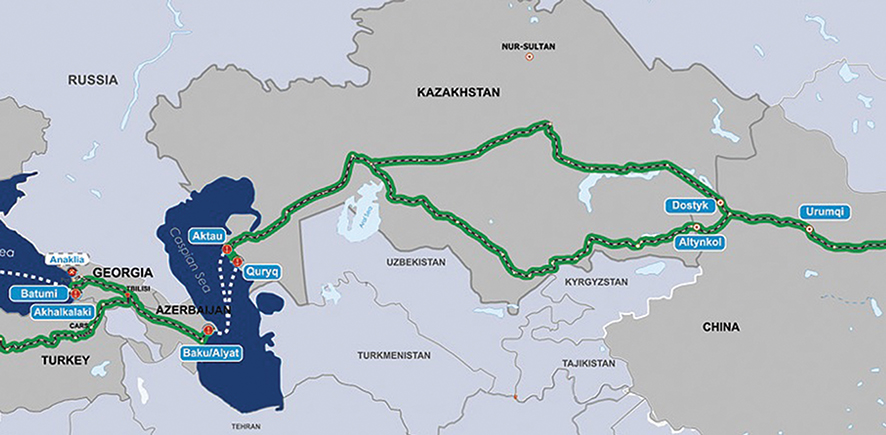
Much of this effort centers on the Middle Corridor, also known as the Trans-Caspian International Transport Route, which links China and Central Asia with Europe through Kazakhstan, the Caspian Sea, Azerbaijan, Georgia, and Türkiye. Beyond serving as a transit country, Georgia hopes to establish itself as a regional hub for logistics, trade, and investment by capitalizing on growing cargo flows between Asia and Europe.
China: Expanding Trade and Connectivity
China has become one of Georgia’s most important economic partners in Asia, with cooperation extending beyond trade to include infrastructure, transport, tourism, and investment.
Relations entered a new phase in 2023, when the two countries established a strategic partnership covering trade, investment, infrastructure, transport, and tourism. The agreement built on an already significant milestone, the Georgia-China Free Trade Agreement, signed in 2017 and entering into force in 2018. It was China’s first free trade agreement with a South Caucasus country.
The free trade agreement has created new opportunities for Georgian exporters, particularly producers of wine, mineral water, and agricultural goods. Georgian wine producers, in particular, have increasingly targeted the Chinese market, where demand for imported wines has expanded steadily over the past decade.
China also plays an important role in Georgia’s broader connectivity strategy. Through the Belt and Road Initiative and the development of the Middle Corridor, Georgia sees an opportunity to increase cargo flows between Asia and Europe while attracting additional investment into its transport and logistics sectors.
Chinese companies have explored opportunities in Georgia in construction, infrastructure, logistics, manufacturing, and tourism. Although China has become an increasingly important partner, European countries continue to account for a much larger share of foreign investment and remain Georgia’s principal economic partners.
Kazakhstan: Strengthening a Strategic Partnership
Kazakhstan has emerged as one of Georgia’s closest partners in Central Asia, driven largely by their shared interest in developing east-west transport links across the Caspian region.
Relations reached a new level in June 2026, when Georgian Prime Minister Irakli Kobakhidze and Kazakh President Kassym-Jomart Tokayev signed a declaration establishing a strategic partnership during Kobakhidze’s visit to Kazakhstan. The visit also produced memoranda of cooperation covering culture, information technology, and tourism.
Transport and logistics featured prominently in the discussions. Both governments reaffirmed their commitment to expanding trade, investment, and freight traffic along the Trans-Caspian International Transport Route, which has become an increasingly important alternative for moving goods between Asia and Europe.
Kazakhstan occupies a pivotal position at the eastern end of the corridor. As Central Asia’s largest economy and a major producer of energy, minerals, and agricultural commodities, it serves as a key departure point for cargo traveling west across the Caspian Sea. Georgia, in turn, provides access to Black Sea ports and onward connections to Türkiye and European markets.
Cooperation is also expanding beyond transport. Agriculture has become an area of growing interest, with officials from both countries discussing ways to increase agricultural exports, strengthen producer cooperation, and encourage investment in food production.
For businesses, the expanding partnership offers opportunities in logistics, warehousing, freight forwarding, agriculture, tourism, and related services. As companies diversify supply chains and seek alternative transport routes, economic ties between Georgia and Kazakhstan are expected to become increasingly significant.
Uzbekistan: A Strategic Partnership with Growing Potential
Uzbekistan has also become an increasingly important partner as Georgia deepens its economic engagement with Central Asia.
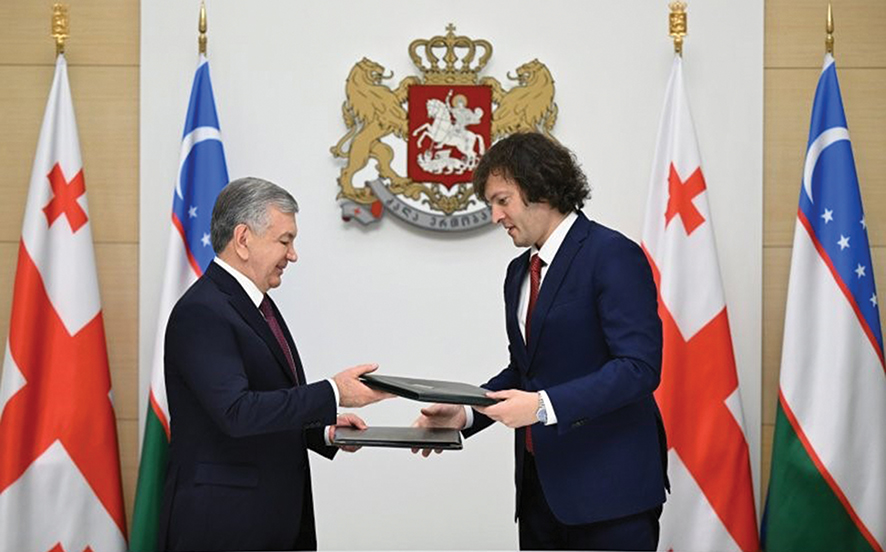
That relationship entered a new phase in July 2026, when Uzbek President Shavkat Mirziyoyev paid a state visit to Georgia. During the visit, President Mirziyoyev and Prime Minister Irakli Kobakhidze signed a declaration elevating bilateral relations to the level of a strategic partnership.
The visit resulted in a package of agreements and memoranda covering trade, finance, customs, agriculture, healthcare, education, digitalization, tourism, and environmental cooperation. Together, the agreements establish a framework for future investment and commercial cooperation between the two countries.
Several agreements focused on facilitating trade through closer customs cooperation, electronic permit exchanges, digital systems, and improved administrative procedures. Other initiatives targeted innovation, transport, and logistics, reflecting both countries’ interest in strengthening commercial connectivity.
Agriculture also featured prominently. Memoranda covered agricultural policy, plant health, veterinary services, food safety, livestock development, and modern farming technologies. Georgian officials said the agreements could help expand exports of Georgian agri-food products while encouraging greater cooperation between agricultural producers.
As a landlocked country, Uzbekistan is seeking reliable routes to international markets, making Georgia an attractive partner through its Black Sea ports and transport links to Europe. The strengthening relationship reflects a broader trend across Central Asia, where governments are seeking to diversify trade routes while reducing dependence on traditional transit corridors.
For Georgia, closer ties with Uzbekistan support its ambition to become a regional logistics and business hub serving trade between Asia and Europe.
Azerbaijan: The Essential Link Across the Caspian
No discussion of Georgia’s growing economic links with Asia would be complete without Azerbaijan, one of its closest regional partners and an indispensable part of east-west connectivity.
For decades, the two countries have developed strong cooperation in transport, energy, trade, and infrastructure. Azerbaijan provides the vital connection between Central Asia and the South Caucasus, enabling cargo crossing the Caspian Sea to continue westward through Georgia toward Türkiye and European markets.
One of the most important projects linking the two countries is the Baku-Tbilisi-Kars (BTK) railway, which officially opened in 2017. Connecting Azerbaijan’s Caspian transport network with Georgia and Türkiye, the railway has become one of the key components of the Middle Corridor and plays an increasingly important role in Eurasian freight transport.
Energy cooperation remains another cornerstone of the relationship. Georgia and Azerbaijan are partners in several strategically important projects, including the Baku-Tbilisi-Ceyhan oil pipeline, the South Caucasus Pipeline, and the Southern Gas Corridor, which delivers Azerbaijani natural gas to European markets and contributes to Europe’s energy diversification.
Trade and investment links are equally significant. Azerbaijan consistently ranks among Georgia’s leading trading partners, while Azerbaijani companies have invested across sectors including energy, infrastructure, agriculture, tourism, and real estate.
Beyond bilateral trade, Azerbaijan’s importance lies in its role as the western gateway for cargo arriving from Central Asia. Together, Azerbaijan and Georgia form one of the principal transport corridors connecting Asian producers with the Black Sea, Türkiye, and European markets. Continued cooperation between the two countries will remain essential to the future growth of the Middle Corridor.
Türkiye: Georgia’s Gateway to European Markets
While Georgia’s economic ties with China and Central Asia have expanded in recent years, Türkiye remains one of the country’s most important economic partners and a cornerstone of its regional connectivity strategy.
The neighboring countries have built close trade, transport, and energy ties over more than two decades. Today, Türkiye is consistently among Georgia’s largest trading partners, with cooperation spanning manufacturing, construction, tourism, agriculture, transport, and logistics.
A key milestone in the relationship was the Georgia-Türkiye Free Trade Agreement, which entered into force in 2008. By removing tariffs on many goods, the agreement helped stimulate bilateral trade and deepen economic integration between the two countries.
According to Georgia’s official trade statistics, Türkiye continues to rank among Georgia’s leading import and export partners. Turkish companies are also among the country’s largest foreign investors, with investments concentrated in energy, construction, transport, manufacturing, hospitality, and retail.
Connectivity remains at the heart of the partnership. As the western gateway of the Middle Corridor, Türkiye connects Georgia’s transport network with European markets. The Baku-Tbilisi-Kars railway provides a direct rail link between the South Caucasus and Türkiye, while Georgia’s Black Sea ports offer additional routes for cargo heading to Europe.
Energy cooperation further reinforces bilateral ties. Major regional infrastructure projects, including the Baku-Tbilisi-Ceyhan oil pipeline and the South Caucasus Pipeline, pass through both countries, transporting Caspian energy resources to international markets and strengthening Europe’s energy security.
For Georgia, Türkiye is more than a major trading partner. It provides the critical connection between Georgia’s expanding economic relationships in Asia and established markets in Europe. As freight volumes along the Middle Corridor continue to grow, Türkiye’s role in linking Asian manufacturers with European consumers is expected to become even more significant.
Armenia: A Potential Future Link
Armenia’s place in regional connectivity is also evolving. For decades, the country has remained outside many of the principal east-west transport routes because of unresolved regional conflicts and its closed borders with Türkiye and Azerbaijan.
Recent diplomatic efforts, however, have renewed discussions about reopening transport links across the South Caucasus. Although significant political challenges remain, improved regional connectivity could eventually create new trade opportunities for Armenia while strengthening transport networks across the region.
For Georgia, greater regional integration could complement existing transit routes and contribute to a more interconnected South Caucasus.
The Middle Corridor: Opportunity and Obstacles
The Trans-Caspian International Transport Route, commonly known as the Middle Corridor, has become one of the fastest-growing trade routes linking Asia and Europe. Stretching from China through Kazakhstan, the Caspian Sea, Azerbaijan, Georgia, and Türkiye before reaching European markets, the corridor has attracted increasing attention as companies seek alternatives to traditional shipping routes.
Its importance has grown significantly since Russia’s invasion of Ukraine reshaped Eurasian trade. As geopolitical tensions and sanctions reduced the attractiveness of routes passing through Russia, governments and logistics companies accelerated investment in the Middle Corridor. According to the route’s operators, cargo volumes exceeded 4.5 million tons in 2025, more than double the level recorded only a few years earlier.
Georgia occupies a strategic position along the western section of the route. Cargo arriving from Central Asia crosses the Caspian Sea to Azerbaijan before continuing by rail through Georgia to Black Sea ports or onward to Türkiye via the Baku-Tbilisi-Kars railway, whose freight capacity has been expanded to 5 million tons annually.
For Georgia, the corridor offers far more than transit revenues. It presents an opportunity to expand logistics services, warehousing, freight forwarding, customs brokerage, manufacturing, and value-added distribution, positioning the country as a regional logistics hub rather than simply a transport corridor.
However, realizing that potential will require overcoming several significant challenges.
One of the biggest constraints is the Caspian Sea itself. Falling water levels have reduced draft depths at some ports, limiting vessel capacity and placing additional pressure on ferry services between Kazakhstan and Azerbaijan. The relatively small ferry fleet, combined with weather-related disruptions, can also create bottlenecks that affect delivery schedules.
Infrastructure remains another priority. Although substantial investments have been made in railways, ports, and border facilities across the corridor, additional capacity will be needed as freight volumes continue to increase. Georgia has modernized parts of its railway network, but further investment in rail terminals, logistics centers, port infrastructure, and border crossings will be essential to accommodate future growth.
Customs procedures have also improved through increased digitalization and closer cooperation between participating countries. Nevertheless, logistics companies continue to identify inconsistent documentation requirements, differing administrative procedures, and varying border processing times as obstacles to smoother cargo movement.
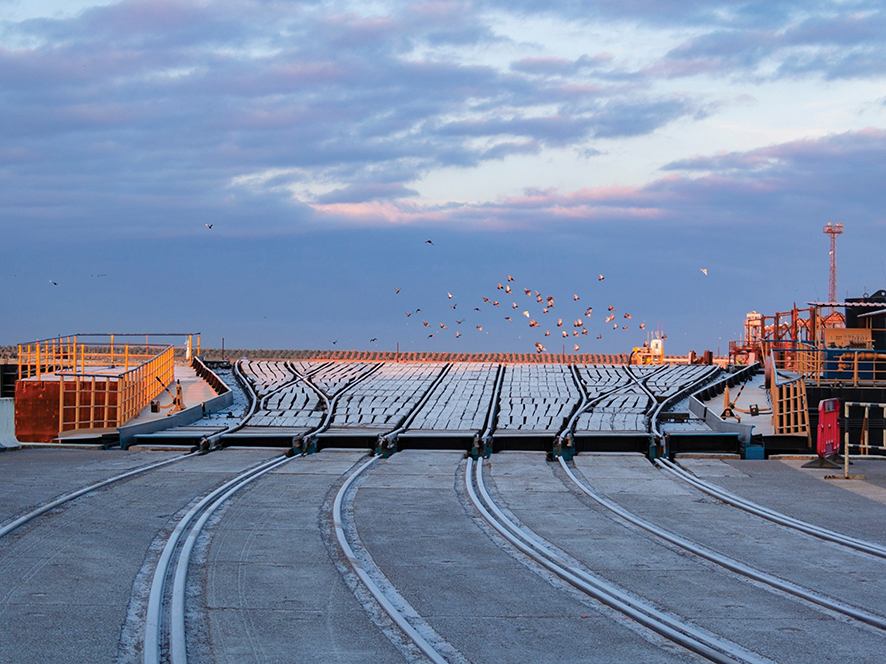
Technical differences add another layer of complexity. Railways across most of the former Soviet Union, including Georgia, Azerbaijan, and Kazakhstan, use the 1,520-millimeter broad gauge, while Türkiye and the European Union operate on the 1,435-millimeter standard gauge. As freight crosses the Georgian-Turkish border, cargo must either be transferred to different railcars or the railcar bogies replaced. Although modern facilities have reduced delays, the change of gauge remains a structural limitation that adds time and cost to the journey.
Even with these challenges, transit times have improved considerably. Depending on the origin and destination, freight can now travel between China and Europe in approximately 18 to 25 days, compared with roughly 35 to 45 days by sea. While maritime shipping remains significantly cheaper and continues to handle far greater cargo volumes, the Middle Corridor offers an attractive alternative for high-value, time-sensitive goods.
Georgia’s maritime infrastructure will also play a decisive role in the corridor’s future development. Poti and Batumi continue to serve as the country’s principal cargo ports, while the long-planned Anaklia Deep Sea Port, now under development, is expected to accommodate larger vessels and significantly increase Georgia’s cargo-handling capacity. Georgian officials view Anaklia as a strategic investment that could strengthen the country’s position as one of the Black Sea’s leading logistics hubs.
Ultimately, Georgia’s success will depend not simply on attracting cargo, but on building the infrastructure, logistics services, and investment climate needed to capture more of the economic value created by growing trade between Asia and Europe.
Balancing East and West
Georgia’s expanding partnerships with China and Central Asia are not a shift away from Europe, but part of a broader strategy to strengthen economic links with multiple regions.
The European Union remains Georgia’s largest trading partner, and the EU-Georgia Deep and Comprehensive Free Trade Area (DCFTA), which entered into force in 2016, provides Georgian businesses with preferential access to one of the world’s largest consumer markets while encouraging higher regulatory and product standards.
At the same time, Georgia’s free trade agreements with China and Türkiye provide businesses operating in the country with preferential access to several major international markets. Combined with its strategic location between Europe and Asia, this network of trade agreements gives Georgia a competitive advantage that few countries in the region can match.
For investors, the country’s appeal extends beyond geography. Continued improvements in transport infrastructure, logistics services, customs modernization, and digital connectivity have strengthened Georgia’s position as a regional business destination. Nevertheless, maintaining competitiveness will require sustained investment in infrastructure, political stability, regulatory transparency, and workforce development.
The coming years will determine whether Georgia can fully capitalize on the changing geography of global trade. If the country succeeds in expanding infrastructure, improving connectivity, and attracting new investment, it could emerge as one of the principal logistics and commercial hubs linking Asia with Europe.
One trend is already unmistakable. While Europe remains central to Georgia’s economic future, the country’s commercial horizons are steadily expanding eastward. Growing partnerships with China, Kazakhstan, Uzbekistan, Azerbaijan, and Türkiye are reshaping Georgia’s role in Eurasian trade and opening new opportunities for business, investment, and long-term economic growth.
By Team GT