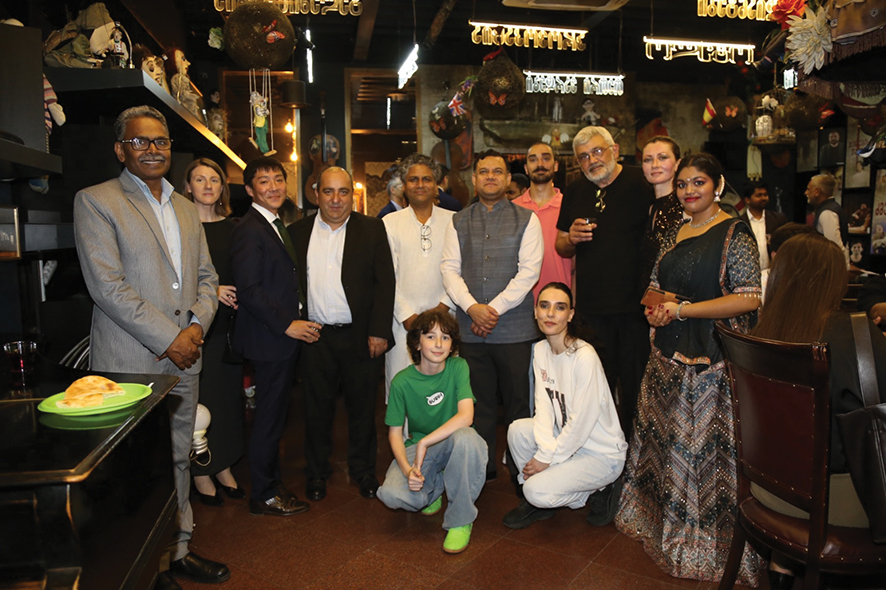
For more than two decades, Darpan (Darispan) Prasher has worked to strengthen cultural and people-to-people ties between India and Georgia. As the Chairman of the NGO Cultural Diversity for Peaceful Future, he has organized cultural exchanges, educational initiatives and events promoting Indian traditions in Georgia. In an interview with GEORGIA TODAY, Prasher speaks about his journey to Georgia, the role of culture in building international relations, and why he considers India and Georgia equally important parts of his life.
Georgia has been a part of your life for more than two decades. How did this journey begin and why did you decide to live here?
My journey to Georgia began in 2002. I first came here with a business idea, but things did not develop as I had planned. Nevertheless, from the very first days, I felt the warmth, hospitality and openness of the Georgian people. This made me feel that the country could become not only a place to work, but also my second home.
Over the years, my connection with Georgia grew stronger. Eventually, I settled here and dedicated my life to strengthening cultural, educational and human relations between India and Georgia.
Today, Georgia is an integral part of my life. I always say that India and Georgia are my two eyes.
You have been working towards this goal for many years through various projects. What does your work in Georgia include?
I am the Chairman of the NGO Cultural Diversity for Peaceful Future, which was founded in 2017. The main goal of the organization is to strengthen cultural, educational and friendly relations between India and Georgia.
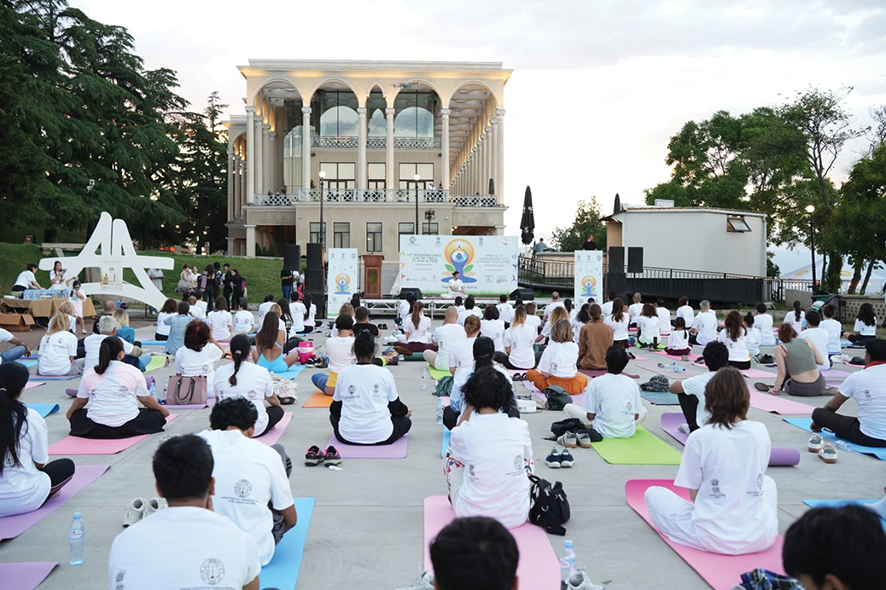
Over the years, we have organized Indian cultural festivals, including Holi and Diwali celebrations, International Yoga Day events, blood donation campaigns, and student and youth programs. We also implement cultural exchange projects within which Georgian actors, dancers and musicians travel to India, while Indian artists visit Georgia.
Our organization also actively supports Indian students living in Georgia by promoting their integration into local society and encouraging their participation in public and charitable activities.
I believe that culture, education and friendship between people are the strongest bridges connecting countries.
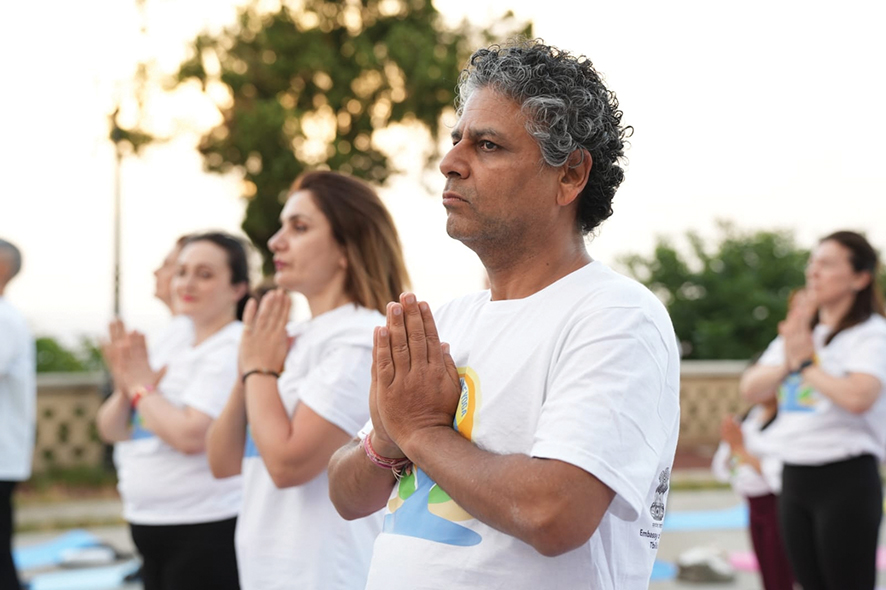
International Yoga Day has been celebrated in Georgia for nine years in cooperation with the Embassy of India. How did this initiative begin and what is its main goal?
At first, it was a small initiative. It grew significantly over the years, and now brings together thousands of people.
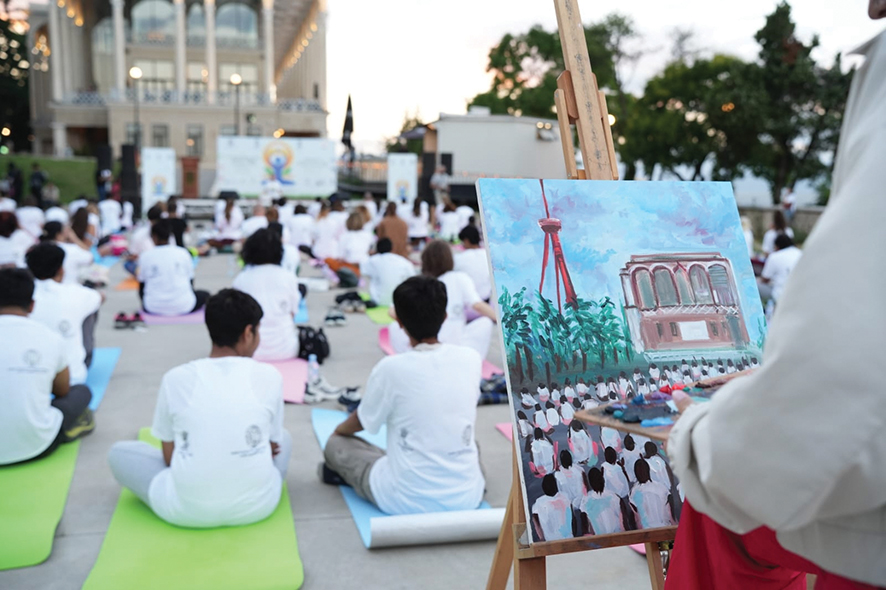
We organize events both in Tbilisi and in the regions. This year, we celebrated International Yoga Day in Tbilisi and Rustavi, and in the future we plan to hold events in Gori, Khashuri and Batumi as well.
For me, yoga is not just a physical exercise. It is ancient Indian knowledge that helps people achieve harmony between body, mind and soul.
The main goal of promoting yoga is to help people understand its deeper meaning; as a philosophy of life that combines health, inner peace, self-discipline and balance.
At the same time, yoga represents another cultural bridge between India and Georgia.
How has the attitude of Georgian society towards yoga and Indian culture changed over the years?
In recent years, attitudes have changed significantly. Previously, many people associated yoga only with physical exercise, but today more people understand its deeper meaning.
It is encouraging that interest in Indian culture, traditions and spiritual knowledge is growing, especially among young people. Our goal is to introduce people to yoga in its full meaning; as universal knowledge that can be embraced by people from any culture.
One of the notable projects was the Liberty Theater performance about Saint Ketevan. How did you become involved in this initiative and what does the history of Ketevan mean to you?
It was a great honor for me to participate in this project. I have been working to deepen cultural relations between India and Georgia for many years, and within this framework, I had the opportunity to become part of a choreographic performance dedicated to Saint Ketevan.
Saint Ketevan is a special figure for both Georgians and Indians. She represents faith, strength and devotion. Her holy relics were brought to India by Portuguese missionaries, creating a unique historical link between our countries.
I am especially proud that I also contributed to the process of returning those relics to Georgia. For me, this was not only a historical event, but also an opportunity to make a small contribution to strengthening the spiritual and cultural ties that have connected India and Georgia for centuries.
What achievement are you most proud of during these many years of activity?
I am most proud of the fact that we were able to create genuine connections between people.
It is especially important that, over the years, we brought Georgian theaters, folk ensembles and cultural groups to India, including the Rustaveli National Theater, Akhmeteli Theater, Liberty Theater, as well as groups from Poti, Zugdidi, Dmanisi and other cities.
In total, around 450 Georgians had the opportunity to visit India and experience the country firsthand.
The greatest joy was hearing their reactions. Many people told me that they had a completely different perception of India and did not expect to see such a diverse, modern and developed country.
It is this kind of personal experience that creates true friendship between nations.
After two decades, how have Georgia-India relations changed?
When I first came to Georgia, relations were mainly focused on the diplomatic level. Today, the situation is completely different.
Interest in each other’s culture, education, tourism and art has increased. More people in Georgia are familiar with Indian culture, while more people in India have learned about Georgia’s history, wine, culture and tourism potential.
For me, the most important aspect is people-to-people relations. When Georgian artists, students and professionals visit India, and Indians visit Georgia, genuine friendship is created: something stronger than official relations.
Indian students living in Georgia are often a topic of public discussion. What do you think is the most common misconception about this issue?
I think the biggest misunderstanding concerns the number of Indian students.
Around 30,000 Indian students study in Georgia, and some people fear demographic changes because of this. In reality, these young people come to Georgia primarily for education, and many return to India after completing their studies.
Moreover, they become unofficial ambassadors of Georgia in their own country. They take back with them the experience they gained here, the hospitality of the Georgian people, and the story of friendship between our countries.
I believe this is not a challenge, but an important opportunity for Georgia.
How do you see the main mission of your work, and what is your greatest wish?
My main goal has always been to build a strong bridge between India and Georgia.
I believe that true friendship between countries is created through culture, education and human connections. That is why bringing young people closer, encouraging cultural exchange and helping people better understand each other are especially important.
Georgia is no longer just a country for me: it is my home. Here, I have made friends, gained valuable experiences, and found an opportunity to make my small contribution to bringing two ancient cultures closer.
My wish is that India and Georgia continue to stand together in the future as friendly countries and as two ancient civilizations united by common values.
Interview by Lana Kokaia