Representatives of Georgian businesses, universities, and industry organizations visited Germany as part of a week-long study tour exploring some of Europe’s leading circular economy initiatives. Funded by the European Union and organized by ICLEI Europe and CENN, the visit focused on practical approaches to waste reduction, industrial symbiosis, sustainable construction, and resource-efficient business models in Berlin.
The tour aimed to give participants first-hand experience of Germany’s circular economy practices and explore how successful models could be adapted to Georgia. Germany has long been regarded as one of Europe’s leaders in recycling and resource management, while Berlin has positioned itself as a major hub for circular innovation through collaboration between businesses, researchers, local authorities, and civil society.
During the visit, participants met representatives of several organizations working at the forefront of circular economy development. These included Circular Berlin, a network that connects businesses, policymakers, researchers, and citizens to accelerate Berlin’s transition toward a circular economy. The organization describes its mission as helping make “the circular economy happen in Berlin” by fostering cooperation across sectors.
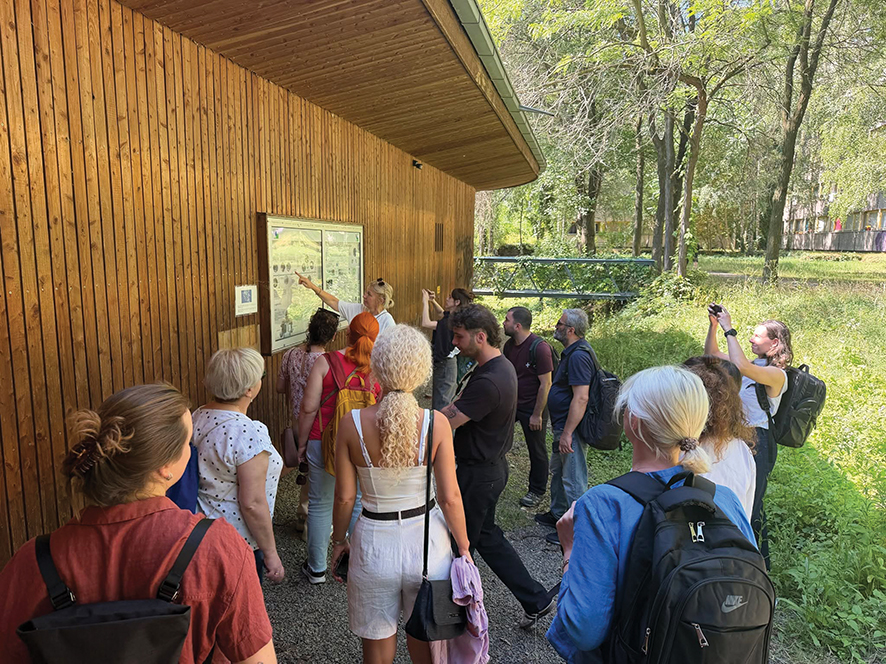
The delegation also visited Floating University Berlin, an award-winning experimental campus built inside a former rainwater retention basin at the site of Berlin’s Tempelhof Airport. The project combines education, research, ecology, and public engagement while demonstrating sustainable water management and circular approaches to urban development.
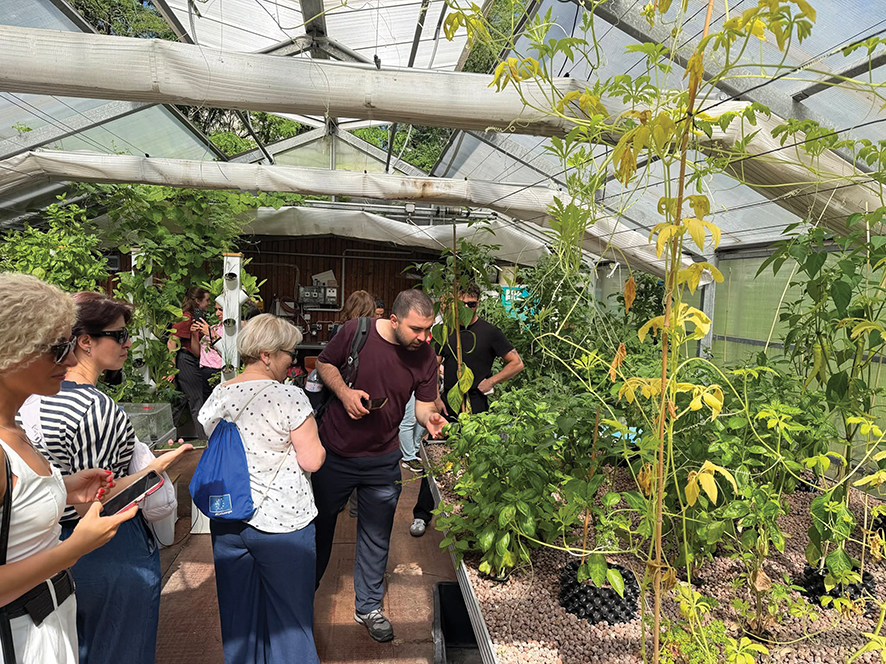
Another stop was the Roof Water-Farm, an applied research initiative showing how urban agriculture, wastewater treatment, and nutrient recovery can be integrated into a single system, reducing waste while producing food within cities.
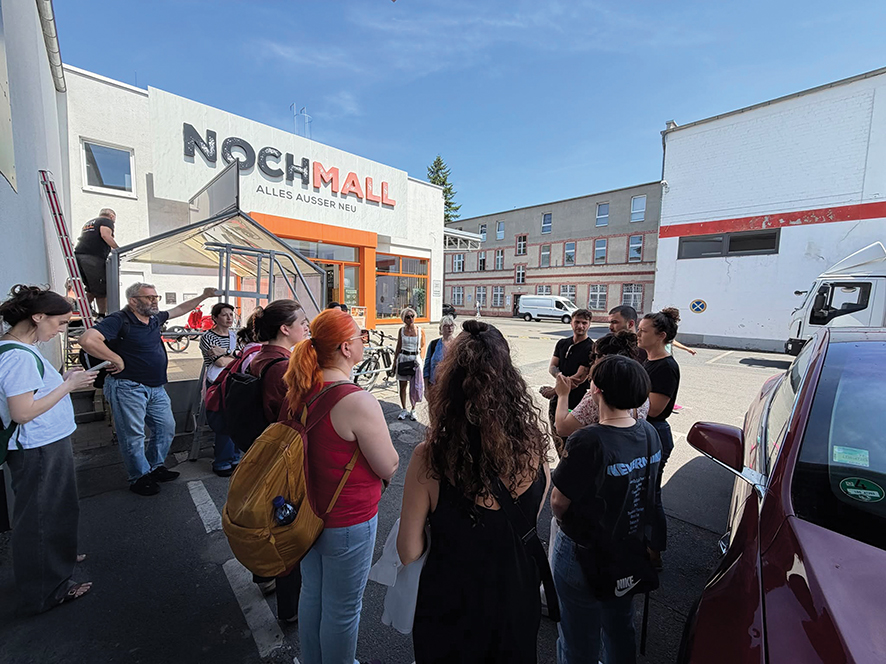
Participants also explored NochMall, Europe’s largest second-hand department store operated by Berlin’s municipal waste management company. Beyond selling pre-owned goods, NochMall serves as a public education center promoting repair, reuse, and waste prevention through workshops and community events.
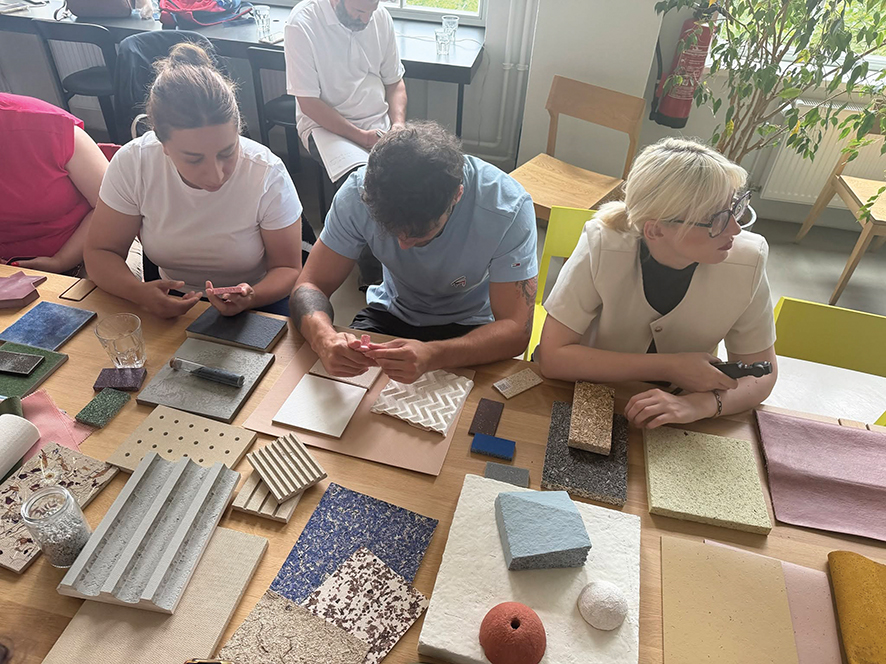
Other visits included Materialista, which supports designers and architects in selecting environmentally responsible materials; Bauhaus Reuse, which demonstrates how reclaimed construction materials can be incorporated into new building projects; and Concular, whose digital platform enables construction companies to recover and reuse building materials instead of sending them to landfill.
The Georgian delegation also met representatives of Sykell, which develops reusable transport packaging systems to replace single-use packaging in industrial supply chains, and Kantine Zukunft, a publicly funded initiative helping restaurants and institutional kitchens reduce food waste, increase the use of seasonal local ingredients, and lower their environmental footprint.
According to the European Commission, the circular economy is a cornerstone of the European Green Deal and aims to keep products, materials, and resources in use for as long as possible while minimizing waste. The Commission says the approach helps reduce greenhouse gas emissions, strengthen economic resilience, and decrease dependence on imported raw materials.
The study tour brought together members of Georgia’s Industrial Symbiosis Network and Circular Economy Dialogue Platform, both established through the “Circular Cities and Regions in Georgia” project. Participants represented businesses and institutions including Madlin, LTD Udabno, the Packaging Cluster of Georgia, Doctor’s Bio-cellar, the Georgian Farmers’ Association, Melaanian Tea, Carrefour Hypermarket, Batumi Shota Rustaveli State University, and Black Sea College.
Organizers say the experience will help participants develop new partnerships and practical solutions for resource sharing, waste reduction, and industrial cooperation in Georgia. The knowledge gained during the visit is expected to contribute to the further development of Georgia’s Industrial Symbiosis Platform and support the wider adoption of circular economy principles across the country.
The study tour formed part of the EU-funded “Circular Cities and Regions in Georgia” project, implemented by CENN in partnership with ICLEI Europe. The initiative supports Georgia’s transition toward a more resource-efficient economy by promoting sustainable production, responsible consumption, and stronger cooperation between businesses, municipalities, and academic institutions.
Source: Circular Economy