Many would say that Georgian-American business, military, cultural, economic, political, and scientific intercourse has somewhat waned lately. Historically speaking, are there any valued relations between the country of Georgia and the United States of America that are worth writing and talking about? The question seems relevant to both nations because it is not merely a matter of curiosity, but of mutual recognition and appreciation. Plus, are there any bad memories that ought to be taken into consideration? And finally, what are the prospects for these relations, if any?
Yes, our interactive dealings seem to be more profound and healthier than the current tensions between our governments. Suffice it to mention that Georgian horsemen were notable participants in the Wild West Shows of the 1890s and later featured in circuses and other successful attractions during the first half of the twentieth century. It probably took us many years of diplomacy and mutual understanding to shape a certain strategic cooperation, including both its achievements and its disappointments.
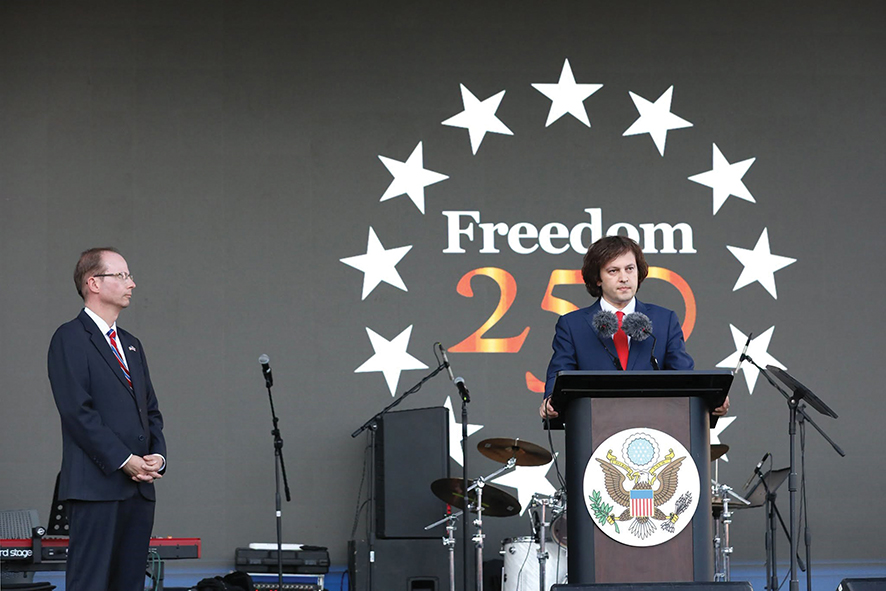
Well, let us give our journalistic credit where credit is due and say, without beating around the bush, that America has never ceased to be one of the strongest supporters of Sakartvelo’s sovereignty, territorial integrity, democratic development, market economy, rule of law, and integration with Western institutions. By the way, one particular historical fact deserves mention here. The United States never regarded the Soviet annexation of Georgia in 1921 as fair or lawful. Moreover, the United States adamantly refused to recognize the independence of Abkhazia and South Ossetia. This position enjoyed bipartisan support in Congress.
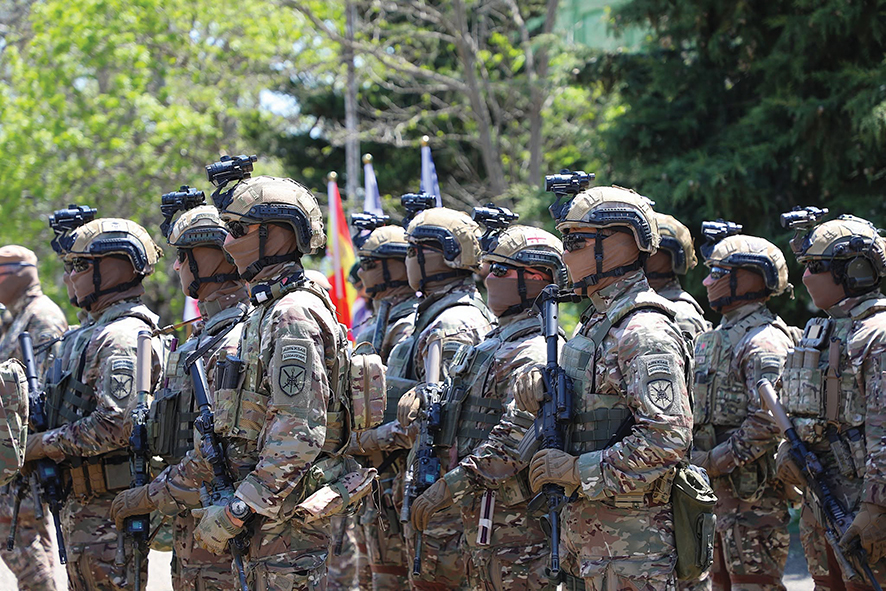
Reciprocally, Sakartvelo contributed as much as it could to international military missions led by the United States. The entire world knows that Georgia’s Defense and Deterrence Enhancement Initiative has significantly improved the capabilities of the Georgian armed forces, and it is not surprising that American servicemen have usually spoken highly of Georgian soldiers. Let us call these great facts the backbone of Georgian-American bilateral relations!
Concerning economic contacts, they gradually expanded over the years, although the volume of trade left much to be desired. The two countries cooperated closely in such fields as agriculture, energy, banking, information technology, logistics, tourism, education, and entrepreneurship. America invested hundreds of millions of dollars in Georgia after independence, and the effect was considerable in terms of modernizing infrastructure, reforming customs, strengthening financial institutions, improving public administration, and developing private enterprise.
One of the most vivid and viable aspects of Georgian-American collaboration was education. Thousands of Georgians have studied in the United States through various well-known programs, giving the country highly qualified scientists, economists, lawyers, diplomats, and entrepreneurs. Research cooperation has also increased in medicine, biology, archaeology, environmental science, and technology.
The realm of culture has been no less important. For instance, in 1990 an American director, Greg Palmer, made a romantic adventure children’s film, the first-ever co-production between American and Georgian filmmakers. It featured three American and three Georgian actors, one of whom was the writer of this article. The film was a real success in both countries.
But the Georgian-American cultural saga does not end there. Americans discovered and tasted Georgian wine and enjoyed our national polyphonic singing, traditional dance, famous indigenous cuisine, mountain culture, and medieval churches. Notably, this cultural process was mutually beneficial. Americans influenced the Georgian people, especially the young, through music, cinema, and literature, all symbols of innovation, opportunity, and individual freedom. Georgia possesses one of the world’s oldest continuous wine traditions, and the popularity of qvevri wines has grown considerably in American specialty markets.
Interestingly enough, archaeologists from both countries have collaborated on numerous excavations, making it very clear that the relationship extends well beyond politics.
Regrettably, sports interaction has not been particularly active, although several Georgian athletes have played professionally in American leagues or trained in the United States.
Perhaps the most enduring relationship is the one between ordinary citizens. The strongest example is the work of Friendship Force International, a long-standing American non-governmental organization that successfully launched and operated the Journalist Exchange Program between the two nations. The author of these words is a living witness to its success, having served as the exchange journalist on Georgia’s side.
On top of that, there are many Georgian communities living and working in numerous American cities. Let us not forget American teachers living in Georgia, Peace Corps volunteers, missionaries, business professionals, students, tourists, and, most importantly, mixed Georgian-American families. Delightfully, friendships built over decades usually survive the vagaries between governments.
Just as meaningful have been American humanitarian aid after conflicts, healthcare initiatives, COVID-era assistance, disaster relief, and agricultural development.
It is no news that every coin has a flip side. Disappointments may occur in any relationship. Many Georgians hoped for stronger American intervention during the Russo-Georgian War. The United States offered diplomatic support, humanitarian assistance, and military aid only after the war. Frankly, some of us felt a little abandoned. On the other hand, it was believed that direct military intervention would have triggered a much larger international conflict. For quite a while, this sounded frustrating to us. Not now, though!
Georgians have also heard many critical comments from Americans concerning democracy, including judicial independence, elections, media freedom, and political polarization. This was welcomed by some of us, while others saw it as excessive interference in domestic affairs.
In recent years, relations between Sakartvelo and America have noticeably cooled. Disagreements have persisted over democratic reforms, foreign influence, legislation, sanctions policy, the war in Ukraine, strategic orientation, and public rhetoric.

To cut a long story short, trust has weakened on both sides. One reason is the American tendency to underestimate Georgia’s ancient civilization, its strategic geography, its military contributions, and the complexity of its neighborhood. Georgians, meanwhile, sometimes tend to overestimate what America can actually do against Russia on Georgia’s behalf and how much attention the United States can devote to a small country amid global priorities. The good news is that we have not given up on the relationship completely. Hopefully, there is still a chance to improve those expectations.
Whatever we say, the two countries matter a great deal to each other. Sakartvelo is strategically located between Europe and Asia. It is a corridor for energy transportation. Notwithstanding the nonstop criticism, we remain a democratic partner in a difficult region. We are contributors to international security and a country with a certain degree of influence in the Black Sea and Caucasus. We are much more than a small country on the map.
On the other hand, America has been a security partner for Georgia, an investor, a source of educational opportunity, a supporter of democratic institutions, and an advocate of Georgian sovereignty in international organizations.
Now, if we want to converse about the future, it will largely depend on political choices in both capitals. The main obstacle seems to be political mistrust and concerns over democratic governance. The current feeling is that government-to-government relations may fluctuate even further, temporarily weakening “business as usual,” but this could very well be compensated for by people-to-people exchanges.
Shared aspirations are what matter most.
Shall we go back to the magic power of Friendship Force International?
I would!
Blog by Nugzar B. Ruhadze