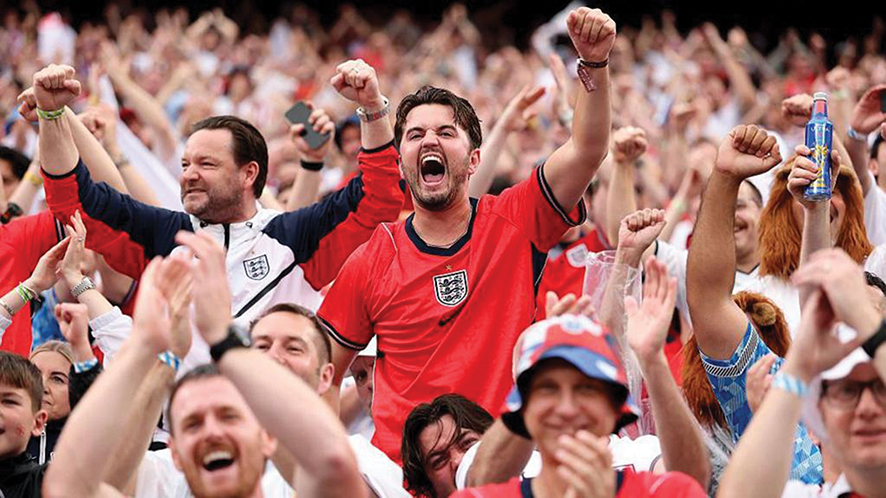
Why does football stupefy the world so extensively and overwhelmingly? Why are we so terribly emotional about a simple ball rolling on the field? People are going crazy watching it. They are literally dying for their teams. Could this be about trivial national pride? If yes, then globalization does not make any sense. People love only their national identity, not common world ideals. Could this be true?
The following is my humble attempt at an affordable psychological, social, economic, and political analysis of this universal sporting phenomenon. Let us try together to understand why contemporary humans spend so much time, energy, nerve, and money on football (soccer). Maybe this is the reason why thousands of soccer moms are so keen on making their kids the stars of this unusually popular sport.
The world is simply running amok, rooting for it. Why does soccer have so much weight in our local, national, and international life? It sounds as though the whole thing is about human nature.
Right before writing this piece, I asked numerous questions and got answers from experts, fans, and those who do not really care. What I heard is basically what I had always thought but never spoke about.
Avidly watching the 2026 Mundial, at this time on every TV screen in the world 24/7, I am coming to believe that, in the last couple of decades, football has turned into a huge ceremonial event that the peoples of the world are willing to share with each other. About five billion people follow it to a certain degree. No large-scale religious or political event is comparable to it.
Is this because the game is inherently and fundamentally more attractive than other sports? Probably not! It may simply be an accident that football has acquired the image of a source of the deepest human emotionalism, needed for self-expression and physiological satisfaction. It has just developed that way!
Psychologically speaking, football triggers a clear sense of belonging. There is us and there is them. Watching the game, my team turns into my true family. Is it not amazing that the victory of my team might feel very personal even if I have contributed nothing to it?
One of the most salient features of our time is that it is weakening many traditional identities, such as religion, family, and community, considering them outdated, whereas football exudes enough power to strengthen those perpetual identities. I am Georgia. I am England. I am Brazil. This kind of identity stays with us for good, creating certainty within us.
How about the perennially dwindling meaning of life? Our everyday routine is so noxious that it renders us terribly nauseous of it: bills, commuting, repetitive work, a stupid boss, and the necessity of putting up with him or her. Against this obnoxious background, football invigorates us, filling our bodies with additional pep and our minds with new stories, giving us new heroes and new triumphs. Villains and defeats too, but that is fairly tolerable. We are, at least, escaping the boring routine that is slowly but surely killing us.
For instance, when my team scores, I feel the simultaneous assault of dopamine, adrenaline, an increased heart rate, cortisol, endorphins, and what not. It feels perfectly all right in terms of my neurology.
I am trying not to miss a more or less important game of the ongoing World Championship, and what impresses me most is the number of tears shed in the stadiums, whether from the chagrin of defeat or the joy of victory. Yes, both the athletes and their fans are weeping sincere tears. Why are they crying? Because the goal is not simply a scored goal. In every single case, it is the culmination of years of patience, expectation, preparation, and investment. That is why!
Socially, football produces unusually strong feelings of unity. During those two strained hours of the match, we, the crowd of fans, are together with people we had never met before and will never see again, hugging and kissing them like our closest friends and family.
From the religious point of view, a comparison between faith and football might sound quite relevant. Instead of holy places and pilgrimages, there are stadiums and away matches. In place of ritual clothing and sacred songs, there are jerseys and chants. Club legends replace martyrs, club stories replace religious sagas, historic victories replace traditional triumphs, and never missing a home match resembles the devotion of never missing a Sunday at church. Would not all this be as true as the gospel?
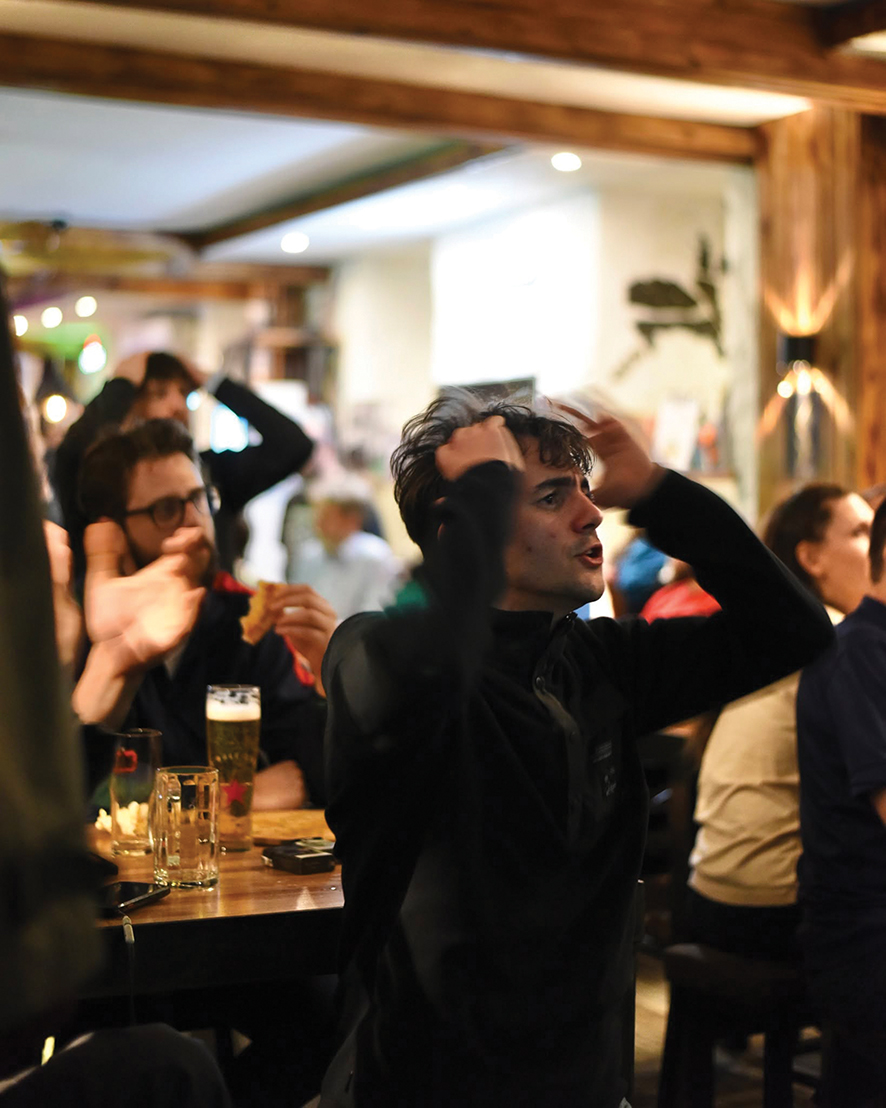
Not to forget, football matches have a proclivity to create national unity, at least temporarily, which may become a huge help to politically divided countries. All of us watch together. All of us celebrate or mourn together. A big deal!
I was told the universal football obsession does not contradict the process of globalization, but I would still insist that it might appear as a divider between nations. I noticed this clearly while watching the game between Brazil and Japan. One of the Japanese fans was ready to eliminate any symbol of the Brazilian flag. I can swear upon my remaining life that there is not even a vestige of whimsical witticism in this painful observation!
Finally, economics! The global football economy is worth hundreds of billions of dollars annually. Businesses invest enormous sums because billions of people watch the game, and there are television rights, advertising, merchandise, betting, tourism, hospitality, stadium tickets, video games, youth academies, and sports media. Wow!
By the way, why do parents invest so much? The expectation of extraordinary success, equal to a chance to go from rags to riches. Is that not a good enough reason for the mentioned parental infatuation? Yes, it is. Football has the biggest audience of all entertainment events.
Politics? Oh, yes. Leaders frequently associate themselves with successful teams. Football sometimes stops wars, but it also fuels conflict.
Football, being such a big deal, is also very simple: a ball and a field. That simplicity has helped it spread worldwide.
The impression is that the world is running berserk, practicing or following football, but this is only an impression. In fact, football makes the world a much, much better and safer place to live. This good thought stands firmly on the human need and desire to belong, to compete, and to celebrate together.
Could there be anything more positive and exciting?
Blog by Nugzar B. Ruhadze