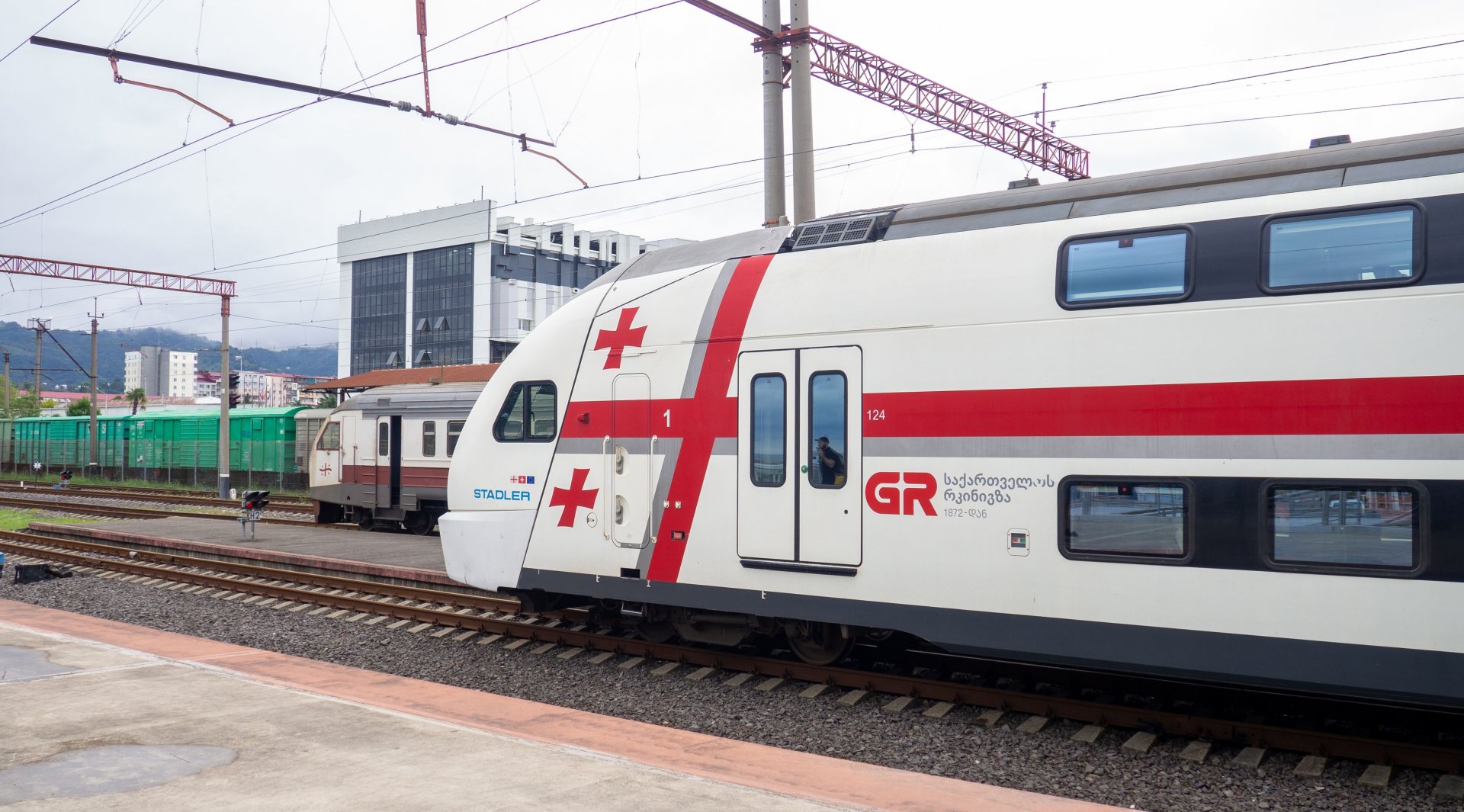
The Asian Development Bank (ADB) has launched an international tender to select a consulting firm to prepare a feasibility study for a regional rail system linking Tbilisi with Rustavi, Mtskheta and the future Airport City.
The study is part of the ADB-financed Liveable Cities Investment Program (LCIP). The consulting contract is estimated at $393,000, including $333,000 for consulting services and project-related expenses, plus a provisional sum of $60,000.
The selected consultant will assess the technical, economic, financial, environmental and social feasibility of the proposed rail network, which would connect Tbilisi with Mtskheta, Rustavi, Marneuli, Tbilisi International Airport and the capital’s eastern districts using Georgian Railway’s existing infrastructure.
The study will identify the most suitable development options for railway corridors serving Rustavi, Mtskheta, Marneuli, Lilo and Ponichala. While the project focuses primarily on upgrading the existing rail network, it may also consider constructing new sections or bypass lines where necessary.
Under the tender requirements, the consultant must prepare passenger demand forecasts for 10-, 20- and 30-year periods, assess the potential shift from private vehicles to rail transport, recommend station locations, determine rolling stock and depot requirements, and evaluate different fare models.
The study will also include an environmental impact assessment, climate risk analysis, social impact assessment, engineering design, and economic and financial evaluations. It will calculate investment and operating costs, conduct a cost-benefit analysis, determine the project’s Economic Internal Rate of Return (EIRR), and assess its long-term financial sustainability.
ADB says public transport’s share of trips in Tbilisi increased from 39% to 48% between 2016 and 2025. During the same period, the number of registered vehicles rose from 540,000 to 880,000, contributing to heavier traffic congestion, worsening air pollution and higher greenhouse gas emissions.
The bank also notes that Tbilisi’s population grew by around 224,000 people, reaching 1.37 million between 2016 and 2026. Population growth in neighboring Rustavi and Mtskheta has also increased pressure on the main roads connecting the cities with the capital.
The winning consulting firm will have eight months to complete the feasibility study. The final report is expected to provide an investment package suitable for international financial institutions and serve as the basis for potential financing and implementation of the proposed regional rail system.
Consulting firms have until July 13 to submit proposals.