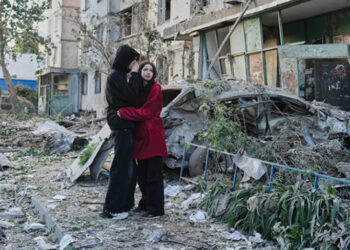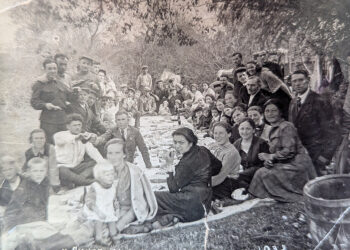
No, this is not about Leo Tolstoy’s famous masterpiece, nor is it about other extraordinary opuses on social commotions and the brutality of war, such as Doctor Zhivago by Pasternak, Les Misérables by Victor Hugo, or Gone with the Wind by Margaret Mitchell. This is about one of the most important questions we might ask ourselves: Why can’t humanity do without wars?
Especially in our glorious time of unprecedented elevation of human reason and mindfulness, unbelievable modern technological advancement, and the present uncanny smallness of the world, violence and feuds seem irrelevant. Thinking in earnest that war is not inevitable, we could certainly do without killing each other if some influential and commanding forces did not push societies toward struggle, competing for natural resources and power, motivated politically, trying to acquire something more valuable than they already have, obsessed with fear and insecurity, blinded by ideology, steeped in religious belief, seeking identity, moved by emotions like anger, revenge, and pride, and suffering from misunderstandings and miscalculations.
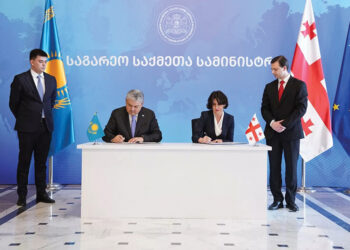
What are international institutions like the United Nations doing? Why is the sense of economic interdependence no longer working? Are education and diplomacy no longer functional among the peoples of the world? What makes conflict stronger and more relevant than cooperation? Could it be assumed that, for us humans, war is a biological necessity? Hardly! We are far more likely to need food, water, shelter, social connection, and cooperation to survive than war.
Maybe this is exactly the thought and attitude that currently dominate in Sakartvelo, with people tending to spend most of their time at restaurants, entertainment venues, shopping centers, and fashion shows, cruising around in luxury cars and riding their high-tech bikes, noiselessly taking for granted the skyrocketing prices and enjoying frequent flights to various pleasant destinations around the globe. On the other hand, peaceful life is appreciated only until the moment fighter jets hover over our heads and drone-carried explosives destroy our homes. It is definitely easier to listen to bothersome political polemics and foreign-made reprimands concerning our deviations from the Western course than to scurry fearfully to bomb shelters and heartbreakingly send our kids to terrifying front lines, never to see them again.
Nobody says that human societies can completely eliminate war, but nothing should stand in our way of minimizing its risk and likelihood. Meanwhile, the contrary is happening: one war has not ended before another breaks out, and often not even for a good reason one can think of. What’s wrong with us, folks? Why can’t we coexist peacefully and enjoy life as kindly and reasonably as it is granted to us by the Creator?
Some scholars say that conflict is deeply rooted in human nature, whereas others argue that it has nothing to do with what human character represents in general. The crux of the matter is that we have not yet been able to create political systems, economic conditions, social institutions, and leaders whose decisions ensure that disputes among nations do not become violent.
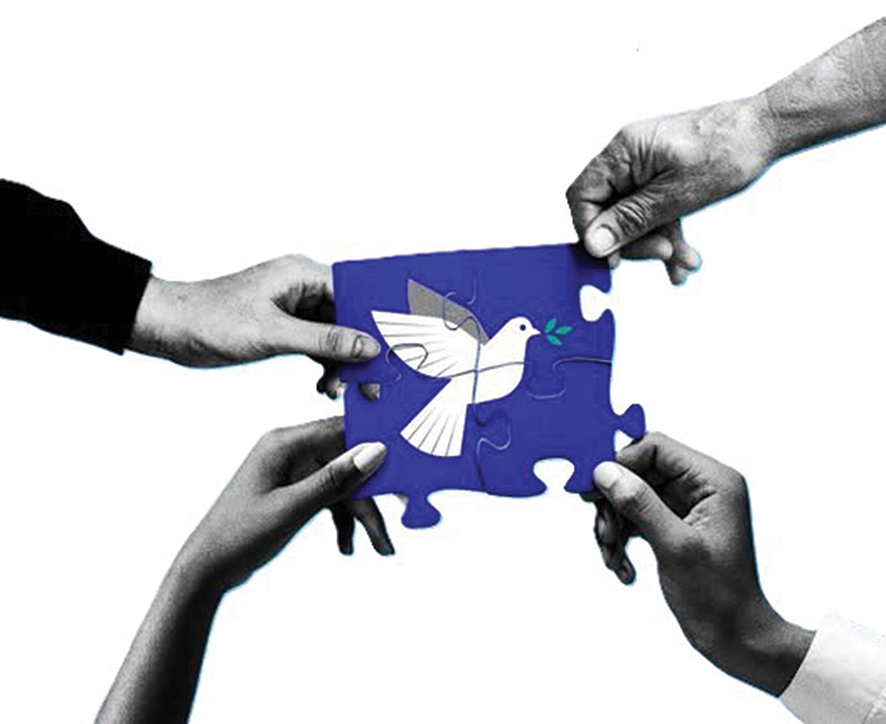
It is an egregious modern paradox that we wage ruthless wars while at the same time creating peaceful and cooperative alliances, carrying out charitable works for the benefit of those who need help, and forging social, economic, and political structures based on internationally accepted rules and regulations designed to make life balanced and pleasurable on Earth.
So, where is the logic?
Answering this painful question, here is where we probably stand at this point in time: we humans could absolutely live without war and, in principle, the entire human civilization could do without it, today’s Georgia being a vivid example of this concept, but we have not yet learned how to eliminate the potential for war on this planet once and for all.
Shall we ever learn?
The realists say no, and the dreamers say yes. Personally, I am not sure which group I belong to.
How about you?
Op-Ed by Nugzar B. Ruhadze