Ukraine carried out a series of drone strikes targeting Russian oil infrastructure overnight into Saturday, just hours after the United States granted Moscow another waiver allowing the sale of sanctioned oil.
Ukraine’s drone forces commander, Robert “Madyar” Brovdi, says the strikes hit several strategic energy sites, including the Novokuybyshevsk and Syzran oil refineries in Russia’s Samara region, the Tikhoretsk oil terminal in Krasnodar, the Baltic Sea port of Vysotsk in the Leningrad region, and an oil depot in Sevastopol, located in Russian-occupied Crimea.
While Russia’s Ministry of Defense did not confirm the attacks, it reported that air defense systems intercepted 258 Ukrainian drones overnight. However, regional officials acknowledged incidents affecting energy infrastructure.
Samara region governor Vyacheslav Fedorishchev stated that “strikes have been recorded” on what he described as industrial facilities, adding that emergency services were deployed at the scene. In Krasnodar, authorities confirmed a fire at an oil depot in Tikhoretsk, with over 200 personnel and dozens of equipment units involved in firefighting efforts. Meanwhile, Leningrad region governor Aleksandr Drozdenko reported that a drone attack caused a fire at the port of Vysotsk, which was later extinguished.
Ukrainian officials framed the strikes as a direct response to Washington’s decision to renew a sanctions waiver permitting the shipment and sale of Russian seaborne crude oil until May 16. Brovdi criticized the move, accusing the United States of “cynicism” and warning that such decisions come at the cost of “Ukrainian lives.”
The US Treasury issued the waiver on Friday, citing the need to stabilize global oil markets amid rising pressure linked to ongoing geopolitical tensions, including the war involving Iran. A Treasury spokesperson stated that ensuring oil supply remains critical “as negotiations accelerate.”
The decision marks the second such waiver by the current US administration. A previous exemption expired on April 11, and Treasury Secretary Scott Bessent had recently indicated it would not be renewed. The reversal has drawn attention amid ongoing Western sanctions aimed at limiting Russia’s ability to finance its war in Ukraine through energy exports.
Russian President Vladimir Putin’s special envoy, Kirill Dmitriev, said the extended waiver could apply to approximately 100 million barrels of oil, in addition to volumes covered under the previous license. International Energy Agency says Russia’s energy revenues nearly doubled in March, reaching $19 billion compared to $9.75 billion in February — a rise attributed to both higher oil prices and continued export flexibility.
The latest developments highlight the complex balance between geopolitical strategy, energy markets, and the ongoing war, as both military actions and economic decisions continue to shape the trajectory of the conflict.
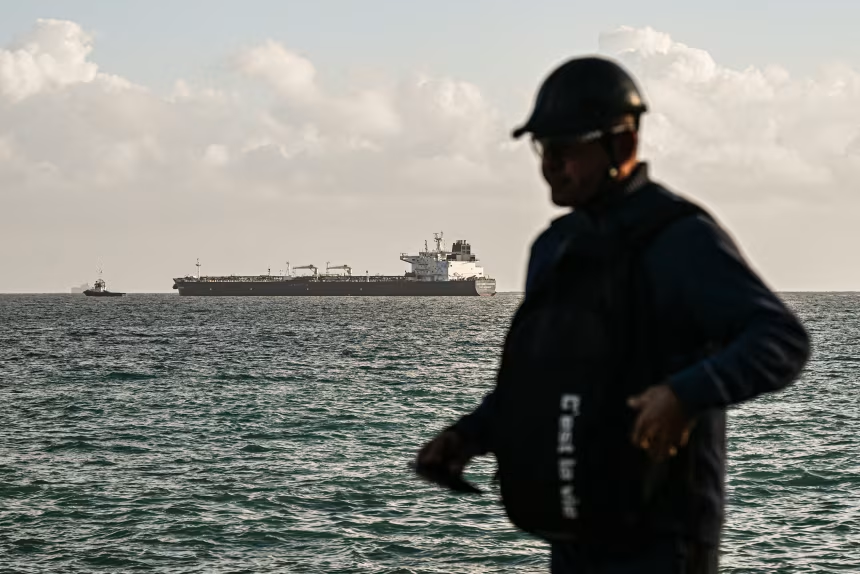
Header image: A tugboat guides a Russian oil tanker at a terminal in northwestern Cuba on March 31, 2026.