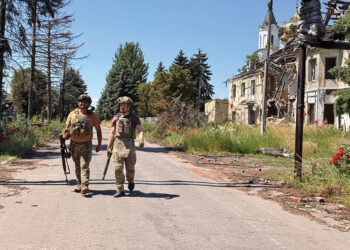
This week’s fighting in Ukraine was marked not by dramatic breakthroughs, but by grinding advances across multiple fronts. Russia has renewed its focus on Ukraine’s energy infrastructure as winter approaches, and there are fresh signs that diplomatic efforts toward even a temporary pause have all but stalled.
Kyiv reported steady tactical successes in key areas, though independent analysts and open-source maps confirm that Moscow continues to slowly expand the territory it holds. This steady progression is shaping both Ukraine’s military decisions and how Western allies plan to replenish Ukrainian defenses.
Ukrainian commanders described heavy fighting in Donetsk and surrounding areas, where their forces are working to slow Russian advances and inflict costs on attacking units. President Zelensky and military officials pointed to significant Russian losses near Pokrovsk and Dobropillia—areas repeatedly identified as intense battlegrounds—though the situation remains fluid and costly for both sides. These reports align with continued fighting around Kupiansk, Lyman, and contested zones in Zaporizhzhia.
At the operational level, observers tracking the war note that Russian forces have kept up localized offensives, gaining ground bit by bit over the past month. One monitoring group described the past four weeks as showing a measurable uptick in Russian-held territory—a worrying sign for Kyiv, as this kind of attrition tends to benefit Moscow over time.
The battlefield map is shifting in small, incremental pieces rather than sweeping moves. Both sides report daily gains and losses of villages and forward positions. Russia claims new footholds in Zaporizhzhia and Donetsk, while Ukraine highlights its efforts to disrupt Russian logistics and cause heavy casualties. U.S.-based analysts noted the heaviest Russian casualties this week occurred in the Pokrovsk, Kupiansk, and Lyman sectors—areas where control over small terrain features can affect supply lines and firepower.
In his nightly video address, President Zelensky said: “We are inflicting frontline losses on Russian troops in Donetsk,” citing operations near Dobropillia. He acknowledged “intense fighting … difficult conditions” in areas like Kupiansk and parts of Zaporizhzhia. He also described conditions near Novopavlivka as “difficult,” adding that “our active defensive actions there are showing good results.”
A major development this week was the renewed Russian campaign against Ukraine’s energy and industrial infrastructure. Overnight strikes severely damaged a thermal power plant and took out transmission lines serving regions far from the front—an escalation that heightens humanitarian risks as cold weather sets in.
A Russian drone attack on Odesa injured five people and damaged both port and energy facilities, according to the regional governor. The strike knocked out power for 30,000 people and set containers of vegetable oil and wood pellets on fire.
Ukrainian energy providers and local officials said these strikes target more than just military assets—they aim to break civilian resilience and strain Ukraine’s war economy. The power plant strike injured several workers and prompted authorities to open warming centers and emergency shelters in the affected areas.
Alongside damage to infrastructure, the human toll continues to mount. Throughout the week, missile and drone strikes on populated areas caused deaths and injuries. Emergency workers dug through rubble, treated the wounded, and helped displaced families. Ongoing power and water outages are making it harder to deliver aid and provide basic services along the front lines.
Ukraine is continuing to invest in long-range strike systems, counter-drone tools, and air defense to blunt incoming missile barrages and drone swarms. Russia, meanwhile, is deploying large-scale drone attacks and precision strikes to test Ukrainian defenses.
Still, this week showed that neither side has a decisive weapon to bring the war to a close. The focus is shifting toward endurance—restocking ammunition, fixing damaged gear, keeping supply lines open, and maintaining infrastructure under pressure. Industrial capacity, foreign support, and resilience are becoming as important as firepower.
Diplomatically, momentum has faded. What once seemed like a possible path to talks has now grown cold. Russian diplomats said this week that the “impetus” for peace following the U.S.–Russia summit has largely disappeared, dampening hopes in some Western capitals. Kyiv continues to insist it won’t accept any deal that locks in territorial losses, while Moscow appears to see military leverage as its best bargaining chip.
Russian Deputy Foreign Minister Sergei Ryabkov put it bluntly: “The impetus for peace in Ukraine after [the Putin–Trump] summit has been exhausted.”
He also pointed fingers at Europe: “This is the result of destructive activities, primarily by the Europeans.”
European Commission President Ursula von der Leyen responded strongly during a speech to the European Parliament: “This is not random harassment. It is a coherent and escalating campaign to unsettle our citizens, test our resolve, divide our Union, and weaken our support for Ukraine. And it is time to call it by its name. This is hybrid warfare.”
She urged European nations to go beyond traditional military responses.
Even as talks stall, Western and European support for Kyiv continues. Ukraine approved the reallocation of more EU funds toward defense, aiming to speed up military procurement and bolster logistics as the fighting intensifies. Brussels and its member states are also keeping up macro-financial aid, helping Ukraine sustain governance and public services despite enormous pressure.
On the battlefield, allied support remains crucial. From ammunition and air-defense modules to longer-range weapons funded through joint mechanisms, these transfers are central to Ukraine’s ability to counter Russian advances. The U.S. and NATO partners are using a combination of direct aid, pooled funds, and stockpile replenishment to keep weapons flowing—an approach likely to continue as the war grinds on.
Historically, Ukraine’s role as a gas transit hub to Europe gave it some protection—providing about 5% of the EU’s gas in 2024 and bringing in much-needed revenue. That arrangement offered a degree of deterrence against attacks on its energy grid. But since the transit deal expired on January 1, 2025, those safeguards have faded.
Now, Ukraine relies on domestic production (around 19 bcm last year) and imports via connections with Hungary, Poland, and Slovakia. It’s also tapping into Balkan pipelines and receiving limited LNG shipments through Greece and Croatia. But continued strikes on power and gas infrastructure risk worsening civilian hardship and may increase political pressure on Ukraine’s allies to step up—not just with weapons, but with emergency energy and rebuilding assistance.
If Russia keeps making slow territorial gains, Ukraine faces tougher choices: where to send reserves, when to launch risky counterattacks, and how to minimize losses while holding the line.
Compiled by Ana Dumbadze