
Did you know that Georgia once had its very own Luxemburg? Before receiving its Soviet-era name in 1921, this prosperous settlement was known as Katharinenfeld. It was founded in 1818 by Swabian colonists, and from 1941 onward, the location became known as Bolnisi. In total, there were 23 German settlements across the South Caucasus.
Secrets of the Swabian Masters
Our interlocutor, Bolnisi native Natela Grigolia, never ceases to marvel at how the Germans built their timber-framed houses, which have effortlessly withstood two centuries and remain beautifully preserved. The technologies utilized by the colonists were far ahead of their time. Abundant oak forests grew around Katharinenfeld back then, providing the massive timber beams needed for the framing.
“They mixed oats, hay, clay, and calcite, deposits of which are found right near Bolnisi,” Natela explains.
“When we tore down an old partition wall in a room, we saw it with our own eyes. The wall thickness in these houses can reach up to one meter!”
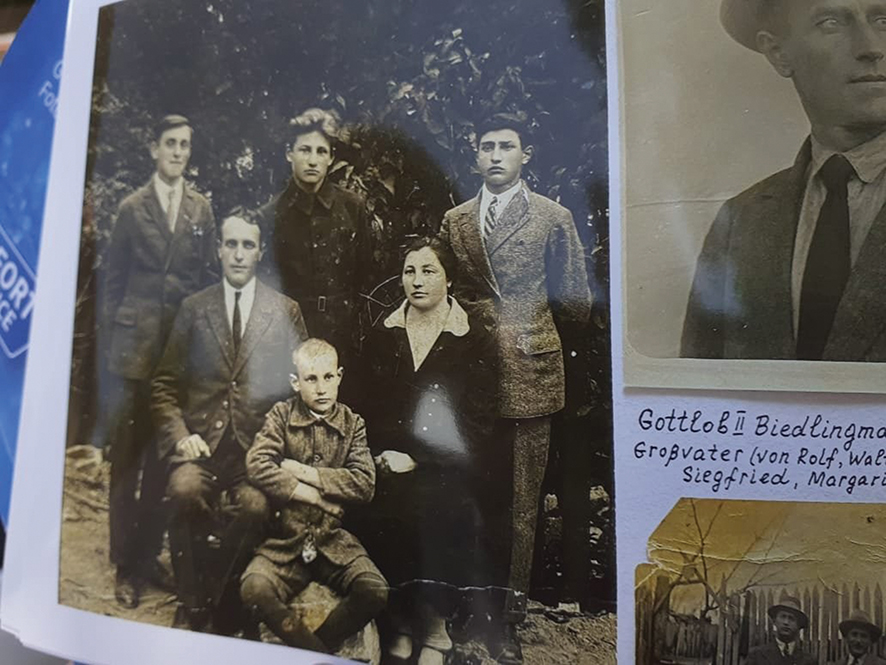
Natela carefully brings out vintage family photographs that capture both festive holidays and everyday labor in Luxemburg, alongside trips her mother took around Georgia with her classmates. In these snapshots, her mother and uncle are the only Georgians in a large company of Germans. One photo features handsome young men: one in a traditional papakha fur hat, another in a peaked cap, and a third in a brimmed hat.
“That is my grandfather Elizbar and his brothers,” Natela explains.
Her grandfather’s family hailed from Kakheti. Their lineage, the Princes Vakhvakhishvili, owned ancestral lands in Telavi. An ancient family coat of arms dating back to the reign of the last Georgian king, Erekle II, has been preserved in Natela’s archive: a scroll surmounted by a crown, flanked by two heraldic lions.
Following the arrival of the Bolsheviks, five of her grandfather’s brothers were executed, while he himself, a graduate of Kharkiv University, was dispatched to work as an economist in Georgia’s Luxemburg. Thus, Elizbar and his wife, Alexandra Zurabashvili, not only escaped political repression, but seamlessly integrated into the life of the German community, which until then had been quite insulated from outsiders.
Spring Water that Turned the Region into Paradise
From her mother, Natela inherited a boundless respect for the German people: “It is a very resilient and incredibly industrious nation! Every single one of them is like that, without exception. Even in exile, out in the harsh Kazakh steppes, they managed to pick themselves up and stand on their feet once more.”
Prior to the arrival of the Swabians, water was an immense problem in these parts, leaving fertile lands barren and dry. According to Natela’s accounts, it was the German settlers who piped water from a spring in a nearby mountain directly into the settlement. They dug small aryks (irrigation ditches) to carry utility water through every single courtyard. It was used for watering vegetable gardens and scrubbing floors.
“Yet the water in these channels was so clean that you could even wash clothes in it! I remember perfectly how we, as children, would play and splash around in those streams.”
The injustice committed against the German residents of Georgia’s Luxemburg still echoes with pain in the elderly woman’s heart: “To deport these people because of Hitler was a massive sin. After all, it was the Germans who turned this arid region into a blossoming paradise!”
Recalling her mother’s stories, Natela speaks with bitterness about what transpired in the village immediately following the deportation: “When they were taken away, people from neighboring villages came to plunder the deserted homes. My mother just walked the streets and wept, because the houses of all her friends fell silent in a single instant.”
Shortly thereafter, new residents were resettled in Katharinenfeld. They were predominantly impoverished, land-poor peasants brought from Western Georgia: Samegrelo, Imereti, Racha, and Svaneti.
“It was incredibly difficult for them: it was a fierce winter, and because they did not know how to operate the local heating systems, they lit bonfires right on the floor in the middle of the rooms. They, too, were destitute, exhausted people. Look, in my house, the floors are still scorched in several places,” Natela sighs.
Over time, the new owners remodeled or expanded the homes to suit their own needs, making it difficult today to discern the original German Fachwerk features in many of Bolnisi’s buildings.
Asureti: A Rachan Village on a German Foundation
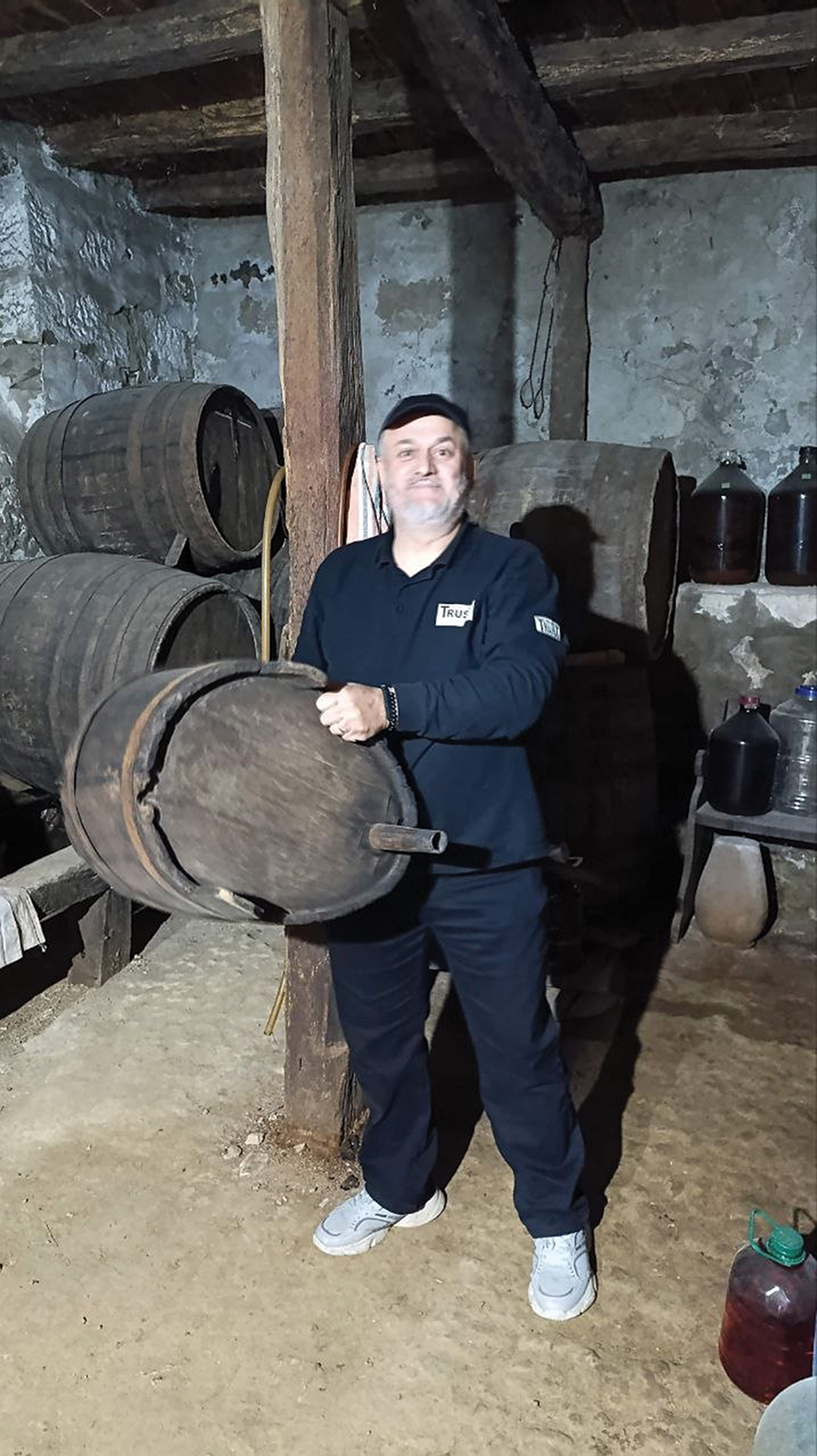
In the former German settlement of Elisabetthal, now renamed Asureti, we meet Tamaz Petriashvili. He is a descendant of settlers from Western Georgia who, along with their fellow villagers, arrived in this emptied village from the high-mountain region of Racha in the autumn of 1941, immediately following the deportation of the local Germans to Kazakhstan. Other highlanders from the Mtiuleti region were also resettled in Asureti.
“My grandfather and his fellow villagers arrived here when the Germans had already been evacuated to Central Asia,” Tamaz says. “A once-developed and well-tended land was left abandoned. Someone had to feed the cattle, the horses, the dogs, and look after the deserted farms.”
Tamaz recalls his grandfather’s stories about inheriting a fully functioning, advanced infrastructure. The village even possessed horse-breeding farms, a rarity in Georgia at the time. Pig farming was also highly developed, and the wheat fields were staggering in their scale and yield.
“Wheat is our Georgian pride: out of 27 global varieties, nearly half are of Georgian origin,” Tamaz explains. “However, the Germans managed to expand and modernize all of it.”
German Order and the “Culture of the Promenade”
Unlike Bolnisi, where the vacated homes fell victim to spontaneous looting by residents of neighboring villages immediately after the Swabians’ expulsion, the fate of Elisabetthal unfolded differently. To preserve the unique infrastructure of this model settlement, the Soviet authorities temporarily deployed troops to Asureti. Soldiers strictly guarded the perimeter, houses, and farms against plundering, maintaining order right up until the organized arrival of the new inhabitants, the land-poor peasants from Racha. Thanks to this, Asureti was handed over to the settlers practically intact.
The village possesses a strict, geometric, well-thought-out layout, with the houses situated quite close to one another. Meanwhile, the space for orchards and vegetable gardens was shifted to a separate zone containing systematically irrigated fields.
“The Germans had everything arranged in absolute harmony,” Tamaz emphasizes.
We walk through cozy Asureti, greeting Tamaz’s neighbors and acquaintances. Our guide proudly shares that the habit of taking an evening stroll through the village after work and on weekends (following church service) was also introduced here by the Germans.
“After a long day of labor, they would return home, spruce themselves up, and solemnly go for a walk along the beautiful cobblestone streets. In what other Georgian village could you see anything like that back then?”
Inside the recently restored Lutheran church, Tamaz shows us an exhibition of archival photographs depicting the peaceful life and daily routines of the colonists. From Württemberg, they brought the latest innovations to the Caucasus: not only cutting-edge winemaking methods, but also brewing, as well as the production of hemp oil: two powerful oil presses operated in the village.
Judging by the photographs, the Swabians knew not only how to work hard, but also how to enjoy high-quality leisure: Elisabetthal possessed its own brass band and several sports clubs.
The Legacy of the Böpple Family
Tamaz’s house is located in the very heart of the village, right next to the church. It once belonged to the family of Adam Johann Böpple. Tamaz discovered this from the initials carved above the entrance to the wine cellar, as well as from surviving church registers where the entire history of the congregation was meticulously recorded.
Descendants of the original owners have traveled from Germany to Asureti on multiple occasions; they maintain a warm relationship with the family living in their ancestral home, and even sent a large photo album as a gift.
“This house is nearly 200 years old; it was one of the very first in the village,” the host explains.
Because the soil in these parts is unstable and prone to shifting, the Germans began erecting the building’s load-bearing walls directly from deep within the cellar. The walls, a meter thick, provide flawless thermal insulation: the rooms remain cool in the summer and warm in the winter. A stable temperature of 12 to 14 degrees Celsius is naturally maintained inside year-round.
“But when we disrupted this centuries-old harmony and began building modern extensions onto the houses, cracks started appearing in the new structures,” Tamaz laments. “And this is despite the fact that the Rachan settlers themselves have always been regarded as first-rate carpenters and builders.”
Secrets of the Wine Cellar and the Legendary “Shalla”
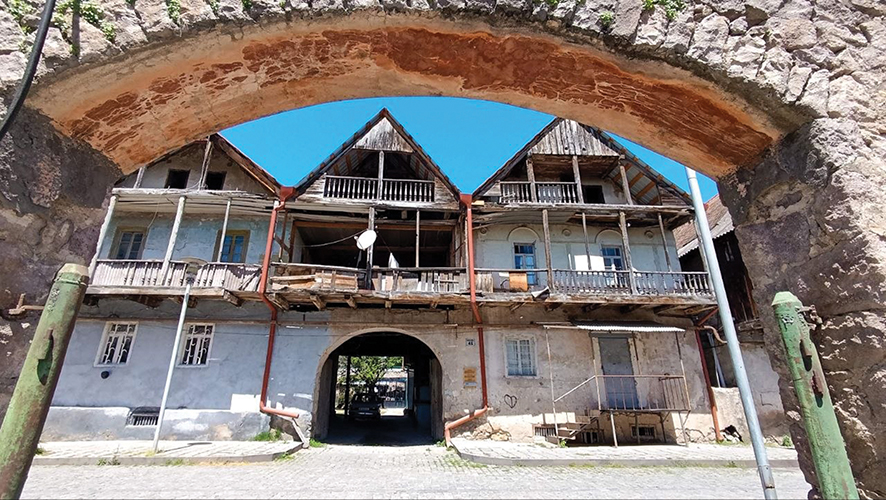
The special pride of the house is its marani (wine cellar).
“Welcome to our cellar!” Tamaz invites us in. “Georgia possesses the world’s oldest winemaking culture, but in Kakheti, they traditionally use qvevri, clay amphorae buried in the ground, for aging. The Germans, however, adhered to their own European tradition: they crafted and stored wine in oak barrels. There were magnificent coopers among the colonists.”
Between the cellar and the residential balcony, the architects incorporated a buffer zone; an air pocket that shields the wine from sudden temperature fluctuations.
“Look, here is the inscription above the entrance in old Gothic script: Adam Johann Böpple,” Tamaz points out. “He is the one who built this house and this cellar.”
Inside, century-old wine barrels, a massive iron grape crusher, and a gigantic funnel used for transferring wine have been carefully preserved.
The crown jewel of Asureti is its famous wine made from the endemic grape variety Asuretuli Shavi (Asuretian Black), also known as Schalla. The variety received its second name from the surname of a German settler named Schall, who discovered a wild vine in a local forest and cultivated it, as Hilarius Pütz, a winemaking expert from Germany, later explained to me. This grape grew exclusively here, and German winemakers successfully marketed the wine made from it across the entire Russian Empire.
The Schall grape has a unique biological characteristic: it is a functionally female variety, and for pollination, it strictly requires the proximity of a vine of a different, “male” variety. Consequently, they are always planted in pairs across the vineyards, explained Pütz, who is currently reviving the historical vineyards in Asureti.
Tamaz pours us some wine to taste: it is dense, deep ruby in color, with a complex, rich aroma. “Let’s drink to our wonderful Georgia and its people!” the hospitable host proclaims, raising a toast.
Asureti Today
In recent years, the flow of tourists to Asureti has been growing rapidly. The interest shown by international visitors, predominantly from Germany, in the Swabian heritage has catalyzed the development of local infrastructure.
Over the past decade, about ten guesthouses of various scales have opened in the village, and an atmospheric restaurant has begun operating inside the building of the former station. Yes, indeed, Elisabetthal had its very own station! It was planned as a terminus from which a horse-drawn car, the tramway of that era, would depart along tracks, linking the colony with the winery and the vineyards.
Regrettably, this project was never fully realized. Today, the winery building remains abandoned, even though it was purchased by private investors.
Back in the nineteenth century, everything in Asureti was built according to the absolute latest word in technology, and today, centuries later, the village’s current residents continue to safeguard and utilize these unique European traditions.
To be continued…
By Tatjana Montik
Tatjana Montik, journalist, author, and passionate admirer of Georgia, has spent the past 15 years living in and reporting on this captivating South Caucasus country. See more of her experiences in her new travel diary and cultural guide, Georgia: A Tapestry of Time and Space.









