

Today, the global aviation industry is facing a significant shortage of helicopter pilots. Many pilots who began their careers decades ago are approaching retirement age, while younger generations have often chosen different career paths. Another contributing factor is the high cost of helicopter training, which has limited the number of new professionals entering the industry.
As a result, many countries are experiencing a growing shortage of helicopter pilots while demand for helicopter services continues to increase.
Growing Demand for Air Ambulance Pilots
One of the key drivers behind the increasing demand for helicopter pilots is the rapid development of Helicopter Emergency Medical Services (HEMS). Aviation authorities and industry professionals are increasingly recognizing the need to expand the number of pilots qualified to operate within medical flight operations.
The HEMS market continues to grow steadily worldwide. According to industry estimates, the global air ambulance sector is valued at several billion US dollars and continues to expand each year. Consequently, the demand for highly trained helicopter pilots is rising as well.
For Georgia, this issue is particularly important. The country’s mountainous terrain and remote communities create a clear need for an effective air medical transport system. For many regions, a helicopter is often the only means of rapidly transporting a patient to a specialized medical facility and ensuring timely medical assistance.
Search and Rescue Operations
Another critical area of helicopter operations is search and rescue.
Helicopters are widely used to locate missing persons, rescue injured individuals in mountainous regions, and provide support during floods, earthquakes, and other natural disasters. In remote areas far from major population centers, helicopters often become the only transportation method capable of reaching those in need quickly.
One of the greatest advantages of helicopters is their ability to land in unprepared locations. Even in urban environments, where traffic congestion can significantly delay emergency services, helicopters provide a fast and efficient way to deliver rescue teams and medical personnel to the scene of an accident or disaster.
Their versatility and reliability make helicopters indispensable assets for emergency response missions worldwide.

Helicopters in the Oil and Gas Industry
Helicopters also play a vital role in the oil and gas sector.
Today, offshore oil and gas operations would be virtually impossible without helicopter support.
Helicopters transport personnel, equipment, and essential supplies to remote offshore platforms and industrial facilities.
The growth of oil and gas production in many regions has led to increased demand for helicopter transportation services, creating additional demand for qualified helicopter pilots.
Modern offshore operations rely heavily on helicopter transport, making pilot training a critical component of the industry’s long-term sustainability.
Forest Protection and Firefighting
In recent years, wildfires have become an increasingly serious challenge across many parts of the world.
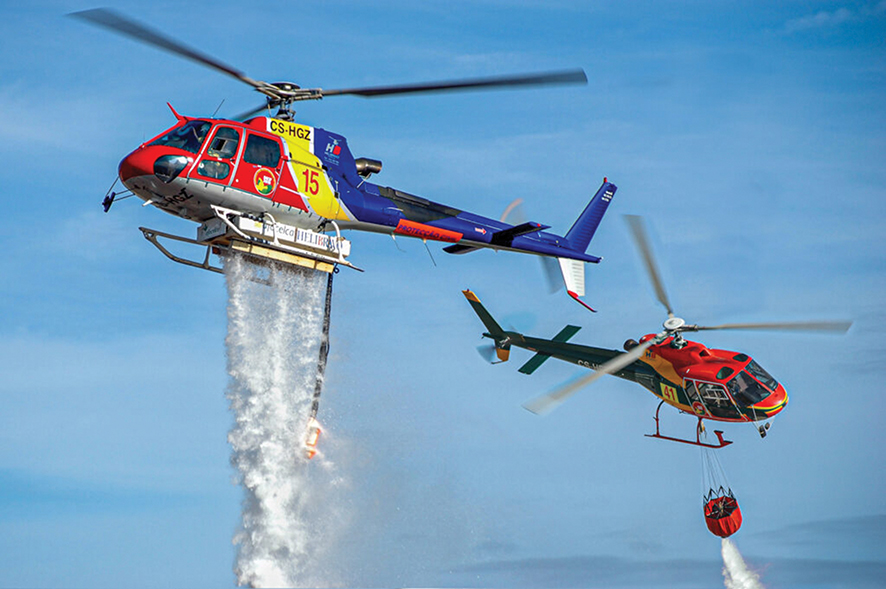
Experience has shown that helicopters remain one of the most effective tools for combating large-scale fires, particularly in remote and difficult-to-access areas. Equipped with specialized firefighting systems and water buckets, helicopters can rapidly deliver water directly to fire zones and perform precise aerial firefighting operations.
Wildfires cause significant damage to the environment, economies, and local communities. As a result, governments and specialized organizations require well-trained helicopter crews capable of supporting firefighting operations whenever needed.
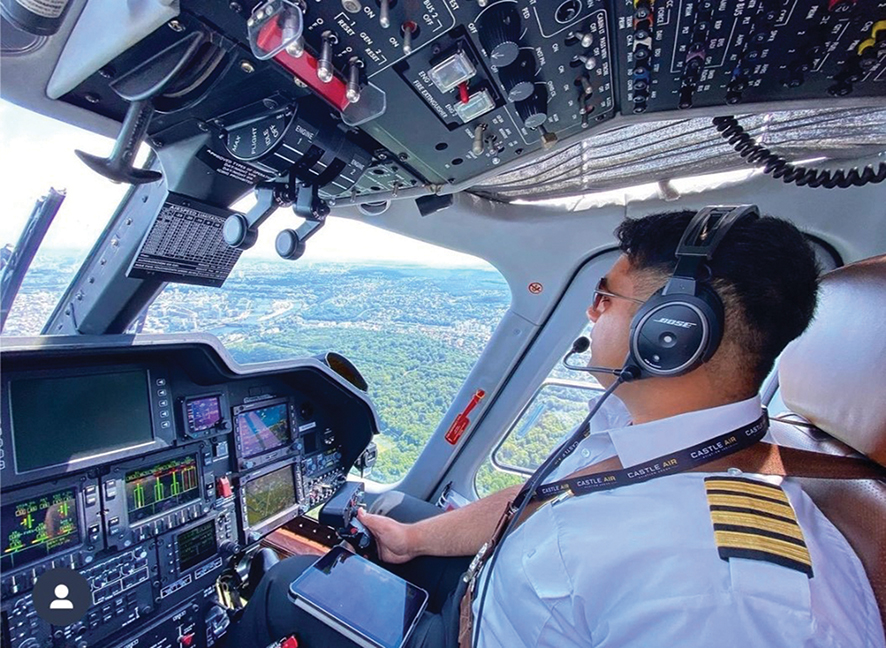
Training New Pilots as a Key Factor in Industry Development
The long-term development of the aviation industry depends heavily on training the next generation of pilots.
For Georgia, this issue is particularly important. The country continues to develop its tourism sector, transportation infrastructure, and aviation services. As these industries expand, so does the demand for qualified aviation professionals.
For this reason, establishing a strong domestic pilot training system is essential. In recent years, Georgia has begun developing modern aviation training programs based on European Union Aviation Safety Agency (EASA) standards. These programs support the training of both airplane and helicopter pilots according to internationally recognized requirements.
Modern training programs provide students with high-quality theoretical education combined with practical flight training under the supervision of experienced instructors.
An important next step will be the expansion of helicopter training opportunities through the use of modern training aircraft. This will enable future pilots to pursue careers not only within Georgia but also in international aviation companies, air ambulance services, and search-and-rescue organizations.
The development of pilot training in Georgia is therefore not merely an educational initiative: it is a strategic investment in the future of the country’s aviation industry, safety, and international competitiveness.
Georgia’s Opportunity to Become a Regional Helicopter Training Hub
In my view, Georgia possesses a unique opportunity to become a regional center for helicopter pilot training based on European Union Aviation Safety Agency (EASA) standards.
The country offers several strategic advantages, including favorable flying weather for much of the year, diverse terrain suitable for pilot training, competitive operating costs, and geographic proximity to the Caucasus, Central Asia, and the Middle East.
Through my work in aviation education and pilot training projects involving students and aviation organizations from Georgia, Azerbaijan, Europe, and other regions, I have observed a growing demand for high-quality helicopter training that meets international standards. At the same time, the availability of such training remains limited in many neighboring countries.
As regional demand for helicopter pilots continues to increase, Georgia has the potential to play an important role in preparing future aviation professionals not only for the domestic market but also for international operators.
The Future of Air Ambulance Services and Helicopter Training in Georgia
Over the coming years, we expect significant growth in air ambulance operations throughout Georgia.
The aviation community, medical professionals, and government institutions are increasingly reaching the conclusion that dedicated medical helicopters represent one of the most effective solutions for providing emergency assistance in areas with challenging terrain and limited response times.
Medical helicopters can rapidly transport doctors to accident sites, evacuate patients from remote locations, and ensure quick transfers to specialized medical centers. In many situations, response time becomes the deciding factor between life and death.
However, the development of an effective air ambulance system is impossible without highly qualified pilots. It is therefore essential to begin building a strong pool of professionals capable of operating in demanding environments and working alongside medical crews.
We see tremendous potential for establishing a comprehensive helicopter pilot training system in Georgia based on EASA standards. Such programs would prepare specialists not only for commercial aviation but also for future air ambulance services, search-and-rescue organizations, and other specialized aviation operators.
The first steps in this direction are already being taken. Helicopter pilot training programs based on European standards are being developed in Georgia, with particular emphasis placed on building the skills required for air ambulance missions, search-and-rescue operations, and other specialized aviation activities.
As part of this effort, our school is launching helicopter training programs using the Guimbal Cabri G2, one of the most modern training helicopters currently used by aviation training organizations throughout Europe.
Training will be conducted in accordance with EASA standards, providing graduates with the knowledge and practical skills required by today’s international aviation industry.
Industry Perspective
Based on my experience working in aviation training and developing EASA-compliant educational programs, I believe that one of the most significant challenges facing the helicopter industry today is the shortage of pilots prepared for specialized operations.
While commercial helicopter flying remains an important career path, future demand is increasingly concentrated in sectors such as Helicopter Emergency Medical Services (HEMS), search-and-rescue operations, offshore transportation, and aerial firefighting.
These missions require not only strong flying skills but also advanced decision-making abilities, risk management competencies, and specialized operational training. As a result, pilot education must continue evolving to meet the growing expectations of modern aviation operators.
Looking Ahead
The development of helicopter aviation in Georgia is still in its early stages, but the opportunities are substantial.
As the country continues to modernize its aviation sector, strengthen emergency response capabilities, and expand international cooperation, the demand for highly qualified helicopter pilots will continue to grow.
By investing in modern training programs today, Georgia can establish the foundation for a sustainable helicopter industry capable of supporting future air ambulance services, search-and-rescue operations, tourism, infrastructure development, and other critical sectors of the national economy.
We firmly believe that the development of helicopter training represents an important step toward creating a modern air ambulance system in Georgia and preparing a new generation of highly qualified aviation professionals.
Blog by Artem Kuzmenko, General Manager, Blue Sky Academy









