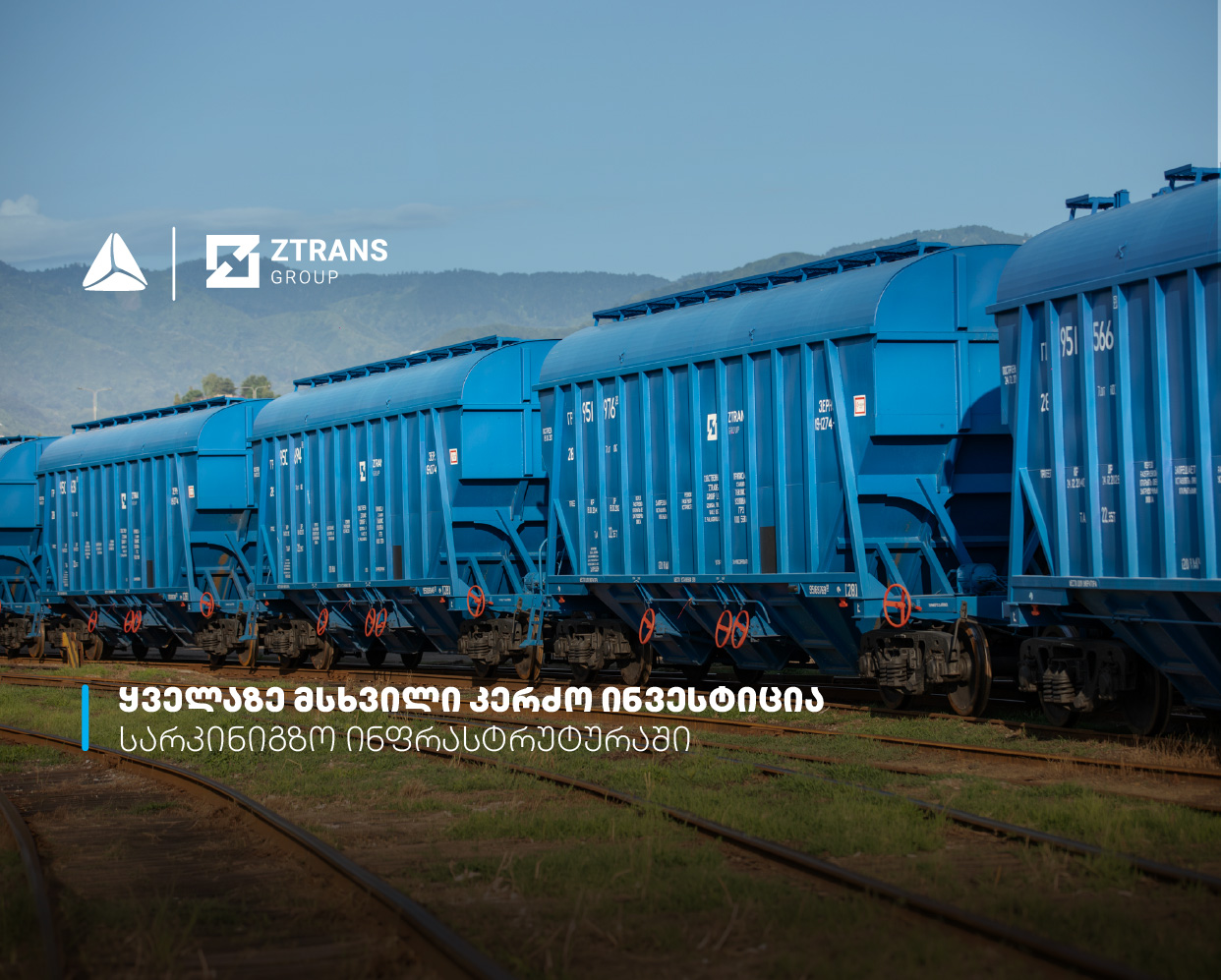
Tbilisi, Georgia — With the support of TBC, Zet Trans Group has expanded Georgia’s railway infrastructure by adding 100 new freight railcars — marking the largest private investment in this sector to date. The total investment value of the project amounted to nearly 7 million USD, fully financed by TBC.
The newly acquired railcars are already operating on the Azerbaijan–Georgia route, transporting carbamide cargo. The wagons entered service in April and currently complete an average of three to four rotations per month. During this period, approximately 40,000 tones of cargo have already been transported toward the Batumi Port.
The addition of the new railcars significantly enhances Georgia’s railway freight capacity. The project contributes to reducing the shortage of specialized freight wagons in the region, increasing cargo throughput, and further strengthening Georgia’s role as a key transit country within the Middle Corridor.
“We have been partnering with Zet Trans Group for more than 10 years and have successfully implemented numerous important projects in the production and service sectors. This investment is another example of how cooperation between a business and a bank can create value not only for a company but also for the country’s economy.
The introduction of new railcars strengthens the capacity of the Middle Corridor and supports the development of Georgia’s logistics sector — one of the important pillars of the country’s economy. Logistics accounts for approximately 6% of GDP, and due to the sector’s scale and strategic importance, transport and warehousing remain key priorities for TBC.
We actively support infrastructure projects, business expansion, and the implementation of modern technologies. As a result, over the past three years, TBC’s loan portfolio in the logistics sector has grown by 74% and currently amounts to GEL 436 million,” said David Kontsee, Vice President of Corporate Banking Business Management at TBC.
According to Alexi Nikolaishvili, Founder of Zet Trans Group, the company’s investment has already delivered positive results by increasing cargo turnover and improving the efficiency of logistics operations.
“Our key priorities are optimizing time, ensuring safe transportation, and maintaining the highest quality standards. The new, modern railcar fleet has significantly enhanced our capabilities, which is crucial for increasing the competitiveness of the Middle Corridor.
It is especially important that the Anaklia Deep Sea Port project has entered an active phase. We are ready to support this large-scale initiative with an upgraded and modern fleet, which can be further expanded if required.
Our extensive experience, international partnerships, and strong technical capabilities give us confidence that we will make a meaningful contribution to the development of the Anaklia Port. We believe that our involvement will further strengthen the transit potential of both the Middle Corridor and Georgia as a whole,” said Nikolaishvili.
The project represents another step toward strengthening Georgia’s logistics infrastructure and supporting the country’s position as a regional transportation hub connecting Europe and Asia.