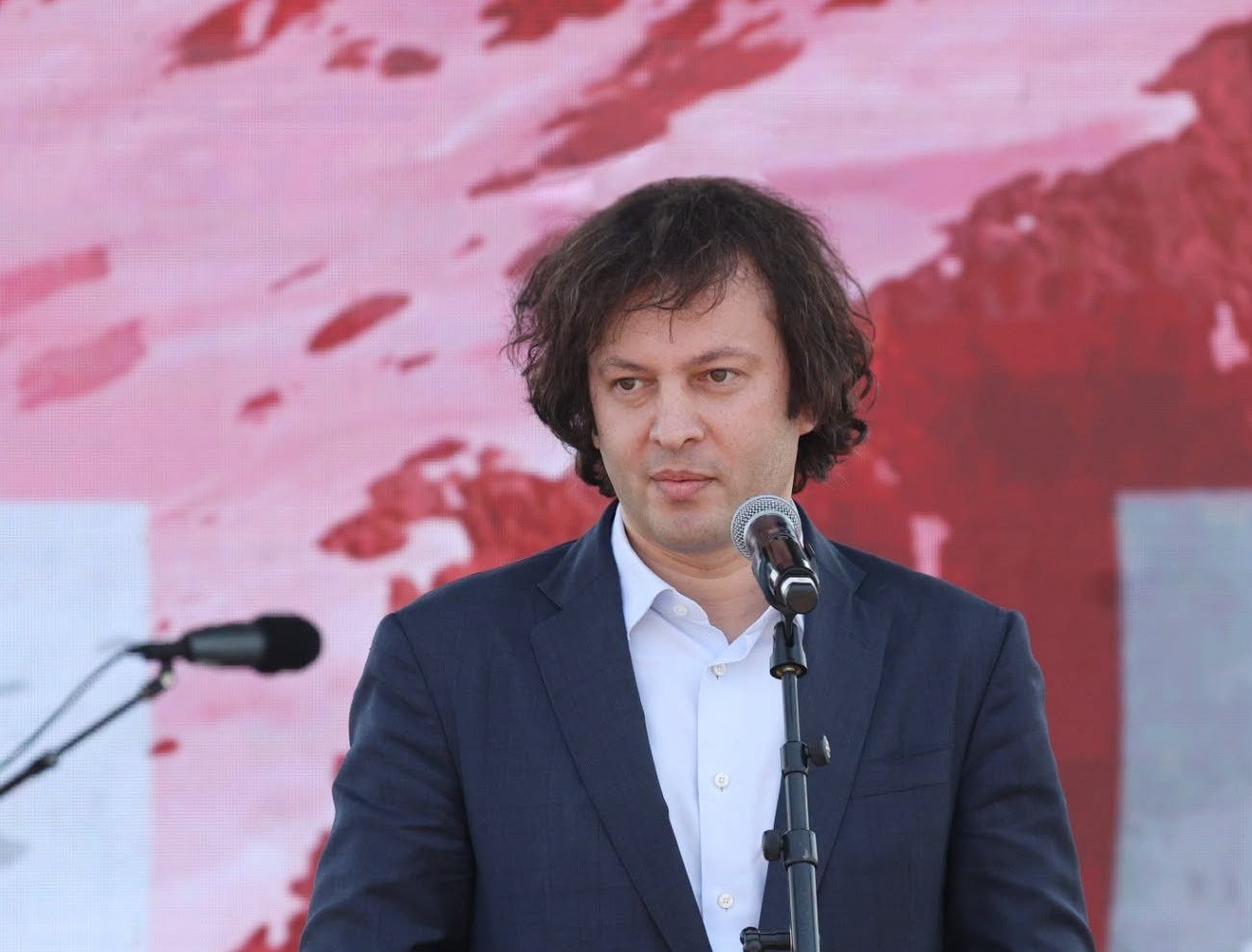
Georgian Dream Chair and Prime Minister Irakli Kobakhidze wrote on social media that if anyone in Georgia was supposed to develop a radical anti-Russian sentiment, it should have happened after 2008, not after 2022. He claims that a logical question arises: why did they become Russophobic now and not then, when the issue concerned Georgia?
Irakli Kobakhidze’s post concerns some opposition leaders’ attitudes toward Russia. As he states, “the rhetoric of foreign agents toward Russia was never as harsh and negative as it is now, neither before the 2008 war nor after the August war.”
“In 2022, after the outbreak of the war in Ukraine, one specific attitude emerged among the opposition, pseudo-liberal minority of our society, which requires separate discussion.
As you know, as a result of the crimes committed by the regime of the United National Movement against its own state and people, Russia carried out the occupation of 20% of Georgia’s territory. Eighteen years have passed since the August 2008 war, yet its devastating consequences continue to affect our country and the lives of tens of thousands of Georgians to this day. As a result of Russia’s military aggression, 412 people were killed and 2,232 were wounded; 30,000 of our citizens were forced to leave their homes; and more than 120 Georgian settlements ended up beyond the occupation line. We have an obligation before our homeland and history to understand that these numbers are not merely statistics, because behind them stand the most precious things – lost lives, abandoned and destroyed villages, and national interests sacrificed through betrayal.
It is interesting that, against the backdrop of such a large-scale tragedy, the August War did not become sufficient grounds for the United National Movement regime and its supporters to develop radical attitudes toward Russia during 2008-2012. In reality, the opposite happened – after Russia’s occupation of Georgian territories in 2008 and its recognition of Abkhazia and South Ossetia as independent states, the United National Movement not only failed to pursue a strict policy toward Russia, but shortly after the end of the war, the regime’s leader personally met Russian citizens at the border and invited them to travel to Georgia for tourism and business activities. During the same period, we witnessed the regime’s active efforts to deepen cultural and humanitarian ties with Russia, as well as the United National Movement government’s encouragement of Russian capital entering various sectors of Georgia’s economy, including strategic sectors. Several years later, the government unilaterally abolished the visa regime for Russian citizens.
It should be recalled that neither representatives of the United National Movement regime nor their supporters expressed any protest against this policy at the time. Moreover, we all remember how today’s leading “Russophobes” – Elene Khoshtaria, Zurab Japaridze, Misha Mshvildadze, and others – welcomed Russian tourists in Georgia, Russian money, which at that time “had no smell,” and the deepening of trade, economic, and cultural ties with Russia. It should be emphasized that all of this took place after Russia had already recognized the independence of Abkhazia and South Ossetia and diplomatic relations between the two countries had been severed.
The fact is that these political forces, the non-governmental organizations associated with them, and other active supporters, who have formed into a single radical force controlled from abroad and have repeatedly proven that they are engaged in advancing only the interests of external forces in Georgia, were not troubled by anti-Russian aggression during 2008-2012. Georgian agents developed radical anti-Russian sentiments only after Russia invaded Ukraine for the second time. It is clear that the so-called “global war party” needed the scale of the current conflict in order to involve Europe in the war and to fuel Russophobia among agents worldwide, including in Georgia, to the highest level.
To clarify once again, the rhetoric of foreign agents toward Russia was not as harsh and negative either before the 2008 war or after the August War – that is, when the matter directly concerned their own (at least formally) homeland; when hundreds of Georgian soldiers, police officers, and civilians lost their lives to Russian occupation; when Giorgi Antsukhelidze was tortured and killed; when we lost more than 120 Georgian villages; when tens of thousands of our citizens became internally displaced; and when something happened that Russia had never even considered before – the recognition of the so-called independence of Georgia’s occupied territories by Russia.
Foreign agents declared Russia an irreconcilable enemy only after it invaded Ukraine for the second time. If we were talking about Ukrainian citizens, this would, of course, be completely understandable, but apparently Georgia’s “people without a homeland” care more about Ukraine than Georgia because they have received such instructions. It is a paradox, but a fact, that in their view, Russia became Georgia’s true occupier not after occupying Georgian territories, but only after occupying Ukrainian territories.
Naturally, their emotions are completely false as well, because foreign agents are devoid of any values – something they have repeatedly proven to this day. However, a logical question arises: why did they become Russophobic now and not then, when the issue concerned Georgia? Do they not even formally recognize Georgia as their homeland, and is Ukraine their homeland instead? Logically, if anyone was supposed to develop radical anti-Russian sentiments, it should have happened not after 2022, but after 2008. The fact that their current Russophobia is fake is proven by specific facts. Without going too far, we all know that Russophobic politicians, NGO representatives, journalists, and activists have no reaction whatsoever to the millions of Russian rubles transferred from the Russian state treasury to Elene Khoshtaria.
I believe that the issue I am discussing now requires no additional explanation for the majority of Georgia’s population. The overwhelming majority of our country’s citizens are genuine patriots, which is clearly reflected in their demand toward the government – to protect peace, state sovereignty, and national values at any cost.
However, I believe that a question must be raised – one that society should discuss. We all know that, both in the past and today, agents in Georgia act according to instructions from external forces, and that their homeland is not Georgia but the “deep state.” Against this background, it is interesting why they were not instructed to be Russophobic when there were the strongest reasons for it – namely, after the August 2008 war – and why they were instructed to be Russophobic now, when the victim of Russian aggression is not their formal homeland, but another country, even if it is a friendly one.
I believe society will easily find a logical explanation for this illogicality”,- Kobakhidze writes on Facebook.