By Sofia Bochoidze
For millions of people living with Type 1 diabetes, daily life is shaped by constant calculation: glucose levels, insulin doses, meals, physical activity, risk, and fear. Modern diabetes technology has improved this reality, but it has not removed the burden. The body still cannot do what it once did naturally: sense glucose and release insulin at the right moment.
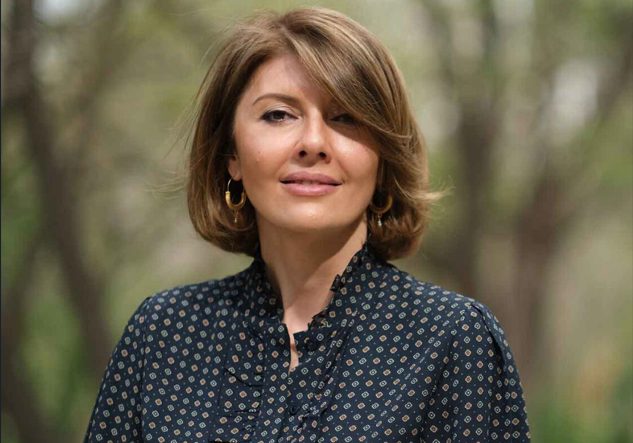
This is the challenge that Georgian scientist Prof. Ekaterine Berishvili, Associate Professor at the University of Geneva Faculty of Medicine, has been working to address. As coordinator of the EU-funded VANGUARD project, she is leading international research into a bioartificial pancreas, a living implant designed to restore insulin production in people with Type 1 diabetes.
The project has already shown encouraging preclinical results and is now moving through the demanding translational phase, where laboratory discovery must become a safe, reproducible, and clinically useful therapy.
In this interview with GEORGIA TODAY, Prof. Berishvili explains what makes the bioartificial pancreas different from existing diabetes technologies, why biomaterials and blood supply are central to the innovation, how close the field may be to human trials, and why the future of medicine may be moving from treating disease toward restoring lost biological function.
Your work on the bioartificial pancreas is being described as a major breakthrough in Type 1 diabetes treatment. At what point did you realize this project could become truly transformative?
For me, there was not one single dramatic moment, but rather a progressive realization. In science, transformation often begins very quietly, with a result that is reproducible, with a biological response that appears more coherent than expected, with a system that starts behaving like living tissue rather than a laboratory construct.
I began to feel that this project could be truly transformative when we saw that the implanted islet cells were not simply surviving, but were becoming integrated into a supportive microenvironment. They were able to sense glucose, respond functionally, and interact with the host tissue in a way that suggested we were moving beyond cell transplantation as we know it today.
That was the moment when the idea became bigger than a technical solution. It became a vision: to recreate, in a controlled and retrievable way, some of the essential functions of the pancreas for people living with Type 1 diabetes.
For readers without a scientific background, how would you explain what the bioartificial pancreas is and how it works inside the body?
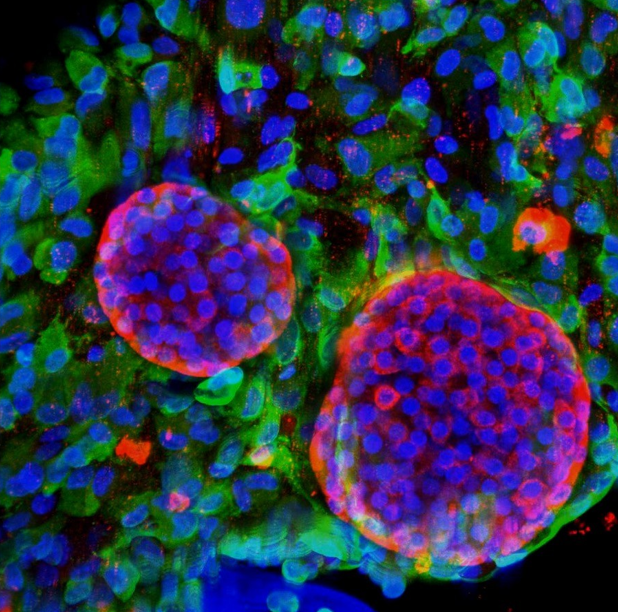
At its simplest, the bioartificial pancreas is a small, living implant designed to do, biologically, what the diseased pancreas can no longer do in Type 1 diabetes: sense glucose and release insulin in a way that follows the rhythm of the body.
The implant contains insulin-producing cells. Those cells are embedded in a soft, supportive gel made from human-derived tissue and, crucially, we engineer a network of small blood vessels directly into the construct itself. This built-in vasculature matters because insulin-producing cells are highly oxygen-hungry. Once the implant is placed in the body, the engineered vessels can connect rapidly with the patient’s own circulation, so the cells are nourished from the first hours rather than starving in the critical early days.
The construct sits at a site that is well perfused and accessible, so it can be monitored, retrieved, or replaced if needed.
It is closer to a small, well-tended garden of living cells than to a device: a garden with its own irrigation system, ready to be connected to the body that receives it. Our role, as bioengineers, is to create the conditions under which those cells can take root, integrate with the host, and quietly do their work.
One of the key promises of your approach is restoring glucose regulation without lifelong immunosuppression. How significant is this shift compared to current treatments, and what were the biggest challenges in achieving it?
This would be a very significant shift. Today, cell-based therapies for Type 1 diabetes can be highly effective, but they usually require immunosuppression to prevent rejection of the transplanted cells. Immunosuppression is not a trivial burden. It can increase the risk of infection and other complications, and it limits the number of patients who can benefit from these therapies.
Our ambition is to gradually reduce that burden and, in the long term, to make beta-cell replacement possible without adding the lifelong weight of additional immunosuppression. But we are not there yet, and I think it is important to be very precise about this.
The biomaterial we use around the cells helps create a more welcoming environment for the implant. It supports the cells, helps them settle into the body, and can reduce some local inflammation. But the material alone is not enough to hide the cells completely from the immune system over the long term.
That is why we are working on more than one level of protection. In addition to the protective material, we are also exploring ways to make the insulin-producing cells themselves less visible to the immune system. You can imagine it as giving the cells both a safer home and a better way to avoid being immediately recognized as foreign.
The challenge is that we cannot simply lock the cells away. They must stay connected to the body. They need oxygen, nutrients, blood vessels, and they must be able to sense sugar levels quickly in order to release insulin at the right moment. So the real challenge is to protect the cells while still allowing them to behave like living, functional pancreatic cells.
It is a delicate balance, protection without isolation, and this is one of the most important scientific questions we are trying to solve.
Your research combines biomaterials, tissue engineering, and cell-based technologies. What is the core innovation that makes this system viable?
The core innovation is that we are not simply transplanting insulin-producing cells alone. We are trying to give them the right “home” inside the body.
Insulin-producing cells are very delicate. If they are placed into the body without support, many of them can die quickly because they lack oxygen, nutrients, blood supply, and the right biological signals. So our approach is to build a small, living-like environment around them: a kind of biological scaffold that helps the cells survive, function, and communicate with the body.
The material we use comes from the human amniotic membrane, a natural tissue that surrounds and protects life during pregnancy. We transform this material into a soft three-dimensional structure that can carry the insulin-producing cells. This scaffold gives the cells physical support and biological signals that feel familiar to them.
Another important part of our strategy is blood supply. Transplanted cells need oxygen very quickly after implantation. Without it, they suffer. So we design the implant in a way that helps it connect rapidly with the patient’s own blood vessels. This is essential because insulin-producing cells must be able to sense sugar levels in the blood and release insulin at the right moment.
We also place the implant outside the liver, in a site that is easier to access. This is important for safety: it means the implant could be monitored, removed, or replaced if necessary.
So the innovation is not one single element. It is the combination: the right cells, the right biological support, the right blood supply, and the right implantation site. We are trying to help biology work better, rather than forcing it to do something unnatural.
Could you explain the role of the biomaterials used in the implant and how they protect and support the transplanted cells?
The biomaterial is, in many ways, the quiet protagonist of this work. It is not the cell itself, but it creates the environment that allows the cells to survive and work properly.
We derive this material from the human amniotic membrane, a natural tissue associated with pregnancy that is designed to protect and support new life. When we process it into a soft gel, it becomes a kind of three-dimensional support structure for the transplanted insulin-producing cells.
This is very important because these cells are fragile. If they are injected into the body without support, many of them can be lost early. They need something to attach to, they need biological signals around them, and they need oxygen and nutrients very quickly.
Our biomaterial helps in several ways. First, it gives the cells a soft and familiar environment, almost like a biological home. Second, it helps reduce some of the local stress and inflammation that normally happen after transplantation. Third, it supports the formation of small blood vessels inside the implant. After implantation, these vessels can connect with the patient’s own circulation, bringing oxygen and nutrients to the cells.
This early blood supply is essential. Insulin-producing cells are very active; they cannot wait weeks to receive oxygen. One of the historical problems in islet transplantation is that many cells are lost in the first days after transplantation, before a good blood supply is established. Our approach tries to solve this problem by preparing a more supportive and vascularized environment from the beginning.
But it is important to be precise: the biomaterial is not a magic shield. It does not make the cells completely invisible to the immune system. Instead, it creates a more favorable local environment. It helps the cells settle, survive, connect with blood vessels, and function better.
This is what makes the implant different from simply injecting cells. We are not only delivering cells; we are delivering a living environment designed to help those cells become part of the body.
The technology has shown strong results in preclinical studies. Realistically, how far are we from seeing this used in patients on a wider scale?
The results so far are very encouraging, but we are not yet at the stage where this treatment can be offered widely to patients.
At the moment, we are in what we call the translational phase. This means moving the discovery from the laboratory toward the clinic, step by step. This is one of the most important and most demanding phases in medical research.
One major challenge is scaling up. What works in a mouse does not automatically work in a human. A mouse needs only a very small number of insulin-producing cells, while a person needs a much larger cell mass. That means we have to show that the implant can be built at human dimensions, that enough cells can survive inside it, that they receive oxygen and nutrients, and that the whole construct can connect properly with the patient’s blood circulation.
So, the question is not only, “Does it work?” but also, “Can we make it large enough, safe enough, stable enough, and reproducible enough for human use?”
Before a new therapy can be used in patients, many other questions must also be answered. We need to show that it can be produced safely and consistently under strict medical manufacturing standards. We need to prove that it is safe. We need to understand how long it works, how the body reacts to it, what dose is needed, and whether the implant remains stable over time.
The next major step would be carefully controlled early clinical studies in a small number of selected patients. These first studies are not designed to prove immediately that the therapy can be used for everyone. They are designed to answer the most essential questions: Is it safe? Does it function as expected? Can we monitor it? Can we retrieve it if needed?
Only after this evidence is collected could we think about broader use in patients.
So, I would say: the direction is very promising, but we must remain rigorous and patient. In regenerative medicine, hope is very important, but hope must always walk together with evidence. Patients deserve both.
Would this treatment be permanent, or would patients need replacement implants over time?
At this stage, I would not promise permanence. Biology is dynamic. Cells age, immune responses evolve, and the local tissue environment can change over time.
Our goal is to create a long-lasting implant capable of restoring meaningful glucose regulation. But it is possible that, over time, implants may need to be replaced or renewed. In fact, one of the strengths of our approach is that the implant is designed with retrievability in mind.
For me, retrievability is not a limitation, it is a safety feature. It means that if something changes, the therapy can be monitored, adjusted, or removed.
In medicine, “permanent” is a very strong word. I prefer to think in terms of durable, safe, controllable, and replaceable if necessary.
What are the main risks or limitations that still need to be addressed before this can become a standard therapy?
The main questions we still need to answer are: Is the implant safe? Can it survive long enough? Can it receive enough blood supply? Can we protect it from the immune system? And can we make it large enough and reliable enough for human use?
Even if a treatment works very well in the laboratory, the human body is much more complex. We need to understand how the implant behaves over months and years. Does the body accept it well, or does it build scar tissue around it? Do the cells continue to produce insulin in a stable way? Can the implant receive enough oxygen and nutrients? Can we remove or replace it safely if needed?
Immune protection is another major challenge. In Type 1 diabetes, the immune system has already attacked the patient’s own insulin-producing cells. If we put new insulin-producing cells into the body, we must find ways to protect them without causing too much risk for the patient.
There is also the question of scale. A mouse needs only a small number of insulin-producing cells, but a human needs many more. So we must show that the implant can be made at human dimensions, with enough cells inside, and that all those cells can survive and function.
Finally, a therapy cannot become standard only because it is scientifically exciting. It must be produced safely, approved by regulators, delivered to hospitals, and made accessible to patients. This is why translation is such a long journey. It is not only about making the science work; it is about making it safe, reproducible, and truly useful for people.
How does your bioartificial pancreas differ from existing “artificial pancreas” systems based on insulin pumps and digital monitoring?
The difference is fundamental.
Current artificial pancreas systems are technological systems. They combine continuous glucose monitoring, algorithms, and insulin pumps. They are very important advances and they have improved the lives of many patients. But they still require devices, insulin reservoirs, infusion sets, sensors, calibration or maintenance, and constant interaction with diabetes technology.
A bioartificial pancreas is a biological system. It aims to restore the missing function by placing insulin-producing cells back into the body in a supportive environment. Instead of calculating insulin delivery from the outside, the cells themselves sense glucose and respond.
So one approach manages diabetes from the outside; the other tries to restore regulation from within.
Do you see a future where patients could live completely free from insulin injections and constant glucose monitoring?
Yes, I believe this is the future we should aim for.
But I would say it with humility. The first step may not be complete freedom for every patient. It may be fewer injections, more stable glucose levels, fewer hypoglycemic episodes, less mental burden, and less fear. Over time, as the therapies become safer and more durable, I do believe that some patients could live without insulin injections and with much less dependence on constant monitoring.
For me, the real goal is not only biological. It is existential. Diabetes occupies space in a person’s mind every hour of every day. True success would mean giving people back that space; the freedom to live without constantly negotiating with their glucose levels.
While your work focuses on Type 1 diabetes, do you see similar regenerative approaches becoming relevant for Type 2 diabetes as well?
Potentially, yes, but the situation is different.
Type 1 diabetes is primarily a disease of beta-cell destruction, so replacing insulin-producing cells is a very logical therapeutic strategy. Type 2 diabetes is more complex. It involves insulin resistance, metabolic dysfunction, inflammation, obesity in some patients, and progressive beta-cell failure. Cell replacement alone may not solve the entire problem.
However, there may be subgroups of patients with advanced Type 2 diabetes who have severe beta-cell failure and could benefit from regenerative or cell-based approaches. More broadly, I think regenerative medicine will help us understand and treat metabolic diseases in a more precise way, not as one-size-fits-all conditions, but as different biological states requiring different strategies.
Looking ahead, do you believe we are entering an era where bioengineered organs could replace traditional treatments for chronic diseases?
I believe we are entering an era where medicine will become increasingly regenerative.
For a long time, medicine has been very good at replacing what the body lacks with external treatments: insulin, dialysis, drugs, mechanical devices. These treatments save lives, but they often manage disease rather than repair function.
Bioengineered organs and tissues offer a different philosophy. They ask whether we can restore function, not only compensate for its loss. I do not think traditional treatments will disappear. Rather, I think they will gradually be complemented, and in some cases replaced, by living, adaptive therapies.
This transition will not happen overnight. It will be slow, careful, and evidence-driven. But philosophically, it is a profound shift: from treating the consequences of disease to rebuilding the missing biology.
Beyond diabetes, are you and your team exploring similar technologies for other conditions or organs?
Our main focus remains Type 1 diabetes and beta-cell replacement, because this is where we believe we can make the most meaningful contribution.
However, the concepts we are developing, biomaterial-supported cell therapy, vascularized tissue constructs, retrievable implants, and engineered cellular microenvironments, are relevant beyond diabetes. Similar principles could be applied to other endocrine tissues, organ repair strategies, and regenerative medicine approaches.
I see our work as part of a broader movement in transplantation and tissue engineering: moving from replacing whole organs toward rebuilding specific functions with cells, biomaterials, and controlled biological systems.
You have built an international scientific career while leading a major EU-funded project. What were the key turning points in your journey, and what inspired you to focus on this field?
My career has had several new beginnings, but the scientific thread has always been continuous.
I began working on diabetes and beta-cell replacement already in Georgia. Research conditions were not always easy, but the field captured me immediately because it combined rigorous science with a very concrete human need. Type 1 diabetes is not an abstract disease. It affects daily life, every day, and I was drawn to the idea that science could one day help restore what the disease takes away.
Moving to Geneva was an important chapter. It came with many challenges: a new country, a new language, and a new scientific and clinical environment. But it was also a major opportunity: an opportunity to develop, expand, and translate the work on diabetes and beta-cell replacement that I had already started in Georgia.
A key turning point was a change in the way we thought about transplantation. Instead of asking only how to transplant insulin-producing cells, we began asking how to create the right environment for those cells to survive and function. This shift, from simply transplanting cells to engineering a supportive biological “home” for them, eventually led us toward the development of Amniogel.
Another major turning point was coordinating VANGUARD, a European Horizon 2020 project. It allowed us to bring together an international consortium and move the work from a promising laboratory concept toward a more structured translational pathway. It also taught me how important it is to think not only as a scientist, but also in terms of manufacturing, regulation, safety, and future clinical use.
For me, the goal has always remained the same: to move from simply managing diabetes to restoring the biological function that has been lost. Ultimately, success means turning scientific possibility into something that can truly help patients.
Finally, if everything progresses successfully, how do you imagine diabetes treatment evolving over the next 10 to 15 years, and what would success look like to you personally?
I am very optimistic about the next 10 to 15 years. The field is moving from managing diabetes toward restoring the biological function that is lost: endogenous insulin secretion.
Several approaches are now advancing in parallel: stem cell-derived islets, xenogeneic islets, immune-engineered cells, and bioengineered constructs such as ours. Each addresses a different part of the problem: the need for a renewable cell source, protection from the immune system, long-term survival, and safe implantation.
I do not think the future will depend on one single solution. It will likely come from combining these advances to create therapies that can replace the missing beta-cell function in a safe, durable, and accessible way.
For me, success would mean that people with Type 1 diabetes no longer depend on external insulin to survive because their bodies have regained the capacity to produce insulin in response to glucose. That would be more than better treatment: it would be a true restoration of function.
Prof. Berishvili’s work stands at the intersection of science, medicine, engineering, and human hope. The bioartificial pancreas is not yet a widely available treatment, and she is careful not to present it as an immediate cure. But its promise is powerful: not simply to manage Type 1 diabetes more efficiently, but to restore part of the biological function the disease destroys.
What makes this research especially significant is its philosophy. It does not treat the body as a machine that must be permanently managed from the outside. It asks whether living systems can be rebuilt, protected, and guided to work again from within.
For patients, that could one day mean more than improved glucose control. It could mean less fear, less calculation, less dependence, and a life no longer organized around diabetes every hour of the day.
For Georgia, it is also a story of scientific achievement on the world stage: a Georgian researcher helping lead one of the most ambitious conversations in modern regenerative medicine: the move from treatment toward true restoration.