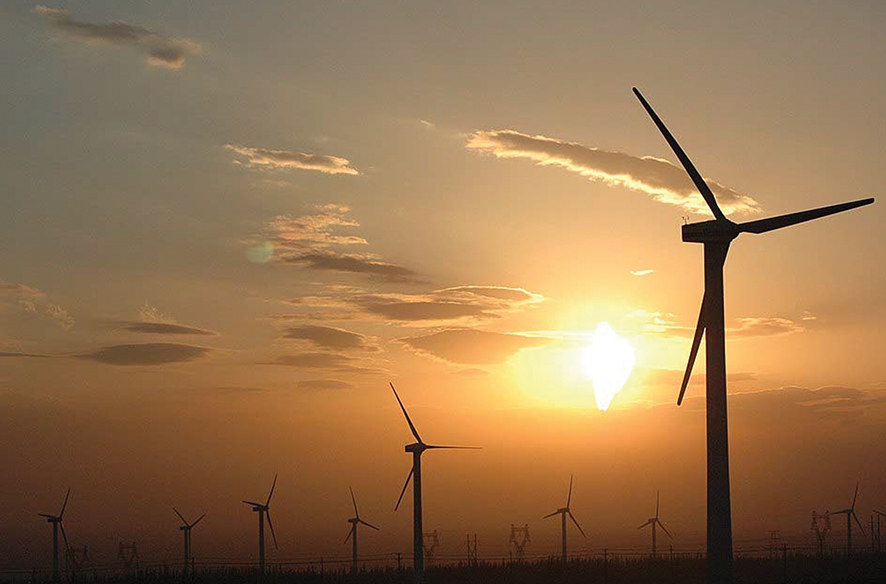
Georgia is moving ahead with another step in its renewable energy push, approving land for a new wind project that could help shape how the country produces electricity.
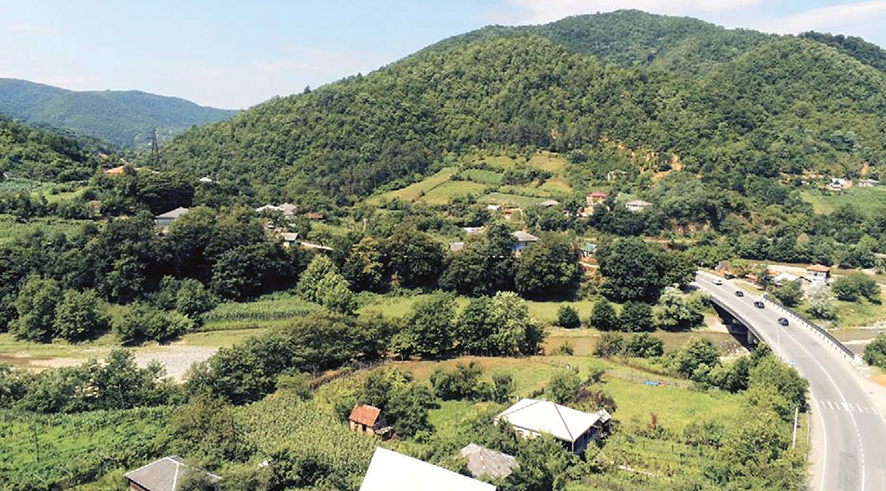
The government has allocated 29 land plots in the municipalities of Khashuri and Kharagauli for the planned Rikoti Wind Power Plant. In total, about 60,000 square meters of non-agricultural land will be handed over to developer Taba LLC under a long-term 49-year agreement. The decision was formalized through Government Decree No. 538.
About 60,000 square meters of nonagricultural land will be handed over to developer Taba LLC under a long-term 49-year agreement
At its core, the deal gives the developer the right to use the land exclusively for building and operating wind energy infrastructure. In return, Taba LLC will pay the state 35,480 Georgian lari each year. The payment is fixed and tied to the size of the land rather than how much electricity the future wind farm produces.
The agreement is designed as a long-term concession, which is typical for energy infrastructure projects that require heavy upfront investment but generate returns over decades. During the lease period, the land is strictly reserved for energy production purposes, meaning it can’t be converted for farming, housing, or other commercial uses. Instead, it will be used for turbines, access roads, and grid connection infrastructure.
Behind the project is a network of public and private stakeholders. Alongside Taba LLC, the arrangement involves the Government of Georgia, the Electricity System Commercial Operator, and the Georgian State Electrosystem. This coordination is meant to ensure that once the wind farm is built, its electricity can be smoothly integrated into the national grid.
Taba LLC itself was founded in 2013 and is jointly owned by two Netherlands-registered companies: Rikoti Energy B.V. and Anadolu Kafkasya Enerji Yatırımları A.S., each holding a 50% stake. The company’s board includes six Turkish citizens and one Georgian citizen.
While specific details like the number of turbines or total electricity output haven’t been made public yet, the project is expected to feed into Georgia’s unified power system. That’s particularly important for a country where hydropower dominates electricity production. Hydropower may be clean, but it is highly dependent on seasonal rainfall, which can lead to fluctuations in supply.
Georgia has been working to attract private investment into renewables, reduce dependence on imported electricity, and build a more balanced energy mix
Wind energy is increasingly seen as a useful complement, especially because it tends to peak under different weather conditions than hydropower. The Rikoti area, located near the Likhi mountain range that divides eastern and western Georgia, has previously been identified as having strong wind potential due to its geography and airflow patterns.
Economically, this is a long-game investment. Wind farms are expensive to build, but once operational they are relatively cheap to run and can operate for decades. The 49-year lease reflects that horizon, giving investors time to recover costs and generate returns while supplying power to the grid.
Although construction timelines haven’t been announced yet, approving land use rights is a major early milestone. It clears the way for the next stages: engineering design, environmental assessments, equipment procurement, and eventually construction.
The Rikoti Wind Power Plant fits into Georgia’s bigger strategy of strengthening domestic energy production. The country has been working to attract private investment into renewables, reduce dependence on imported electricity, and build a more balanced energy mix that can better handle seasonal demand shifts.
In that sense, this isn’t just a single project: it’s part of a gradual move toward a more diversified and self-sufficient energy system.
By Team GT