In the mountain valleys of western Georgia, where rivers cut through steep, green slopes and small villages sit close to fast-moving water, a new kind of investment is taking shape: one that connects sport, politics, and the long economics of energy.
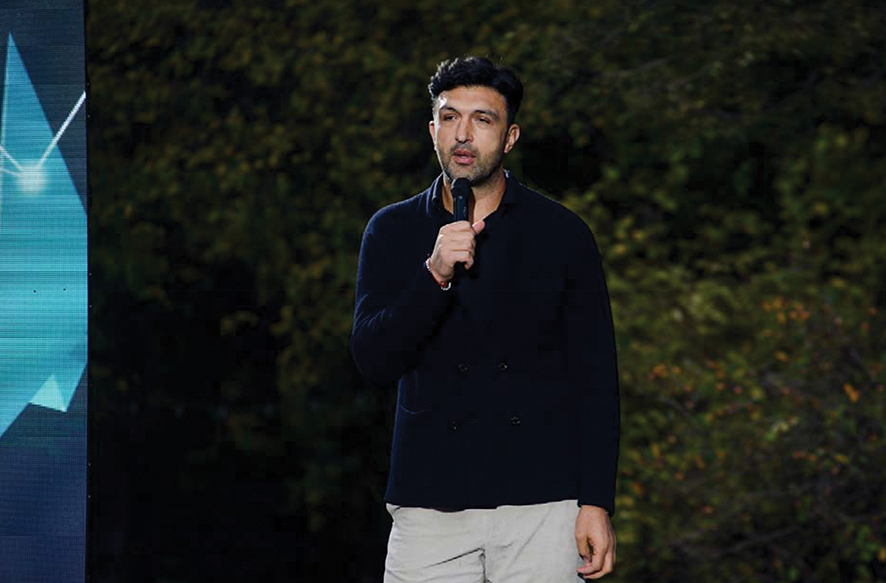
Former NBA champion Zaza Pachulia is stepping further into the world of infrastructure development after a government decree approved a 49-year land lease for a small hydropower project in the Racha region. The decision, signed on March 31, 2026, by Prime Minister Irakli Kobakhidze, grants Pachulia’s company control over nearly 29,000 square meters of state land in Ambrolauri Municipality for the construction of the Sadmeli Hydropower Plant.
The annual lease fee is modest, just under 19,000 Georgian lari, but the ambition behind the project stretches far beyond the numbers on paper.
A small plant with long-term stakes
The Sadmeli Hydropower Plant, registered under Pachulia’s fully owned company in 2023, is designed as a 2.66 megawatt facility on the Ritseula River. According to environmental project documentation, it is expected to be completed by September 2027 and is already included in Georgia’s long-term electricity transmission planning.
The annual lease fee is modest, just under 19,000 Georgian lari, but the ambition behind the project stretches far beyond the numbers on paper
On paper, it is a small project. In practice, it sits inside one of Georgia’s most important economic pillars: hydropower.
In the decree approving the lease, officials note that the agreement for construction and operation was signed in December 2025 between the government, the electricity system’s commercial operator, and the company itself. That structure places the project firmly within Georgia’s regulated energy framework rather than speculative private development.
The economics of a river
Small hydropower projects like Sadmeli are often described as “quiet infrastructure” because they are not flashy, not fast-growing, but steady.
A plant of this size typically generates between 10 and 18 gigawatt-hours of electricity per year, depending on rainfall and seasonal river flow. In Georgia’s wholesale electricity market, that output can translate into roughly $400,000 to $1.2 million in annual revenue, based on prevailing price ranges.
Construction costs, however, are substantial relative to scale: often between $8 million and $16 million for a project of this size. That means payback periods can stretch anywhere from 8 to 15 years, making these investments fundamentally long-term plays.
Hydropower’s appeal, though, is not high profit margins, but predictability. Once built, turbines are relatively inexpensive to operate, and revenue tends to be stable compared to more volatile sectors.
Why Georgia keeps building hydropower
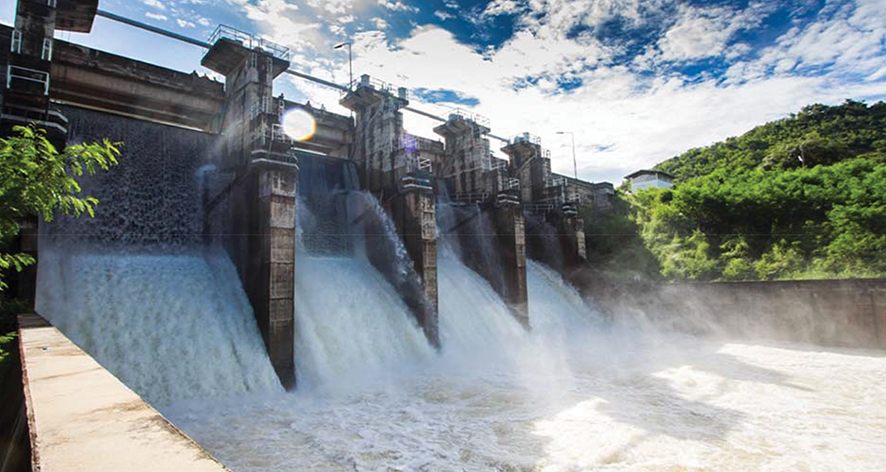
For Georgia, hydropower is not just an investment, it is the backbone of the national energy system. The country’s mountainous geography gives it an advantage: fast-flowing rivers, steep gradients, and natural conditions suited for electricity generation.
Many years, hydropower accounts for a dominant share of national electricity production. That reduces dependence on imported energy and opens the possibility of cross-border electricity exports, particularly to neighboring markets.
Georgia’s mountainous geography gives it an advantage: fast-flowing rivers, steep gradients, and natural conditions suited for electricity generation
But the expansion of hydropower has also come with debate. Regions like Racha, where the Sadmeli project is located, are known for ecological sensitivity and tourism potential. Even so-called “run-of-river” plants can alter water flows, affect fish ecosystems, and require construction roads that change the landscape.
Local tensions around hydropower projects are nothing new in Georgia. They tend to follow a familiar pattern: national government support for energy security and investment on one side, and local environmental or community concerns on the other. What it often comes down to is ensuring transparent, communication between all the parties.
From the basketball court to infrastructure capital
For Zaza Pachulia, the move into hydropower is part of a bigger post-sports trajectory.
Best known for his years in the NBA, including championship seasons with the Golden State Warriors, he has spent recent years building a domestic profile in Georgia through sports development and investment activity. His public work has included youth basketball initiatives and involvement in sports infrastructure projects.
The Sadmeli Hydropower Plant, however, is something more structural: a move from sports-adjacent philanthropy into long-term capital investment.
The project company structure reflects that approach. Sadmeli Hydropower Plant LLC is a single-shareholder entity, fully owned by Pachulia, with local management under director Levan Diasamidze. It is designed for one purpose: build, operate, and generate electricity over decades.
A long game in a long landscape
If there is a defining feature of hydropower investment in Georgia, it is patience. These are not fast-return ventures: they are tied to geography, rainfall patterns, regulatory frameworks, and decades-long concessions.
A 49-year lease, in that sense, is not unusual: it is the standard logic of infrastructure economics applied to natural geography.
What makes the Sadmeli project stand out is less its size than its symbolism: a former global sports figure placing a long-term bet on one of Georgia’s most traditional industries.
In the valleys of Racha, the river will keep running regardless. The question, as always in hydropower, is who can turn it into something lasting.
By Team GT