The situation surrounding Iran has grown significantly more volatile, with a series of military developments and political statements underscoring the risk of a wider regional conflict.
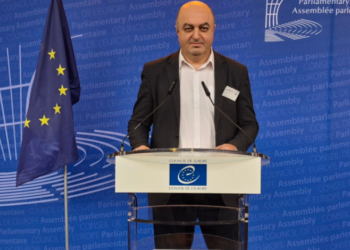
Israel’s Defense Minister Israel Katz said that Iran’s senior security figure, Ali Larijani, has been killed, while the Israeli military also announced that it eliminated Basij force commander Gholamreza Soleimani in a strike overnight. Iranian authorities have not confirmed or commented on these claims so far, leaving uncertainty around the reported leadership losses.
At the same time, Israeli airstrikes have expanded geographically. Strikes were reported in three neighborhoods in Beirut, while the Israeli army said it also carried out new attacks targeting Iran’s capital, Tehran. The escalation has already had direct consequences on the ground in Lebanon, where the country’s army confirmed that one soldier was killed and four others were injured following an Israeli strike in the south.
The broader region continues to face sustained missile and drone activity. Several Gulf states—including Qatar, Saudi Arabia, the United Arab Emirates, and Kuwait—reported intercepting incoming projectiles, highlighting the widening scope of the confrontation and the growing pressure on regional air defense systems.
Tensions have also intensified around key global energy routes. Iran has stated that it has effectively closed access to the Strait of Hormuz “to its enemies,” raising serious concerns about the security of one of the world’s most critical oil transit corridors. Despite these risks, European leaders have signaled reluctance to deepen military involvement. Germany stated it has no intention of joining the United States and Israel in military action, while the European Union’s foreign policy chief emphasized that EU member states have “no appetite” to deploy forces to ensure maritime security in the strait.
Amid the escalation, former US President Donald Trump criticized the current handling of the crisis, arguing that the situation reflects a failure of deterrence and warning that it could spiral into a much broader conflict if not addressed more forcefully.
With active strikes across multiple countries, contested claims over high-level casualties, and growing strain on global energy security, the situation remains highly fluid, with no clear indication of de-escalation in the near term.
Header image: Ali Larijani/ Courtney Bonneau | Afp | Getty Images