
A friend of Lali’s and mine recently invited me to the 20th anniversary concert of Kartuli Pesvebi (Georgian Roots), a concert of traditional Georgia dance and music. This happened at the Griboedov Theater inside Galeria Mall, just off Liberty Square.

The music, by seven musicians, was live: two drummers and accordionists, a bassist, duduk and stringed instrument players. The dancers were in two groups, children and adults, and all were spectacular: the whole gamut of Georgian regional music, costumes and dances, showing their stuff to a packed audience of parents and fans.
I had an ideal seat, aisle, 4th row, and had come prepared with my DSLR camera and a couple of lenses, of which I only needed the 18-55mm. I managed a few video clips by phone camera too, but have long ago learned that one cannot shoot both media at the same event: it’s just too distracting. So I stayed with the still photos. Other people were shooting too, a few on cameras like mine, some for TV, and plenty of cell phones of course.
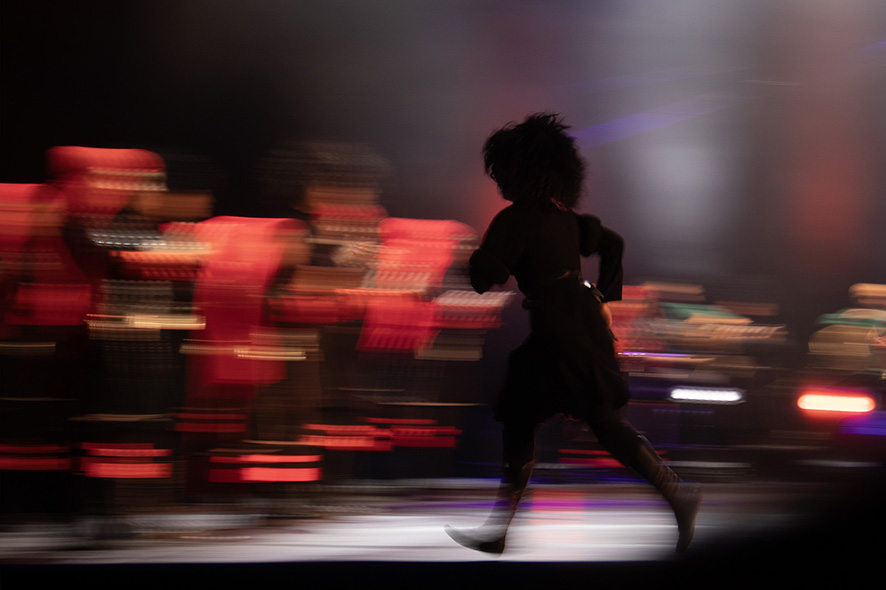
A surprise addition to the repertoire was a set of Ukrainian dances after the interval, also in national costume and cheered as wildly as the rest of the show. We’re rooting for you!

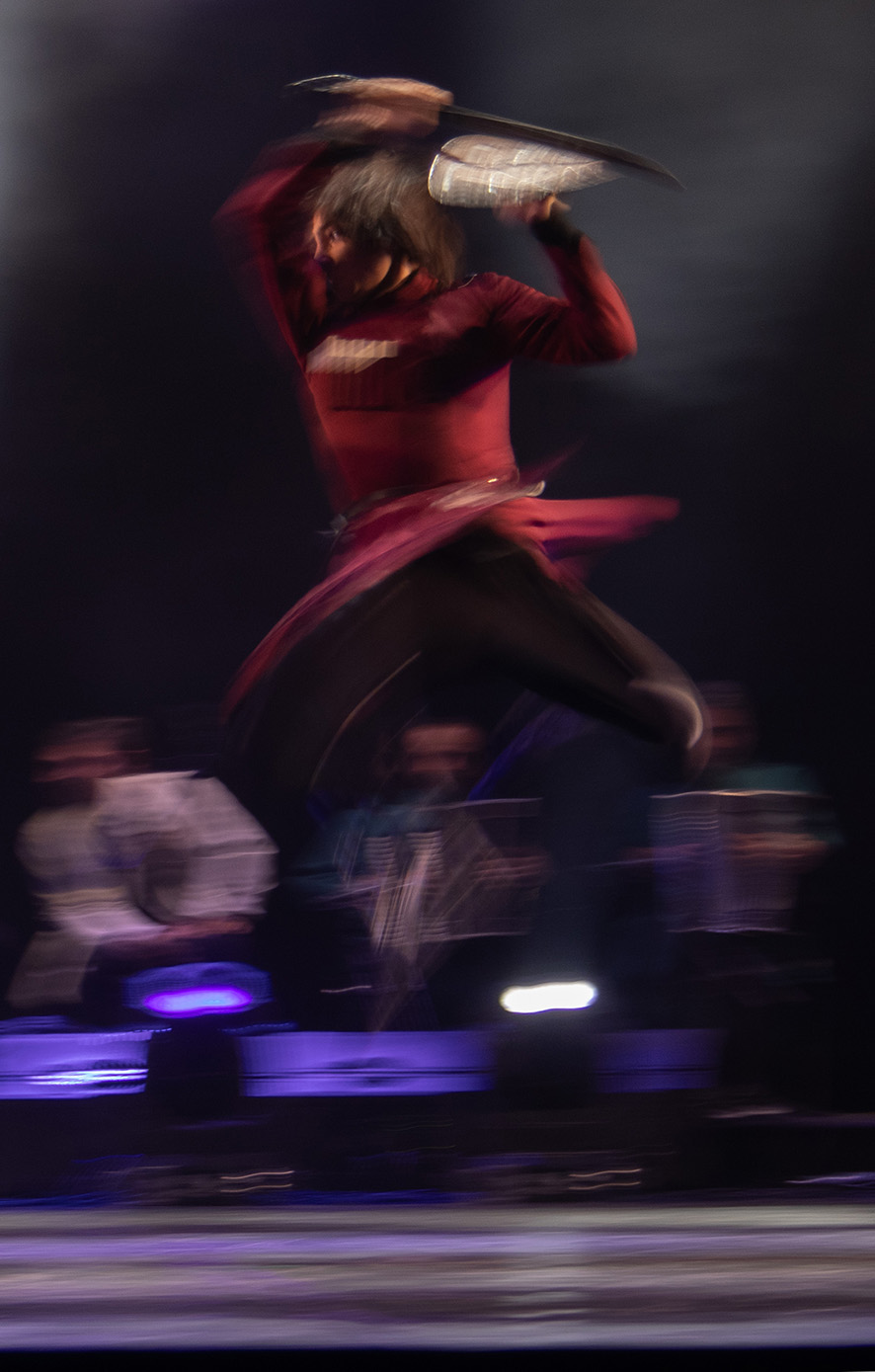
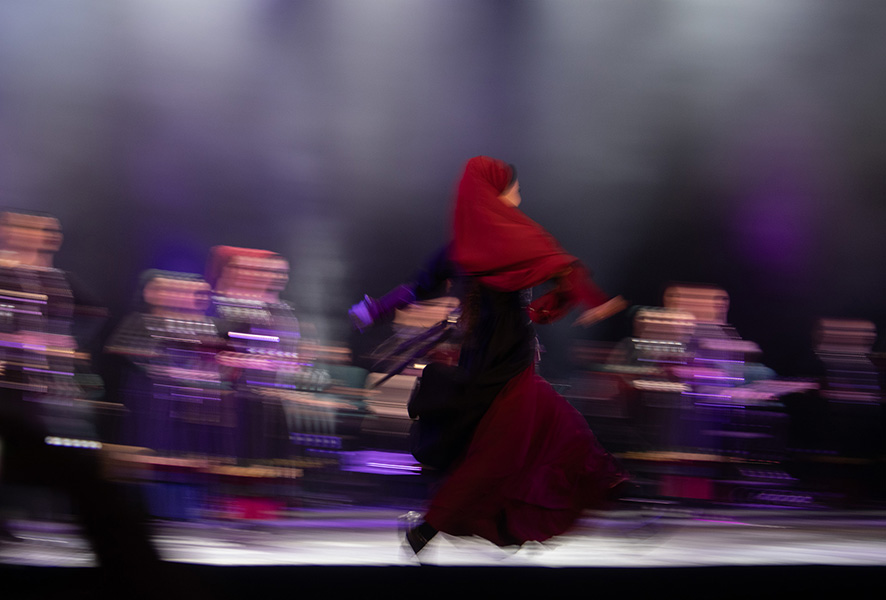
Dance, for me, is all about motion. Nothing new, but capturing that motion is what I try to do in photos. My version of this is a slow shutter speed (1/50 second or so down to as slow as necessary), to blur that motion. The result is something the human eye can never see by itself. But sharply still, frozen frames of dance are, to me, much further from the reality of all that exuberant activity. So, motion blur.

The panning technique, combining that slow shutter with a bit of camera motion in the direction of the subject’s motion, can lead to fascinating results. Usually, when it works well, part of the subject (that in synch with the camera) is recorded as still and everything else (the rest of the subject, and the background) is blurred. I captured this just right in a few shots, but my final processing yielded 77 frames out of 910 that I am really pleased with. I consider this to be a fine ration for such chaotic, fast-moving, unpredictable work. One or two are new masterpieces for me.

I also chose to underexpose all frames by quite a bit, to try to keep the highlights of each scene from blowing out, while letting the blacks from the harsh stage lighting be just that, mostly blacks. And I didn’t adjust colors, letting the existing lights and costumes be themselves. Sometimes this led to a strong color cast over whole sets of frames, other times to more natural looking lighting. I did adjust perspective so that the horizontal line at the bottom of almost all frames made by the stage would BE horizontal: usually I hadn’t shot it perfectly flat, knowing I could ignore this fussiness in shooting and correct it later.

You might think that taking so many photos of a couple of hours’ event would take away from the enjoyment of it for me. I don’t feel this at all. Instead, it helps me fix the glorious spectacle in my memory. And there was plenty to revel in, despite my having seen and heard almost all of this before. It’s just too magnificent to get used to, the very flower and pride of this diverse little country. I will never get tired of experiencing Georgian dance, so full of energy and talent and exuberant joy. It is one of the many reasons why I love this country so deeply and will never get tired of it. If you are here to learn what Georgia is all about, there is no better way than to take in an evening of its traditional culture. You will come away dazzled, awed, and thrilled. Opportunities present themselves; don’t miss out!

Blog by Tony Hanmer
Tony Hanmer has lived in Georgia since 1999, in Svaneti since 2007, and been a weekly writer and photographer for GT since early 2011. He runs the “Svaneti Renaissance” Facebook group, now with over 2000 members, at www.facebook.com/groups/SvanetiRenaissance/
He and his wife also run their own guest house in Etseri: www.facebook.com/hanmer.house.svaneti