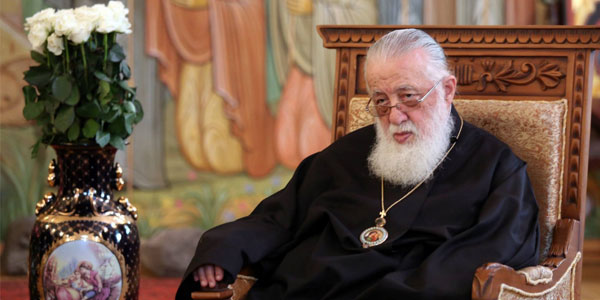
Catholicos-Patriarch of All Georgia Ilia II passed away at the age of 93.
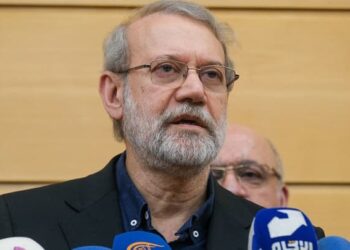
The news was announced by Metropolitan Shio Mujiri, Locum Tenens of the Patriarchal Throne, outside the Caucasus Medical Center, where the Patriarch had been receiving treatment following a deterioration in his health. He had initially been admitted to the Chapidze Clinic before being transferred to the Caucasus Medical Centre.
Born Irakli Shiolashvili on January 4, 1933, in Ordzhonikidze, North Ossetia, Ilia II was raised in the family of Giorgi Shiolashvili and Natalia Kobaidze. He graduated from the Moscow Theological Academy in 1960, having already begun his clerical path years earlier. In 1957, he was tonsured a monk and given the name Ilia, the same year he was ordained a hierodeacon at Sioni Cathedral. Two years later, he was ordained a hieromonk at the Lavra of St. Sergius.
Upon returning to Georgia, he served at Batumi Cathedral and steadily rose through the ecclesiastical ranks, becoming Hegumen in 1960 and Archimandrite in 1961. In 1963, he was appointed Bishop of Shemokmedi and later served as the first rector of the Mtskheta Theological Seminary. His service continued across key ecclesiastical roles, including in the Eparchy of Abkhazia, and in 1969 he was elevated to the rank of Metropolitan.
On November 9, 1977, Ilia II became Locum Tenens of the Patriarchal Throne, and on December 23 of the same year, he was unanimously elected Catholicos-Patriarch at the Twelfth Church Council held at Sioni Cathedral. His enthronement took place at Svetitskhoveli Cathedral on December 25, 1977.
Ilia II’s patriarchate became one of the most defining periods in the modern history of the Georgian Orthodox Church. His name is closely associated with the revival of religious life in Georgia during and after the Soviet era — marked by the restoration and construction of churches and monasteries, the expansion of dioceses and clergy, and the establishment of theological education institutions.
A historic milestone of his leadership came in 1990, when the Ecumenical Patriarchate officially recognized the autocephaly of the Georgian Orthodox Church. Beyond his ecclesiastical leadership, Ilia II was also known for his artistic and scholarly contributions, having painted more than twenty icons, including a notable depiction of the Holy Trinity. Under his blessing, the Bible was published in modern Georgian, along with numerous theological and educational works.
He also introduced the widely practiced tradition of the Patriarch serving as godfather to thousands of children through mass baptism ceremonies — a practice that became a unique and enduring symbol of his legacy.