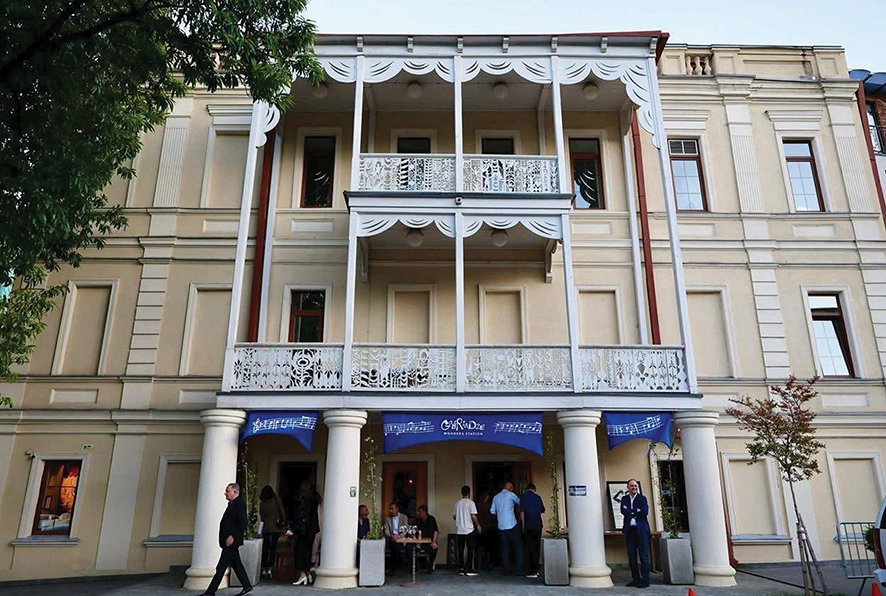
On 29 June, the day that would have marked Rezo Gabriadze’s 90th birthday, Tbilisi gained more than another concert venue. It gained a new cultural address, one that seems less interested in competing for attention than in cultivating attention itself.
Hidden within the lobby of Gabriadze’s first theater, Gabriadze Wonders Station opened with the inaugural program Music in the Theater, introducing a chamber space where concerts, conversations, archival recordings, broadcasts and artistic encounters are expected to coexist under one roof. The project extends the poetic universe of Gabriadze beyond puppetry and visual art into a permanent home for listening.
The symbolism of the opening could hardly have been stronger. Rather than commemorating Rezo Gabriadze with a memorial ceremony, the theater chose to celebrate his birthday by creating a living institution. It is an approach consistent with Gabriadze’s own artistic philosophy: culture survives not through monuments, but through continuous creation.
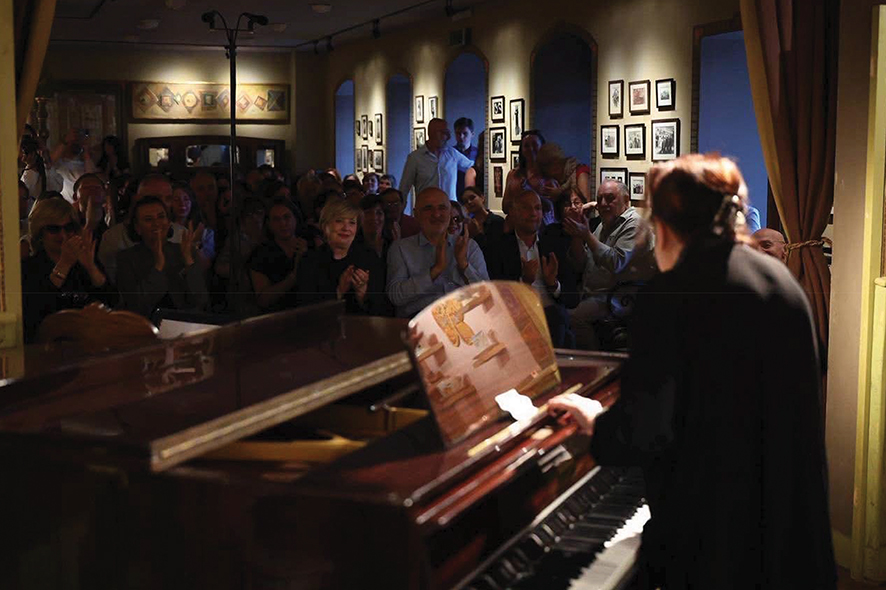
The inaugural evening, aptly titled Music in the Theater, reflected this idea. Instead of treating theater music as historical material, the program allowed it to breathe again through live performance, bringing together music written for Gabriadze productions alongside memorable pages from other Georgian theatrical scores. The evening suggested that music continues telling theatrical stories long after the curtain has fallen.
An additional layer of historical resonance came from the instrument itself. At the center of the new venue stands the personal cabinet grand piano of the celebrated Georgian composer Otar Taktakishvili, restored to concert life as both a musical instrument and a witness to Georgian cultural memory. Rather than becoming a museum object, the piano returns to its original purpose: making music.
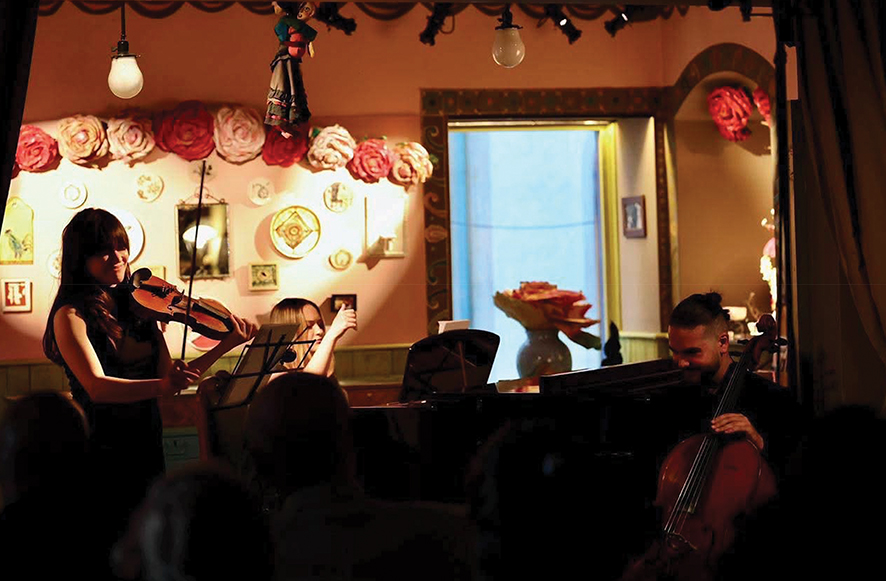
The performers represented several generations of Georgian musicians, reinforcing the venue’s mission as a meeting point rather than a monument. The opening concert featured Marika Kukhianidze, Alexey Gvamichava-Solonovich, Mariam Miminoshvili, Giorgi Hataliov, and Nika Barateli, with a special appearance by Nana Avalishvili. Together they transformed the intimate room into precisely the kind of space its founders envision: one where chamber music regains its original meaning: not simply music performed in a small room, but music experienced without distance.
According to the concept presented for the project, Gabriadze Wonders Station will host chamber concerts, creative evenings, recordings, archival projects and cultural dialogs, becoming a permanent platform for both established artists and emerging voices. In an era increasingly dominated by large festivals and spectacle, the decision to invest in intimacy feels quietly radical.
Tbilisi has never lacked concert halls. What it has often lacked are spaces built around listening itself: rooms where artistic exchange can occur without amplification by scale. Gabriadze Wonders Station seems designed precisely for this purpose. It recalls an older European tradition of salons and intimate musical societies, while remaining deeply rooted in the singular imaginative world of Rezo Gabriadze.
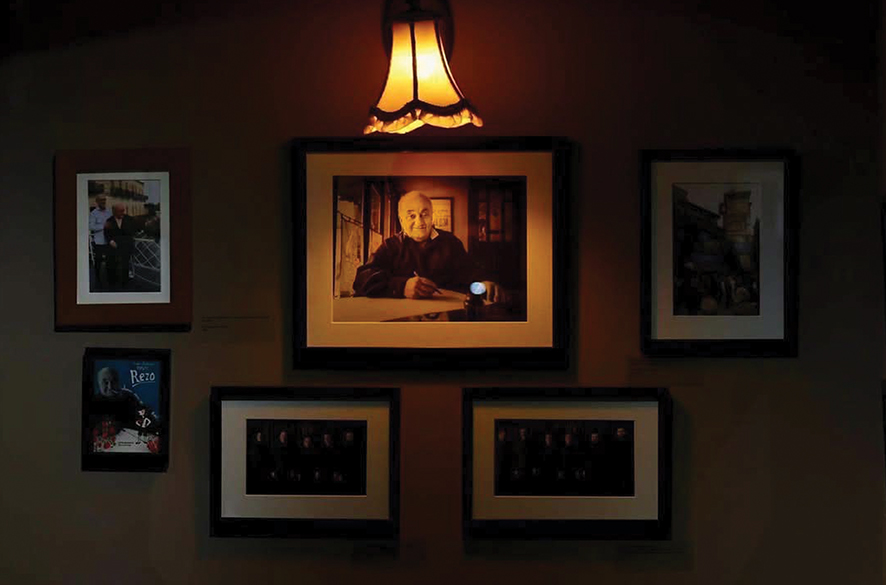
The location itself carries symbolic weight. Long before modern Tbilisi took shape, this corner of the city served as a tram stop: a place of arrivals, departures and unexpected meetings. The creators of the project deliberately invoke that history, imagining the new venue as another station: not for transportation, but for ideas, music and encounters.
For a city whose cultural identity has always been built as much through intimate conversations as through grand institutions, the opening of Gabriadze Wonders Station may prove significant beyond its modest physical dimensions. It introduces not simply another venue, but another way of thinking about cultural infrastructure: one where preservation and innovation, memory and performance, archive and live creation coexist naturally.
Perhaps that is the most fitting tribute to Rezo Gabriadze at ninety: not nostalgia for what has been lost, but the opening of a place where new stories, and new sounds, are invited to begin.
By Ivan Nechaev