
For those who do not know where the town of Gori is on the map of Georgia, and what it actually represents, we might elucidate that it is located right in the heartland of Sakartvelo, 86 kilometers west of Tbilisi, and happens to be not only the birthplace of Joseph Stalin, but also of many other prominent Georgians, among them Davit Oniashvili (1883-1937).
According to the English-language Wikipedia, he was a Georgian politician active in the Democratic Republic of Georgia, a member of the Georgian Parliament, and Minister of Agriculture of the country’s first independent republic. Prior to that, he played a role in the process that led to the declaration of independence of the Transcaucasian Democratic Federative Republic on 22 April 1918, and was one of the signatories of Georgia’s 1919 Act of Confirmation of Independence. During the Great Soviet Purge, on 14 April 1937, he was arrested on charges of membership in the Menshevik Counter-Revolutionary Center and was subsequently shot.
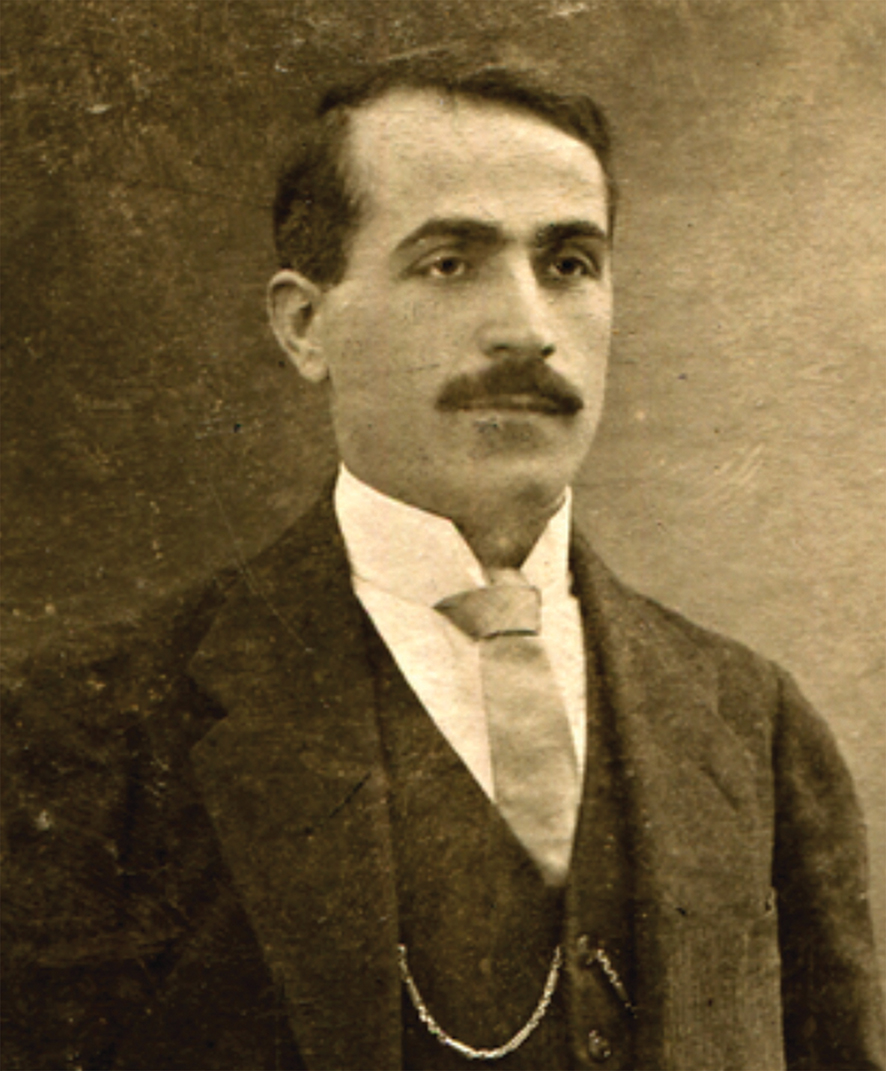
The Wikipedia article about this great Georgian man is only a stub, and before we send the missing significant information to that famously voluminous international electronic reference work, we would like to reveal here some even more interesting facts about his life.
Davit Oniashvili was the translator of William Shakespeare’s Julius Caesar and Johann Wolfgang von Goethe’s Faust into his native Georgian tongue, as well as the author of the first monograph in the Georgian language about the great Lord Byron, titled Byronism and World Sorrow. These three significant literary achievements matter to us, the lovers of Georgian culture and literature, above all.
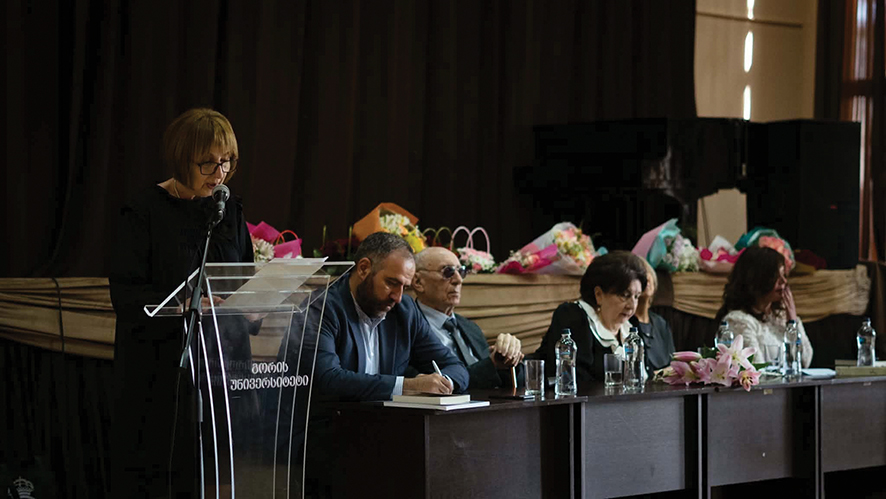
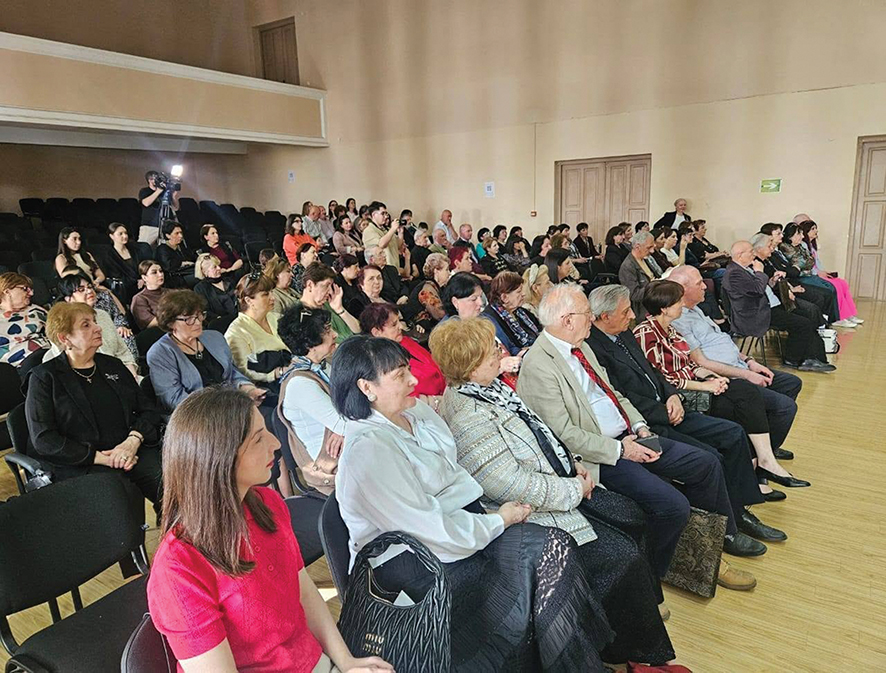
Last Saturday, a conference dedicated to the memory of Davit Oniashvili was held at Gori State University, whose spacious assembly hall was packed with representatives of Gori’s intellectual, educational, and cultural elite, as well as the wonderful youth of the town. Incidentally, Gori has always been known for its distinguished intelligentsia and rich cultural-intellectual life.
The event was opened with an introductory speech by the Vice-Rector of the university, Professor Zurab Zurabishvili. Academician Innes Merabishvili, the eminent Byron scholar and translator of world renown, took the floor immediately after the introductory speech to speak about the significance of the conference and the place of Davit Oniashvili in the literary and cultural life of Georgia.
By the way, Innes, the indisputable darling of Gori, was born and raised in that lovely city. She fondly recalls learning the English language there and receiving an outstanding education in her hometown, within a deeply traditional family rooted in our indigenous culture. In fact, Professor Innes Merabishvili, founder of the Byron School of Tbilisi and member of the Board of Directors of the International Byron Society, has personally given a new life to the memory of Davit Oniashvili, whose name has been somewhat obscured by time and the nonchalance of our currently overstrained and socially exhausted society, preoccupied with everyday survival.
Notwithstanding myriad obstacles along the way, Innes managed to bring to fruition a conference that will not be forgotten by its participants. Why is she doing all this, while being so occupied with academic obligations and translation work, not to mention family care and responsibilities? A playful answer might be that both Davit and Innes belong to the same warm and nourishing soil of Gori, and that is why. But jokes aside, the answer is straightforward: Professor Merabishvili knows the value of her outstanding compatriots and their role in safeguarding Georgia’s elevated cultural and literary heritage, and she dedicates her time and energy to this cause without any ulterior motive.
Innes has even traced the family roots of her great fellow Georgian and restored them into the wider cultural memory, helping to preserve the image of our unforgettable Davit Oniashvili.
After Innes, the floor was given to Academician Mindia Ugrekhelidze, whose warm and fact-rich speech made all of us feel that we were truly in the right place at the right time. Doctor of Philology Tinatin Sikharulidze was next, her presentation offering the most substantial biographical insights, masterfully delivered. Tinatin has authored a 180-page, large-format book dedicated to Oniashvili’s life and work, a thorough monograph that secures his place among those who define the value of Georgian intellectual culture.
Next was Maia Bolashvili, a pedagogue at Gori University, with an enthusiastic presentation of her research on the subject. Finally, the emotionally engaged participants in the conference had the privilege of listening to Maia Mtvaradze, Davit Oniashvili’s granddaughter, and Nugzar Machavariani, the grandson of Davit’s first publisher, Davit Machavariani. Nothing could have been more meaningful than hearing these educated and thoughtful Georgians at the podium.
The newly published books by Davit Oniashvili were also on display. Academician Merabishvili was accompanied by a solid delegation of professors from Tbilisi, which added further weight and significance to the event. In a word, the conference was a great success.
Frankly speaking, this nation badly needs such events to take place more often in our social, cultural, and spiritual life, so that we may tell the world who we are and where we come from.
Blog by Nugzar B. Ruhadze









