From economic damage to national security. What do the three national disconnections of 2026 indicate?
On July 24, July 25, and August 5, 2026, three times in twelve days (!), and each time for a different reason, but with the same disastrous result, the Georgian energy system completely stopped operating. Each time, the official explanation was a different technical reason, without details or deeper explanations.
At first glance, the direct economic damage is small compared to the scale of the problem – approximately 32 million GEL, just 0.03% of GDP in 2025 (the assessment is based on publicly available official data).
But this number alone and independently says nothing.
Interesting stories begin when we look at the unified chain of events according to the principle of the big picture, against the background of a reality where all citizens of Georgia are equally required to co-fi-nance “necessary investment” in regulated tariffs.
The revenue from the increased tariff is directed to the unified budget, while capital investments in the state budget are documented as decreasing (see the State Audit Conclusion on the 2025 Budget).
The country’s largest hydroelectric power plant, according to its own regulator, has never had a backup duplication system and there is still no public information that anyone is even “formally” working on such a thing.
For years, a scheme associated with Russian state capital (i.e., directly with the Kremlin) and now partial-ly sanctioned has been featuring in the chain of electricity imports and distribution network ownership. Ultimately, the logically expected result is guaranteed: during the days of disconnection, not only the economy, but also the country’s defense capability and, in a broad sense, statehood are vulnerable.
With this analysis, we seek to unify four different dimensions of one big, negative event: what hap-pened, what it cost us, why this security issue is much greater than material damage, and who is paying the real price and in what timeframe.
What happened?
After the first two blackouts, the State Security Service (SSS) initiated criminal proceedings under the article of sabotage, to the extent possible, without a specific charge. The conclusion is not yet public.
The most obvious detail of the August 5 incident was voiced by one member of the regulatory commission himself in a statement published on social media: “Today, the State Electrosystem was conducting a planned test on the Enguri HPP units, the purpose of which was to identify and assess the weak points in the system, taking into account the accidents that oc-curred on July 24 and 25. Within the framework of the test, among other measures, Georgia’s
The operation of the electricity system in an isolated mode. This mode was associated with significant technical risks, including the possibility of complete shutdown of the electricity system.
In other words: the regulator knew in advance and publicly confirmed that this specific “test” was accompanied by the risk of a complete national split, and it was still carried out exactly that way, with the realization of this risk.
This is precisely the “pre-announced and fully implemented successful failure experiment”.
What did the “blackout” cost us: a light economic account
The international methodology for assessing such events uses two simple measures: Energy Not Served (ENS) and its economic value to the consumer (Value of Lost Load – VoLL, ACER standard approach).
ENS measures how much energy was not supplied to the system; VoLL measures what this cost the economy and society, including lost production, time, services, and spoiled goods.
The basis for calculating the data is used as ESCO’s balance sheet prices and the 2019 Georgian VoLL survey, recalculated with a GDP deflator level up to 2026.
This is not a “weighted” assessment in one block, each case was reconstructed separately with known technical circumstances:
For the sake of objectivity, it should be noted that these two indicators: 0.9 million GEL and 31.9 mil-lion GEL do not add up to each other: VoLL already covers the economic result of unsupplied energy as a whole.
Based on this methodology and publicly available data, the best current estimate of only the direct, material part of the socio-economic damage is approximately within the range of 32 million GEL, with a reasonable range of 18 – 54 million GEL (based on public data, calculated using the formula of international methodology).
We can also verify the same based on GDP data. The result obtained at the calendar hour value of GDP in 2025 (approximately 11.9 million /h, recalculated as 104.6 billion annual GDP in 2025) is close to the loss from ENS.
The official, minute-by-minute data of the third case is not yet public, it is logical to keep the final number within this range until this detail is published.
What is the issue?
The economic assessment gives us the answer to the question: What did it cost us? However, the much more important question is: what do these three, similar in scale, national disasters that occurred within 12 days, each caused by a different reason, indicate?
Cyber Security and External Threats
In 2015-2016, hackers associated with the Russian military intelligence (GRU) remotely disabled the switches of three distribution companies in Ukraine (BlackEnergy3), and later attempted to cause long-term damage to generation (Industroyer). This is the first confirmed case where a cyber-attack physical-ly disrupted the national electricity system.
Since 2022, the same logic has shifted to a kinetic form. Russia’s missile-drone campaign has damaged and almost halved Ukraine’s generation capacity, causing an emergency in Moldova’s energy sector as well.
We have our own experience in Georgia: in October 2019, a large-scale cyberattack damaged thousands of government websites and the broadcasting of two TV channels; in 2020, the US and the UK unequivocally linked this to the GRU unit Sandworm/Unit 74455, which is also accused of attacking the Ukrainian network.
No official source has yet confirmed cyber-interference as the cause of all three shutdowns in 2026, but the State Security Service (SSS) itself opened a case of sabotage, which shows that this scenario is not off the agenda.
Energy Dependence and Geopolitics
The Georgian electricity system is synchronously connected to the networks of Russia and Azerbaijan; frequency stability has historically been tied to the Russian system. The disconnection on July 25 is a direct illustration of this. The loss of the connecting line with Azerbaijan collapsed the entire national system in just a few minutes, which shows that there is not enough “islanding” protection in the coun-try. Unfortunately, the same trend is observed in the structure of gas imports, in 2025 the purchase of Azerbaijani gas decreased, while Russian gas increased by 23%.
The Baltic countries spent 18 years of unwavering work and large-scale support from the European Union to avoid a similar risk, before leaving the Russian-Belarusian BRELL network without a blackout in February 2025. Georgia’s diversification (e.g., the agreement with Azerbaijan) so far only changes the supplier, but not the synchronous space, i.e., by shifting the assemblies, the sum remains unchanged since Azerbaijan is still connected to the same Russian IPS/UPS system.
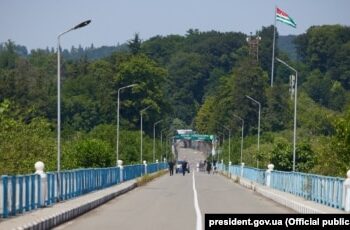
A separate risk is the Enguri HPP, Georgia’s largest hydropower asset. Its dam is located on Georgian-controlled territory, while the station itself is in Russian-occupied and controlled Abkhazia; any technical work here requires coordination between both sides of the dividing line.
The fact that deserves attention (the connection is still unconfirmed): the European Union included the Russian state company Inter RAO, which through Dutch intermediaries owns 75.47% of the Tbilisi distribution company “Telasi” and the Khrami HPPs, in the 21st package of sanctions on July 23, 2026.
The first national shutdown occurred the next day, on July 24. This temporal coincidence is worth noting, but there is no claim of a causal link.
Resilience of critical infrastructure. International experience
More than 50 million people were left without electricity, which was caused not by a single cat-astrophic event, but by a chain of vulnerabilities: outdated reliability standards saturated with non-mandatory bureaucracy, poor coordination and insufficient training of operators (the so-called “three T’s”: Trees, Training, Tools). The systemic response was not technical repairs: the 2005 legislative re-form made the voluntary NERC standards mandatory and enforceable (100+ standard), continuous backup communication and real-time monitoring were introduced.
Pakistan’s national blackout, 2021. An engineering glitch at one station (Gudu) caused a cascading shut-down of the entire national network, which directly demonstrates that a local glitch should not be able to leave the entire country without energy if the system has adequate protection. The regulator (NEPRA), after an investigation, imposed a fine on the standard, non-criminal, regulatory accountabili-ty mechanism of the Transmission Company (NTDC).
In our case, the most “eloquent” recognition came from the regulator itself. The chairman of GNERC stated after the shutdown on July 25 that there were flaws in the protection systems of the Enguri HPP and added: “If we had a second station like the Enguri HPP, in case of a possible defect at the Enguri HPP, the second one would protect us from all this, but it’s unfortunate that we don’t have it” (As in the famous film: “Do you want candy?… No.”)
This is not an accidental statement, it is the regulator’s own acknowledgment that the country’s largest regulated generation asset has been operating for years without backup duplication. What
everyone knew, but no one bothered to create an alternative protection mechanism and unfortunately they do not intend to now either.
Military readiness and defense capability
Energy security is directly and closely related to military security and the country’s defense capability.
The combat readiness of the armed forces is critically dependent on sustainable and uninterrupted energy supply, which is a necessary condition for timely and adequate response to physical, cyber and hybrid threats.
One of the essential components of defense sustainability is the uninterrupted operation of intelligence and surveillance systems, for which duplication of energy sources is necessary. However, it
takes time to activate backup generators, and it is these seconds that determine the effectiveness of operational efficiency. Imagine even a few minutes of “blinded” air defense or reconnaissance and notification network located in the border zone, a resource that is already limited.
Bringing military units into combat readiness even in the conditions of power outages is repeatedly complicated: the time for gathering with alarm, issuing weapons, evacuating equipment and going to the operational purpose area increases. In the conditions of modern weapon systems, it is precisely these lost minutes that can become the cause of a decisive, negative result.
A separate risk is the weakening of the ability to respond to subversive, terrorist and other hybrid threats. It is precisely in such conditions of disconnection that hostile forces may avoid contact with security and defense forces and exert kinetic influence directly on civilian targets. To achieve political, economic and social results. Naturally, the question arises: when was the last time an alarm and com-bat readiness exercise was conducted in defense and power structures by imitating a complete power outage?
For Georgia, this threat is no longer virtual. On the territory of the country, at a short operational distance from its important centers, there are separatist bridgeheads, behind which the forces have ambitions for further appropriation of the territory. In such an environment, the factor of timely response is of vital importance, as any delayed response can lead to severe strategic consequences.
Institutional accountability
The criminal investigation of the SSS after the first two disconnections is partly related to the opposition’s simultaneous citation of sabotage, incompetence and corruption as possible causes. This combination of technical uncertainty and pre-existing low institutional trust is a security factor in itself.
The absence of a timely, independent and public technical explanation leaves ample room for speculation and conspiracy theories, strengthens the vulnerability of disinformation, and practically pours oil on the fire in an already tense political and polarized environment, which further exacerbates social di-visions and polarization, and inherently threatens the country’s strategic security. This is a major problem for all citizens of Georgia, regardless of their religious beliefs and political orientations.
Criminal investigation is by its nature a non-public and lengthy process and cannot replace an independent technical report. Both are necessary mechanisms in parallel and substitute for each other.
It provides that in parallel with the criminal/disciplinary investigation, within a certain period of time, the country should have a public, detailed technical “post-mortem” report, at least a minute recovery curve, a causal chain and a plan of corrective measures, with deadlines. In our case, such a document does not yet exist for all three disconnections, and no one is talking about its preparation yet.
The Trace of Money: Who Pays and for What
Economic and security risks are not formed in a vacuum – they are formed in a specific financial and institutional environment. Four documented facts show that this environment itself is a source of risk.
Tariff increase in the name of “investment”: From April 2026, the electricity tariff has increased. The population +5, business on average +4-6 tetri. According to the official explanation of the regulator, the main reason is an “unprecedented”, 1.5+ billion GEL investment program in the distribution network, which three companies (Energo-Pro Georgia, Telasi, EP Georgia) will implement in the coming years. It should also be noted that 75.47% of “Telasi’s” share belongs to the Russian state Inter RAO, the company that the European Union included in the sanctions list in July 2026. The opposite picture in the state budget: According to the analysis of the Parliamentary Budget Office, the component of growth of non-financial assets, i.e. capital investments, in the 2025 state budget plan decreased by 380.6 million GEL (9.1%) compared to the previous year. This is formally a different, non-communal budget, but it forms the same picture from two different angles: high investment rhetoric, actually low probability of execution, traditionally weak approach and verified result.
Documented conflict of interest in the import chain: According to a study by “Transparency International – Georgia”, the former General Director of the State Electricity Operator (ESCO) became the head of the company “Inter RAO Georgia”, 50.01% of which is owned by the subsidiary company registered in the Netherlands, the Russian state Inter RAO. Import agreements
It is closed and not public, which increases the risk of a “revolving door” and an artificially inflated purchase price.
These three facts together – the tariff increase in the name of “necessary investment”, the actually decreasing investment spending at the state level, and the documented non-transparent mediation in connection with Russian, already partially sanctioned capital, create a chain in which the 32 million direct loss is only a small visible part (the tip of the iceberg), but in reality it hides a much larger, systemic price that the consumer pays to the system under the guise of “investment”.
Against this background, the “personal tragedies” that are not reflected in any statistics remain unappreciated – increased calls to 112, traffic accidents and accidents caused by blackouts, “personal” problems of people stuck in elevators, walking through metro tunnels, long-term health damage caused by panic attacks and stress, etc… Such human tragedies are not reflected in GDP or economic growth statistics.
What do we learn from our own cases?
The common conclusion of all three international precedents is the same: a recurring, cascading nation-al collapse almost always indicates not a one-time, isolated flaw, but a systemic defect. Deficiencies in defense organization, operator competence and training, real-time monitoring, and coordination be-tween agencies. Which were corrected and standardized with systematic and competent approaches. In the case of Georgia, the national collapse caused by three independent technical reasons (frequency drop, loss of the outer line, “planned” test), which was implemented in just 12 days, showed that the current defense lines are insufficient, one local event easily turns into a national crisis regardless of the size and shape of the trigger.
The crossroads of economic and security risks
Economic analysis shows that the direct financial loss (approximately 32 million , only 0.03% of GDP) is relatively small in scale. However, from a security perspective, the real significance of the event is not in the amount, but in what it shows:
- Insufficiency of System Defence
- Structural dependence on an external potentially unstable synchronous
- Confirmed external cyber capabilities in the region, even in this particular case, all three are not yet confirmed.
- The lack of institutional trust, which turns any scale of technical incident into a political crisis.
It is this quartet that is the indicator of a systemic problem and an immense problem, and not a specific, even multi-million figure that international security analysts and reliability regulators assess after such events. Not a one-time loss, but the strategic vulnerability of the state and the prospect of real resilience.
Synthesis and what should happen
All three sections of our analysis lead to the same conclusion in different ways. Economically, 32 mil-lion GEL is small, but the repetitiveness itself indicates what has already become “tradition” in a non-positive sense of the word.
In terms of security, this risk extends from cyberspace to military readiness. In terms of governance, the same risk is embedded in the logic of financing – a citizen pays for an investment that cannot be verified.
There is no independent, time-limited, public technical report on all three cases according to the NERC and NEPRA model.
The conclusion of the independent audit on the “islanding” and N-1/N-2 continuity of the network. Separate (independent) risk management plan for the Enguri HPP. reserve capacity management and communication (effective) protocols.
Public monitoring of the fulfillment of investment obligations by utility companies and transparent, verifiable annual monitoring reports; analysis of promised to actually spent.
Transparency of import intermediary contracts and a public registry of ultimate beneficial owners. An independent public, professional and state vulnerability assessment of the impact of EU Inter RAO sanctions on Georgia’s energy sector.
Until concrete steps are taken in this direction, the next disconnection will not be an unforeseen event, but part of a “tradition” that has formed over the past decade. (For which we can apply to UNESCO for the status of a non-material monument).
Op-Ed by Nikoloz Alavidze, Advisor, and Vakhtang Kapanadze, Member of the political council of the political party ‘Georgia First.’
Sources: Civil Georgia, OC Media, Georgia Today, DFWatch, bfm.ge, radiomaestro.ge, IEA, ESCO, GSE, TSU DSpace, Geostat, ACER, CRS/Congress.gov, ECFR, OSW, “საერთაშორისო გამჭვირვალობა საქართველო”, პარლამენტის საბიუჯეტო ოფისი 2026 წლის 6 აგვისტოს მდგომარეობით.