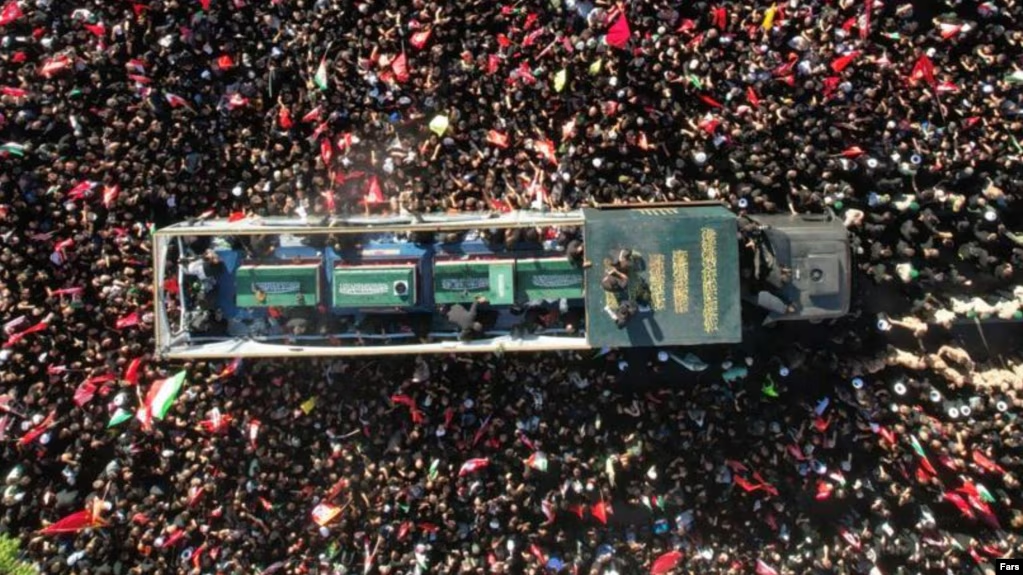
Former Iranian Supreme Leader Ayatollah Ali Khamenei was buried on Thursday at the shrine of the eighth Shia Imam, Reza, in the northeastern Iranian city of Mashhad, following a week-long funeral procession attended by large crowds.
Khamenei was killed on February 28, the first day of the US and Israeli military campaign against Iran. His funeral took place five months after his death.
Khamenei led Iran for more than three decades. During his rule, many Iranians associated his government with political repression, intimidation, arbitrary arrests, and strict political and social restrictions.
His use of force against protesters, imprisonment of opposition figures, obstruction of the timely delivery of COVID-19 vaccines to Iran, and hostile stance toward several countries, particularly the United States and Israel, contributed to his reputation as an uncompromising authoritarian leader who left the country increasingly isolated on the international stage.
Earlier this year, security forces violently suppressed anti-government protests across Iran, leaving many people dead and hundreds injured.
On July 3, Khamenei’s body was transferred to Tehran’s main religious complex, Imam Khomeini Mosalla, marking the beginning of a week-long series of mourning ceremonies organized by the Iranian authorities.
Following ceremonies in Tehran and Qom, Khamenei’s body was taken to four cities in Iraq before being transported to Mashhad, Iran’s second-largest city, where he was laid to rest on July 9.
The final funeral prayer was led by Khamenei’s eldest son, Mustafa Khamenei. However, the Islamic Republic’s new leader, Mojtaba Khamenei, was again absent from the ceremony. His absence throughout the five-day funeral procession, despite the presence of Khamenei’s three other sons, fueled speculation. He has not appeared publicly since the attack in which he was reportedly seriously injured.