In the contemporary classical music landscape, orchestral tours often function as cultural diplomacy disguised as concert programming. Every appearance abroad becomes a statement about identity, artistic priorities, institutional confidence, and the ways nations choose to represent themselves through sound. This perspective makes the arrival of the Polish Baltic Frédéric Chopin Philharmonic Orchestra in Tbilisi an event of unusual importance.
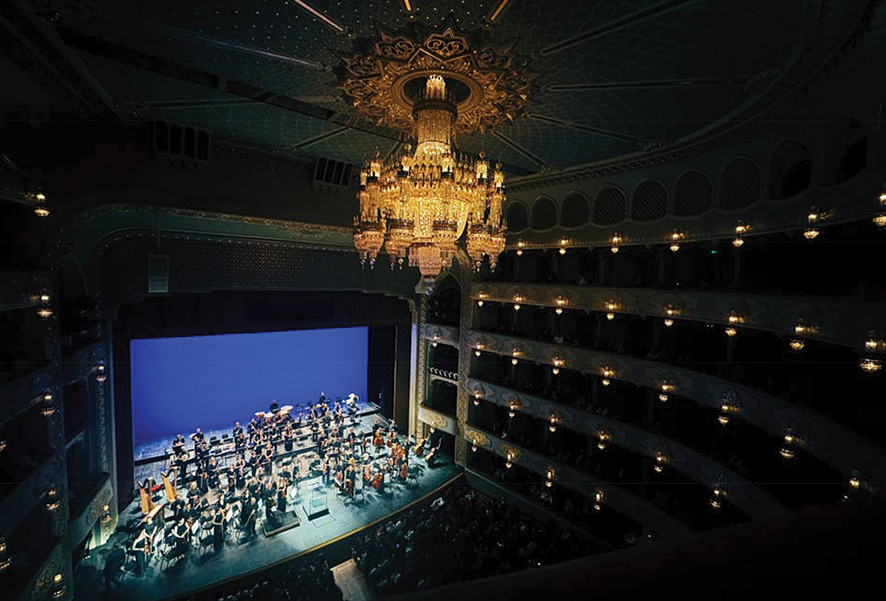
For the first time, one of Poland’s leading symphonic institutions appears before Georgian audiences, bringing a carefully curated repertoire that spans the late Romantic tradition, twentieth-century modernism, and the central canon of European orchestral music. The two evenings at the Tbilisi Opera and Ballet Theater, under the direction of conductor Gogi Chichinadze, reveal a dialogue between two cultural regions situated on opposite shores of Europe’s historical imagination: the Baltic and the Caucasus.
The Polish Baltic Frédéric Chopin Philharmonic Orchestra occupies a unique position within Poland’s cultural ecosystem. Based in Gdansk, a city whose history embodies centuries of exchanges between Central Europe, Scandinavia, Germany, and the Baltic world, the orchestra carries within its institutional identity a complex geography of memory. Gdansk has long been a crossroads where political histories, commercial routes, and cultural influences intersect. The same city that witnessed the birth of the Solidarity movement also nurtures one of Poland’s most internationally active musical institutions.
The orchestra’s association with Frédéric Chopin provides an additional symbolic layer. While Chopin remains perhaps the most universally recognized figure in Polish culture, the Baltic Philharmonic has consistently avoided treating his legacy as a museum artifact. Instead, it has embraced a broader mission: presenting Polish musical traditions within an expansive European framework. This philosophy becomes visible in the Tbilisi repertoire.
Interestingly, the orchestra does not arrive carrying a program devoted exclusively to Polish music. Instead, it presents itself through a broader European narrative, positioning Polish musical culture as an active participant in the larger history of continental art music. Such a decision demonstrates artistic confidence. Institutions secure in their identity rarely feel compelled to define themselves narrowly.
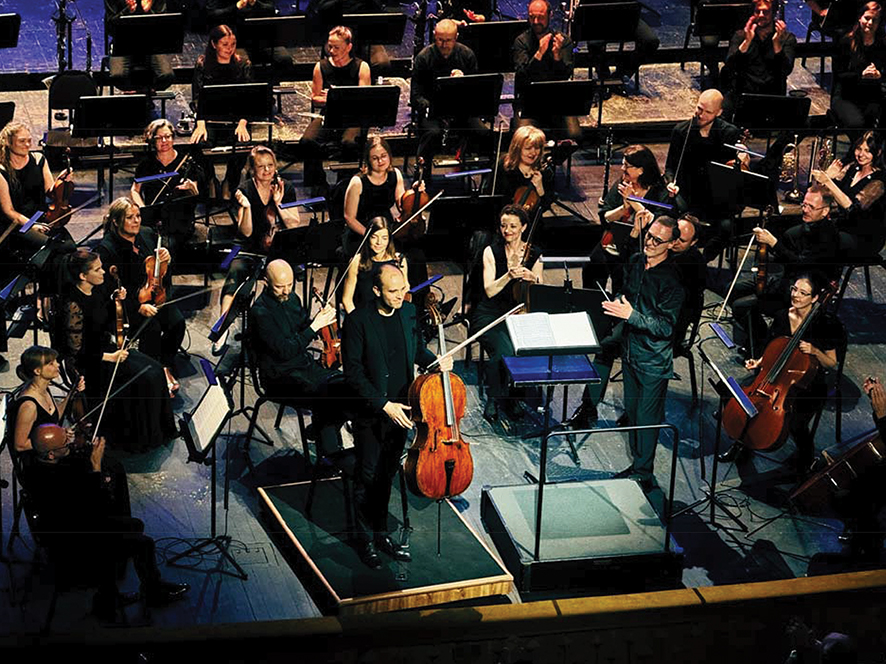
The first evening places Antonín Dvorák’s Cello Concerto in B minor alongside Tchaikovsky’s Sixth Symphony, the Pathétique. At first glance, these works belong comfortably within the standard symphonic repertoire. Yet their pairing reveals a profound emotional architecture. Dvorák’s Cello Concerto occupies a unique place in nineteenth-century music. Written in New York during the composer’s American period, it emerged from a creative moment in which questions of national identity and universal expression became inseparable.
The concerto is frequently celebrated for its lyrical beauty and technical brilliance. Such praise, while justified, often overlooks its structural sophistication. Unlike many Romantic concertos, Dvorák avoids treating the soloist as a heroic protagonist battling against orchestral forces. Instead, the cello becomes a participant in a larger symphonic conversation. The work resembles a symphony with obbligato cello more than a traditional virtuoso vehicle.
For soloist Maciej Kułakowski, this presents a demanding artistic challenge. The performer must sustain a narrative that balances intimacy with grandeur, lyricism with architectural clarity. The concerto’s emotional center lies in its final movement, where personal memory enters the musical discourse. Dvorák incorporated references associated with his dying sister-in-law Josefina, transforming what might have been a triumphant conclusion into a meditation on loss and remembrance.
The result is music that continually oscillates between public and private expression—a characteristic that resonates strongly with contemporary audiences living amid similar tensions between collective history and individual experience.
If Dvorák’s concerto explores memory, Tchaikovsky’s Sixth Symphony confronts mortality itself. Few works in orchestral literature have generated as much interpretive debate as the Pathétique. Premiered only days before the composer’s death, the symphony has often been treated as a prophetic farewell. While such readings can become overly romanticized, they nevertheless acknowledge the work’s extraordinary emotional singularity.
What remains genuinely radical about the Sixth Symphony is its formal design. The nineteenth-century symphonic tradition typically culminated in victory. Beethoven established the model. Brahms refined it. Bruckner monumentalized it. Tchaikovsky dismantled it. Instead of ending with a triumphant finale, he concludes with an Adagio lamentoso that gradually dissolves into silence. The symphony appears to move backward through emotional states: exuberance, grotesque irony, restless motion, and finally resignation.
This reversal transformed the possibilities of the symphonic form. The famous third movement, often mistaken by audiences for the finale because of its overwhelming energy, becomes a trap. Applause frequently erupts before listeners realize that the true ending still awaits them. The final movement remains one of the most devastating passages ever written for orchestra. Rather than offering resolution, it leaves audiences suspended between acceptance and despair.
For Georgian listeners, this work carries an additional resonance. Few cultures understand the coexistence of beauty and melancholy as deeply as those shaped by centuries of political upheaval, cultural resilience, and historical memory. Tchaikovsky’s final symphony speaks directly to such sensibilities.
The second evening moves in an entirely different direction. Mozart, Lutosławski, and Richard Strauss form a sequence spanning nearly two centuries of musical evolution. The result resembles a compressed history of European orchestral thought.
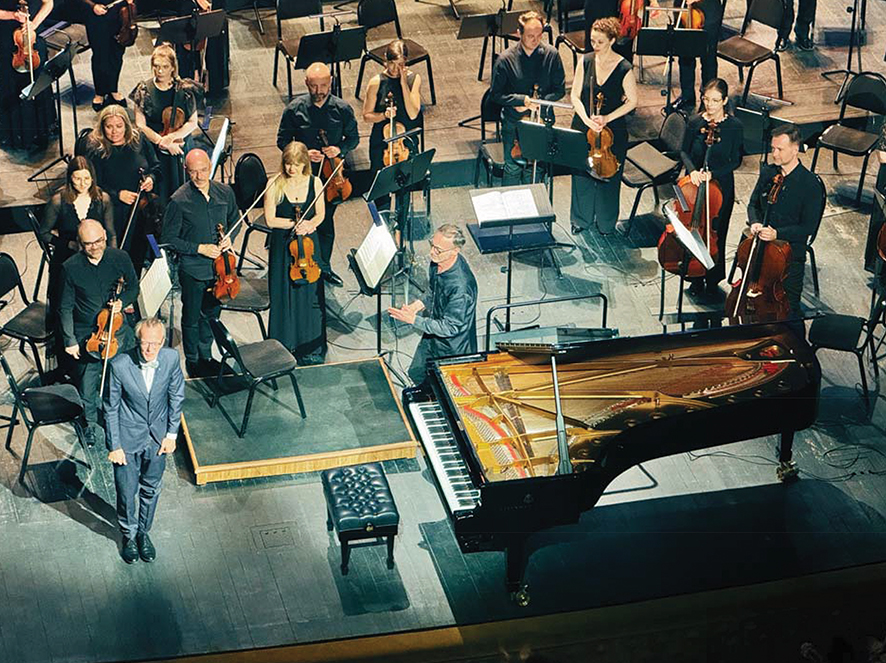
Mozart’s Piano Concerto No. 25 in C major occupies a special place within his mature output. This is Mozart at his most public, ceremonial, and architecturally ambitious. The concerto emerged during a period in which the composer was transforming the genre from elegant entertainment into something approaching symphonic drama. The piano and orchestra engage as intellectual equals. Every phrase participates in a dynamic exchange of ideas.
For soloist Luis Fernando Perez, the work offers opportunities beyond virtuosity. Mozart demands clarity, balance, timing, and rhetorical intelligence. The challenge lies in making complexity appear effortless. The concerto’s opening movement possesses a distinctly theatrical quality. One senses the influence of Mozart’s operatic imagination everywhere. Themes behave like characters. Contrasts unfold like dramatic scenes.
Such music reminds listeners that the Enlightenment was not merely a philosophical project. It was also an aesthetic one, grounded in the belief that reason, beauty, and communication could coexist harmoniously.
The inclusion of Witold Lutosławski’s Small Suite may be the most significant programming choice of the tour. Among twentieth-century Polish composers, Lutosławski occupies a position comparable to that of Bartók in Hungary or Sibelius in Finland. His music redefined national traditions without surrendering to nationalism.
Composed in 1950, Small Suite draws on folk melodies from southeastern Poland. Yet its importance extends beyond ethnographic inspiration. Lutosławski transforms folk material through sophisticated orchestral thinking. Rhythms become engines of structural development. Instrumental colors acquire narrative functions. Simplicity coexists with modern complexity.
For Georgian audiences, this work may feel surprisingly familiar. Georgia possesses one of the world’s richest folk music traditions. Throughout the twentieth century, Georgian composers similarly grappled with the challenge of integrating traditional materials into contemporary artistic language. The parallels between Polish and Georgian musical modernities deserve closer scholarly attention than they typically receive. In this sense, Small Suite functions as a bridge between cultural histories.
The evening concludes with music from Richard Strauss’s Der Rosenkavalier. By the time Strauss composed this opera, the Austro-German musical tradition had reached an extraordinary level of refinement. Harmony, orchestration, dramatic structure, and instrumental color had evolved into astonishingly sophisticated forms. The suite extracted from the opera condenses much of this brilliance.
Strauss understood the orchestra as few composers ever have. Every instrumental combination carries dramatic significance. Every texture possesses psychological weight. The famous waltz episodes reveal another dimension of Strauss’s genius. They celebrate Vienna while simultaneously exposing its nostalgia, elegance, and fragility. Beneath the glittering surfaces lies a deeper meditation on time itself.
The opera’s central theme concerns aging, memory, and the impossibility of preserving the past. These concerns resonate powerfully in the twenty-first century, when cultural institutions increasingly find themselves negotiating relationships between heritage and innovation.
The arrival of the Polish Baltic Frédéric Chopin Philharmonic Orchestra in Tbilisi represents a meeting between two musical cultures that have long understood art as a form of historical memory. The repertoire chosen for these performances reflects that understanding. Dvorák transforms personal grief into universal expression. Tchaikovsky confronts mortality. Mozart imagines rational beauty. Lutosławski reinvents tradition. Strauss meditates on the passage of time. Together, these works form a portrait of European culture at its most ambitious: diverse, self-critical, emotionally expansive, and historically conscious.
For two evenings, Tbilisi becomes part of that conversation. And in a century increasingly characterized by noise, speed, and distraction, the opportunity to participate in such a conversation remains one of culture’s most valuable gifts.
Review by Ivan Nechaev