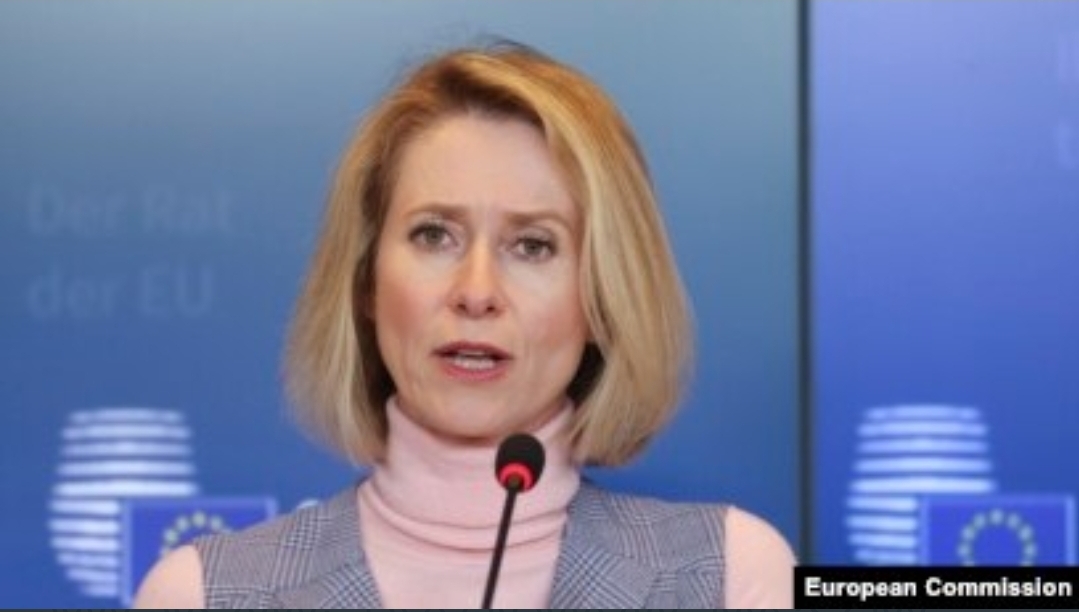
Georgia shows no signs of reversing its democratic backsliding, EU High Representative for Foreign Affairs and Security Policy Kaja Kallas said following a meeting of EU foreign ministers, underscoring growing concern within the bloc over recent developments in the country.
Speaking after the meeting, Kallas noted that EU ministers delivered a unified and unequivocal message to Tbilisi.
“Georgia shows no signs of reversing its democratic backsliding. The ministers had a clear message that Georgia needs to change course and, of course, a sincere engagement in the human rights dialogue would be a sign that they want to change course,” Kallas said, referring to the ruling Georgian Dream party.
The statement reflects mounting criticism from European partners regarding the state of democratic institutions, governance standards, and human rights in Georgia, amid strained relations between Tbilisi and Brussels.
In addition to discussing Georgia, Kallas outlined decisions related to the broader region. She confirmed that EU foreign ministers agreed to deploy a civilian mission to Armenia ahead of the country’s parliamentary elections scheduled for June. She claimed that the mission aims to strengthen Armenia’s resilience against disinformation campaigns and cyber threats during the electoral period.
Kallas also emphasized Azerbaijan’s continued importance as a strategic partner for the European Union, particularly in the areas of energy and regional connectivity. She noted that the EU intends to deepen cooperation with Baku and will soon resume negotiations on a new bilateral agreement.
The remarks come at a sensitive time in EU–Georgia relations, as Brussels increasingly calls for concrete steps to address democratic concerns and re-align the country with its European integration path.