
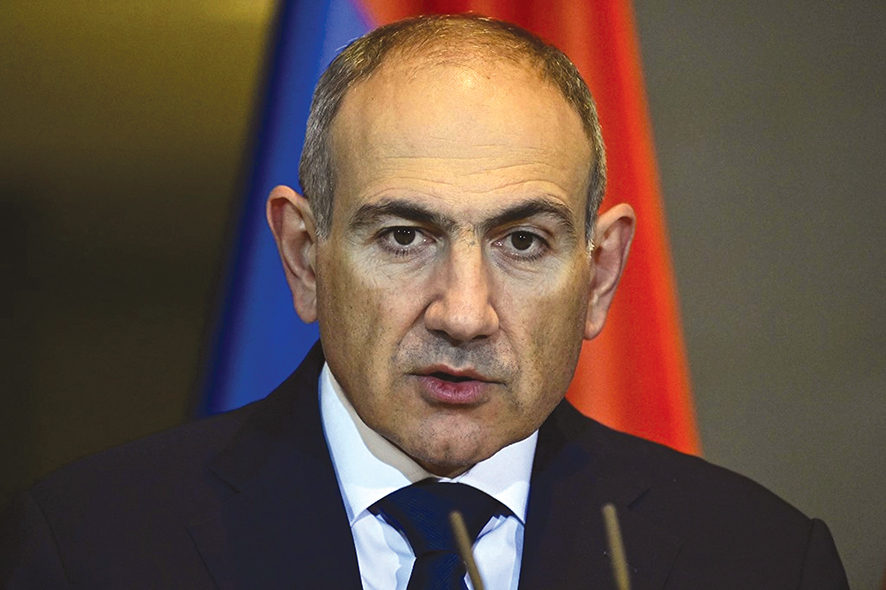
The complex geopolitical landscape of the South Caucasus is currently best observed through the lens of Armenia’s agricultural trade. On May 22, Russia’s federal veterinary and phytosanitary agency implemented a strict suspension on all floral imports originating from Armenian greenhouses. While inspectors cited the detection of invasive western pests within the shipments as the formal justification, the underlying driver is undeniably geopolitical. Moscow is employing targeted economic sanctions to penalize the administration of Prime Minister Nikol Pashinyan, whose government has actively pursued stronger diplomatic and security integration with Washington and Brussels.
The timing of this trade disruption is highly calculated, arriving a mere fortnight before the country’s crucial parliamentary elections on June 7. Having lost its primary security leverage over Armenia following its non-intervention during the 2023 conflict in Nagorno-Karabakh, the Kremlin has turned to financial pressure. This strategy seeks to induce widespread economic anxiety among the Armenian electorate, undercutting the position of the ruling Civil Contract party while boosting the prospects of opposition factions that favor closer alignment with Russia.
However, this confrontation exposes a profound economic contradiction. Even as Moscow attempts to project dominance by threatening Armenia’s export sectors, the ongoing conflict in Ukraine has made Armenia a vital channel for the sanctioned Russian economy. Consequently, Yerevan is managing an intricate balancing act: trying to detach itself from Moscow’s political orbit while simultaneously generating substantial domestic wealth from the very transit trade that sustains Russian markets.
The Dynamics of Commercial Coercion
The restriction on floral products represents just the latest phase in an expanding economic conflict. Armenian growers traditionally command a notable portion of the Russian market, providing roughly a tenth of its imported tulips and offering roses at prices that significantly undercut Latin American competitors. In announcing the ban, Russian authorities stated they identified over one hundred safety infractions among tens of millions of imported stems, claiming this represented a massive spike compared to the entire previous year’s figures.
The financial fallout is unlikely to remain contained to the flower industry. Leadership at the Russian regulatory agency has already indicated that inspections are intensifying, with similar quality issues allegedly emerging in shipments of Armenian fruits and vegetables. This pattern mirrors previous pressure campaigns where Russian authorities restricted Armenian dairy goods, bottled mineral waters, and traditional brandy under the umbrella of public safety enforcement. For local farmers who view Russia as their primary consumer base, a comprehensive agrarian blockade would be catastrophic.
The Kremlin’s Well-Worn Trade Playbook
This strategy of phytosanitary warfare is a hallmark of Russian foreign policy across the post-Soviet space, serving as a well-worn playbook used to punish disobedience and enforce regional alignment. Over the past two decades, whenever a neighboring state has drifted toward Euro-Atlantic integration, Moscow has routinely discovered harmful impurities, pests, or health hazards in that nation’s primary exports.
The historical parallels are striking and comprehensive. In 2006, as President Mikheil Saakashvili pushed Georgia toward NATO and EU integration, Moscow instituted a total embargo on Georgian wine, agricultural goods, and famous mineral waters like Borjomi. That same year, and again in 2013, Russia slapped sudden bans on Moldovan wine, meat, and fruit, deliberately timing the restrictions to sabotage Chis inau just ahead of its signing of an EU Association Agreement.
Ukraine experienced extensive trade warfare with Kyiv long before the hot wars of 2014 and 2022, facing the infamous 2005 chocolate wars against its confectionery exports, subsequent dairy blockades, and a devastating 2006 winter gas shutoff designed to derail the pro-Western momentum of the Orange Revolution. Beyond these principal frontlines, Russia has utilized similar economic coercion against Belarus during periodic energy and milk disputes, and applied sudden customs blockades on Lithuanian dairy and logistics companies in 2013 to protest Vilnius hosting an EU Eastern Partnership summit.
The Law of Unintended Consequences
Historically, the long-term effectiveness of these weaponized trade bans has been remarkably poor for Moscow, frequently yielding the exact opposite of its intended results. In the short term, these embargoes inflict genuine pain, forcing immediate structural adaptations, causing localized bankruptcies, and temporarily depressing GDP. However, as a tool for permanent political subjugation, the policy consistently fails.
Instead of forcing capitulation, Russia’s trade blockades have acted as a powerful catalyst for economic decoupling and structural modernization. Denied access to the unstable Russian market, countries like Georgia and Moldova were forced to radically upgrade their production standards to meet stringent European Union regulations. Today, Georgia exports its premium wines to diverse, higher-value global markets across Europe, Asia, and North America, leaving it far less vulnerable to Kremlin blackmail.
Politically, rather than scaring electorates into voting for pro-Russian factions, these heavy-handed interventions have historically solidified public resentment toward Moscow. They demonstrate to voters that the Kremlin is an unreliable, predatory partner, ultimately accelerating the very Western integration Russia seeks to prevent.
Electoral Manipulation
Despite this history of diminishing returns, the Kremlin continues to leverage these commercial anxieties to influence Armenia’s highly unpredictable domestic political climate. Independent data indicates that the upcoming parliamentary vote represents the most severe electoral challenge of the Prime Minister’s career. Domestic polling suggests that support for the incumbent Civil Contract party has receded to just over a quarter of the electorate.
This vulnerability is compounded by international studies showing that nearly a third of voters remain entirely undecided, leaving the final outcome highly volatile. Furthermore, prominent business figures with deep ties to the Russian Federation are running competitively, with some matching the Prime Minister’s personal approval ratings in direct matchups. By jeopardizing the financial stability of rural communities just before polling day, Moscow aims to steer unaligned voters toward political factions that favor a return to the status quo.
The Parallel Import Lifeline
Crucially, Moscow’s punitive approach overlooks a reciprocal dependence: The Russian marketplace relies heavily on Armenian cooperation. Following the implementation of global sanctions in 2022, Armenia’s integration within the Eurasian Economic Union allowed the country to operate as a vital transit node. Advanced technology, consumer electronics, and industrial machinery prohibited from direct delivery to Russia are frequently routed through Armenian trade networks before crossing into Russian territory.
This intermediation has caused bilateral commercial volume to skyrocket. Regional economic records indicate that total trade between the two nations surged from a pre-war baseline of three billion dollars to an unprecedented peak of twelve billion dollars. The re-exportation of Western hardware and automotive components generated massive capital flows, while substantial precious metal transit allowed local financial entities to capture lucrative processing and logistical premiums.
While these shadow trade networks have rapidly accelerated Armenia’s economic growth and fortified its banking sector, they also provide Yerevan with significant leverage. Because Russia depends on its regional partners to bypass international trade restrictions, any deliberate enforcement measures by Armenian authorities to restrict re-exports or disrupt associated financial transactions would create severe bottlenecks for the Russian domestic economy.
Calculated Restraint
Despite possessing these economic countermeasures, the Armenian executive branch has responded to the trade restrictions with notable moderation. Rather than initiating reciprocal sanctions or hindering transit routes toward the north, Yerevan has prioritized collaborative technical assessments to address the stated agricultural concerns.
This diplomatic caution is entirely intentional. With the elections fast approaching, the administration recognizes that provoking an all-out trade dispute could invite severe asymmetric retaliation from Moscow, such as sudden price hikes on subsidized natural gas or restrictions on grain shipments, which satisfy nearly the entirety of domestic demand. To mitigate the risk of destabilization before citizens cast their ballots, the government is deliberately choosing de-escalation.
Ultimately, this friction underscores the structural constraints facing Armenia’s Western integration. Despite strong political messaging, new partnerships with European entities, and joint defense exercises with the United States, the country cannot instantly detach itself from its historical economic framework. Russia retains critical ownership over Armenia’s energy networks, transport infrastructure, and external borders. For the foreseeable future, Yerevan remains bound to Moscow through a highly profitable yet deeply volatile arrangement of mutual reliance: one that cannot be easily dismantled by trade bans or electoral shifts.
Op-Ed by George Katcharava
Author’s bio: George Katcharava is the founder of eurasiaanalyst.com, a geopolitical risk and advisory firm.









