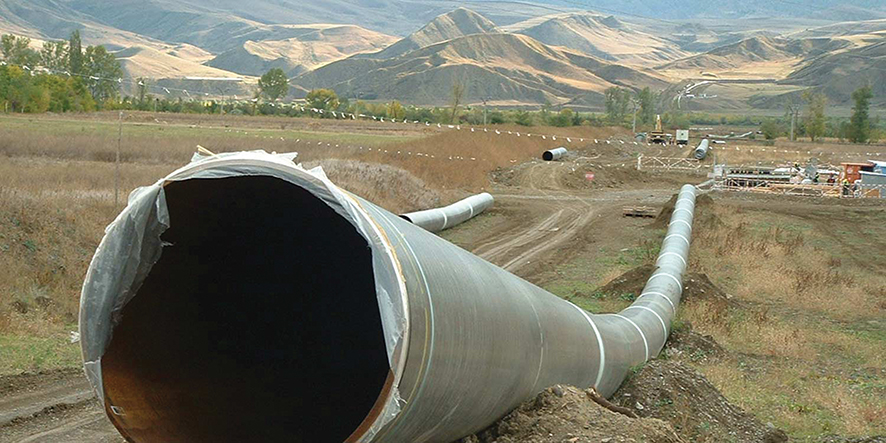
Azerbaijan’s state energy company SOCAR has taken over operatorship of the Baku-Tbilisi-Ceyhan (BTC) oil pipeline from BP, marking a major shift in the management of one of the South Caucasus’ most important energy corridors.
The transfer became effective on July 1, 2026, with operations handed over through SOCAR Midstream Operations (SMO), a SOCAR subsidiary. The change covers all three sections of the 1,768-kilometer BTC pipeline, which runs through Azerbaijan, Georgia and Türkiye.
The transition also includes management of joint BTC and South Caucasus Pipeline (SCP) operations previously overseen by BP. The Sangachal Terminal in Azerbaijan will remain under BP operatorship, while other BTC-related operational responsibilities have moved to SOCAR. The pipeline’s ownership structure remains unchanged.
The companies said the handover followed a final readiness review by BTC Co., the consortium that owns the pipeline, and was carried out in line with existing agreements to ensure a safe and orderly transition.
“Today’s announcement marks an important milestone for the BTC project,” said Gio Cristofoli, BP’s regional president for the Caspian, Central Asia and Türkiye. “We are confident that SOCAR will uphold the same high standards of safety, reliability and operational excellence.”
SOCAR President Rovshan Najaf said the transfer reflected the company’s growing experience in managing major energy infrastructure and highlighted the BTC’s continued importance as a regional and international energy route.
BP’s Long Role in Georgia and the South Caucasus
The change does not represent BP leaving the South Caucasus. The British energy company remains a major investor and operator in the region, with long-standing involvement in Azerbaijan’s oil and gas sector and in regional export infrastructure.
BP has played a central role in developing the Azeri-Chirag-Gunashli (ACG) oil fields and the Shah Deniz gas field, two of the largest energy projects in the Caspian region. The company remains a shareholder in both the BTC pipeline and the South Caucasus Pipeline.
Since the late 1990s, BP has been one of the key international companies connecting Caspian energy resources with global markets through routes that avoid Russia. Its projects helped establish Azerbaijan, Georgia and Türkiye as an important energy corridor between the Caspian Sea and Europe.
In Georgia, BP has been closely linked with the development of major transit infrastructure, including the BTC pipeline, the South Caucasus Pipeline, and the Baku-Supsa Western Route Export Pipeline (WREP).
The transfer reflects the BTC’s continued importance as a regional and international energy route
The BTC pipeline, which began operations in 2006, transports crude oil from Azerbaijan’s offshore fields to the Mediterranean port of Ceyhan in Türkiye. With a capacity of around 1 million barrels per day, it has transported more than 4.7 billion barrels of crude oil since its launch.
The Baku-Supsa pipeline, launched in 1999, was another milestone in regional energy cooperation. The 830-kilometer pipeline carries oil from Azerbaijan’s Chirag field to Georgia’s Black Sea port of Supsa, with around 375 kilometers of the route crossing Georgian territory. It became one of the first major routes to export Caspian oil to international markets while bypassing Russia.
Transfer of Baku-Supsa Operations
The transfer of WREP/Baku-Supsa operations is also part of a broader restructuring of pipeline management.
BP Executive Vice President for Production and Operations Gordon Birrell said the transfer was not a decision by BP to withdraw but rather the fulfillment of contractual obligations agreed when the pipeline arrangements were established.
“This is simply the fulfillment of a contractual obligation undertaken by BP when the pipeline agreement was signed,” Birrell said.
He added that operatorship would return to the owners, with the governments of Azerbaijan and Georgia deciding how the pipeline would be managed in the future.
Earlier, in June 2026, WREP facilities in Azerbaijan and Georgia were transferred to entities representing the two governments.
South Caucasus Pipeline Remains a Key Gas Route
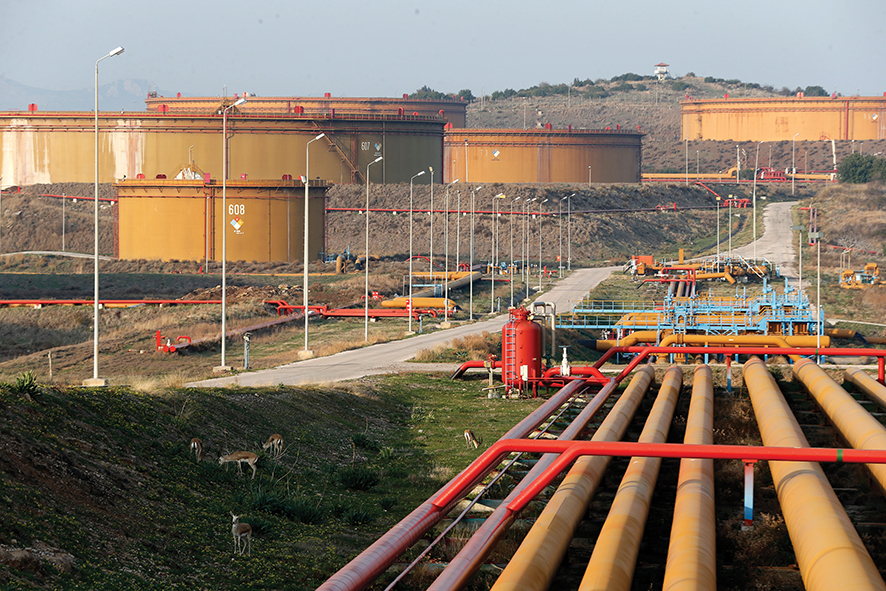
The South Caucasus Pipeline (SCP), which began operations in 2006, continues to transport natural gas from the Shah Deniz field through Azerbaijan and Georgia to Türkiye.
Following the completion of the SCP expansion project, commercial deliveries began for the Turkish market in 2018 and for European consumers in 2020 as part of the wider Southern Gas Corridor, which connects Caspian gas supplies with European markets.
According to BP data, average gas transportation through the SCP increased in early 2026. The pipeline carried an average of 63.5 million cubic meters of gas per day in the first quarter of 2026, compared with 60.8 million cubic meters per day during the same period of 2025.
BP reported that SCP operating expenditure was approximately $21 million in the first quarter of 2026, while capital expenditure reached around $9 million.
A New Phase for Regional Energy Infrastructure
The transfer of BTC operations to SOCAR reflects Azerbaijan’s growing role in managing strategic energy infrastructure, while BP continues as a major partner and shareholder in the region.
For Georgia, the pipelines remain strategically important. BTC, WREP and the South Caucasus Pipeline have positioned the country as a transit hub between the Caspian region and international markets, providing both economic benefits and geopolitical significance.
The latest changes represent an evolution of the South Caucasus energy model: Azerbaijan is taking greater operational responsibility for infrastructure built through international partnerships, while BP continues its involvement in upstream production, investment and regional energy projects.
By Team GT