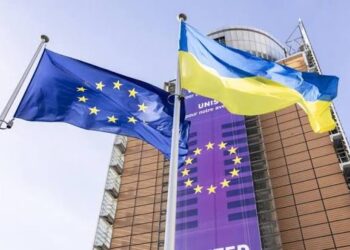
The European Union has begun restricting Hungary’s participation in certain confidential discussions amid concerns that sensitive information shared within EU forums could be relayed to Moscow, Politico reported, citing experienced sources familiar with the matter.
Based on the report, the move reflects growing unease among EU officials regarding Budapest’s stance on Russia and its potential implications for internal security and diplomatic coordination. While Hungary remains a full member of the bloc, its involvement in high-level, sensitive exchanges has reportedly been curtailed in specific cases.
Sources indicate that, as a result, a “significant part of European diplomacy” is increasingly being conducted in smaller, informal groupings rather than in meetings involving all 27 EU member states. These formats allow for more controlled information-sharing among countries that are closely aligned on key geopolitical issues, particularly in relation to Russia and the war in Ukraine.
Among the emerging diplomatic configurations are the so-called EU3 — comprising France, Germany, and the United Kingdom — as well as the E4, which includes Italy alongside those countries. Other formats include the “Weimar Triangle” (Germany, Poland, and France) and the NB8 group, bringing together eight Nordic and Baltic nations.
The shift toward smaller diplomatic circles highlights a broader trend within the EU, where unity on foreign policy — especially regarding Russia — has at times been challenged by diverging national positions. Hungary, under Prime Minister Viktor Orbán, has maintained closer ties with Moscow compared to many of its European counterparts and has repeatedly voiced reservations about sanctions and military support for Ukraine.
While EU institutions have not officially confirmed any formal exclusion mechanism, the reported changes suggest an evolving diplomatic landscape in which trust and alignment are playing an increasingly central role in shaping decision-making processes.
The development underscores ongoing tensions within the bloc as it seeks to balance inclusivity with security concerns in an increasingly complex geopolitical environment.
Header image: Viktor Orban/Attila Kisbenedek/AFP via Getty Images