The Tbilisi Baroque Festival 2025 moves across the city with the steady pulse of a tradition that keeps discovering new chambers of its own architecture. The opening night with Shavnabada and the celebrated duet of Giulia Bolcato and Andreas Scholl established the ceremonial threshold; the days that followed opened a landscape shaped by visiting virtuosi, historically informed ensembles, and Georgian partners who treat the early-music repertoire as a living ecosystem rather than a curated archive. This edition carried an atmosphere of artistic concentration. Every program delivered an outlook, every guest illuminated a stylistic horizon, and every stage—large or intimate—offered the sense of a city learning to speak an older musical language with growing fluency.
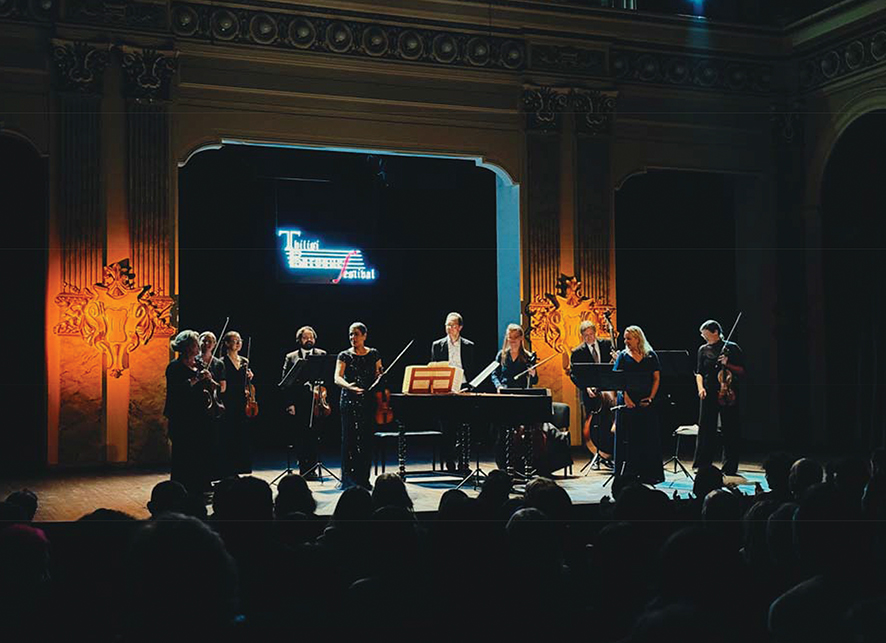
Leila Schayegh and the Helsinki Baroque Orchestra: A Northern Precision in a Georgian Chamber
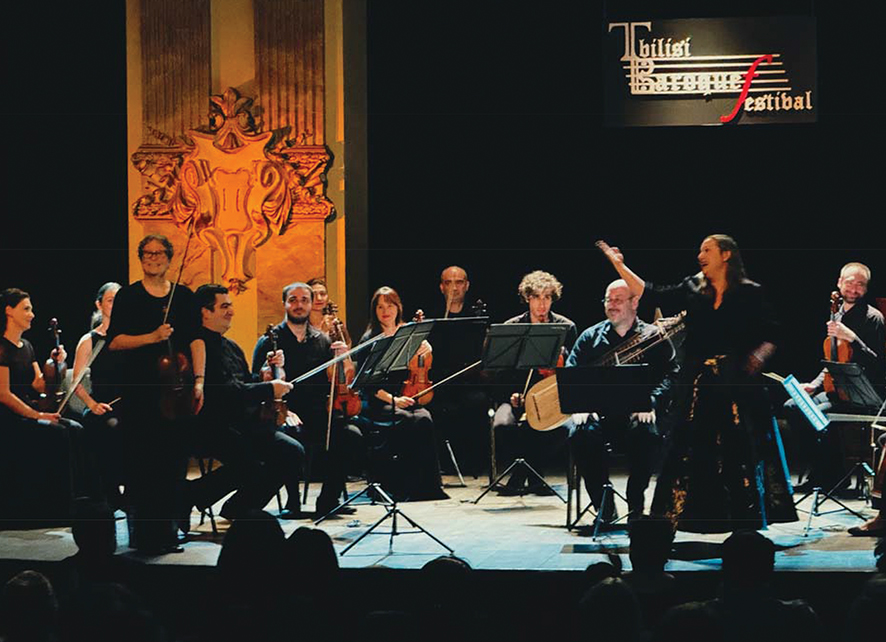
The evening of November 9 introduced a northern refinement that shifted the festival’s axis into the pure geometry of Bach’s instrumental writing. Leila Schayegh guided the Helsinki Baroque Orchestra with a tone that carried both authority and buoyancy. Her violin led the ensembles with an unforced intensity, forming a kind of clear northern light within the Rustaveli Theater Small Stage.
Pauliina Fred’s flute brought an aerial line to the Orchestral Suite No. 2, landing gracefully in the Badinerie with a poise that transformed the miniature into a kind of signature gesture for the night.
Aapo Häkkinen, at the harpsichord, shaped the Fifth Brandenburg’s keyboard part with sculptural clarity; the dialogue of soloists created an atmosphere of continuous motion. The Georgian audience responded to this balance of energy and emotional control with rare attentiveness. The evening outlined an international baroque vocabulary that has entered the festival as a natural register.
Paul McNulty’s Pianoforte and the Rediscovery of Color
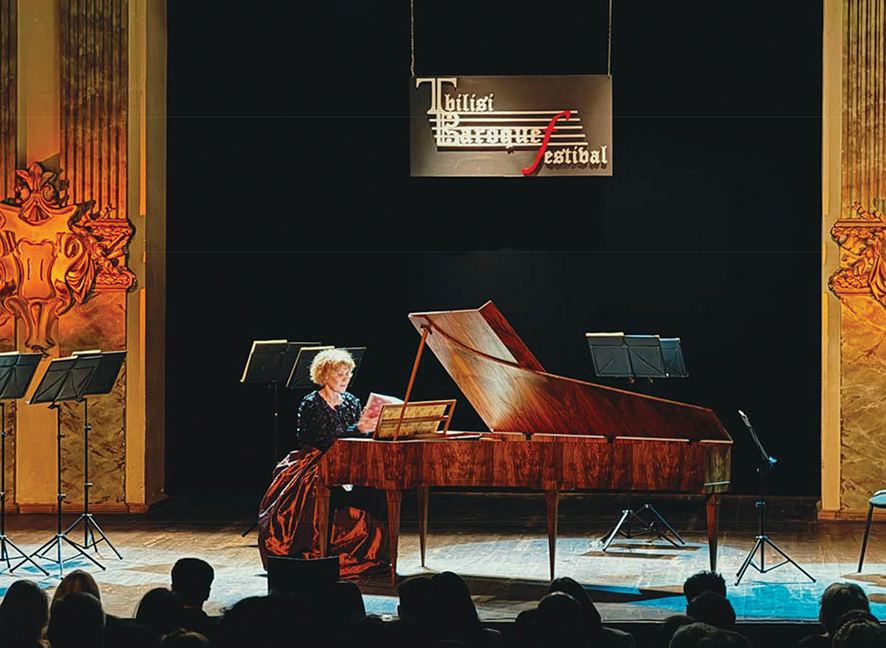
Paul McNulty’s visit on November 12 shaped another major thread of this year’s edition: the fascination with timbre, instrument-making, and the physicality of sound. His introductory lecture offered a bridge between historical reconstruction and present-day listening practice.
Viviana Sofronitsky and Ana Kurdovanidze carried the momentum into performance. Their approach to C.P.E. Bach and Haydn placed articulation at the center of interpretation; every gesture of the pianoforte produced a micro-drama of resonance. Mozart’s Rondo and the d-minor Fantasia unfolded with a lyrical transparency that resonated deeply in the hall. Beethoven’s Sonata quasi una Fantasia gained a different gravity on McNulty’s instrument, turning the “Moonlight” into an exploration of texture and kinetic pulse.
The closing Mozart Concerto K.414, performed with Georgian Sinfonietta, created an image of partnership: international instrument makers, historically informed soloists, and a Georgian ensemble with a firm stylistic identity.
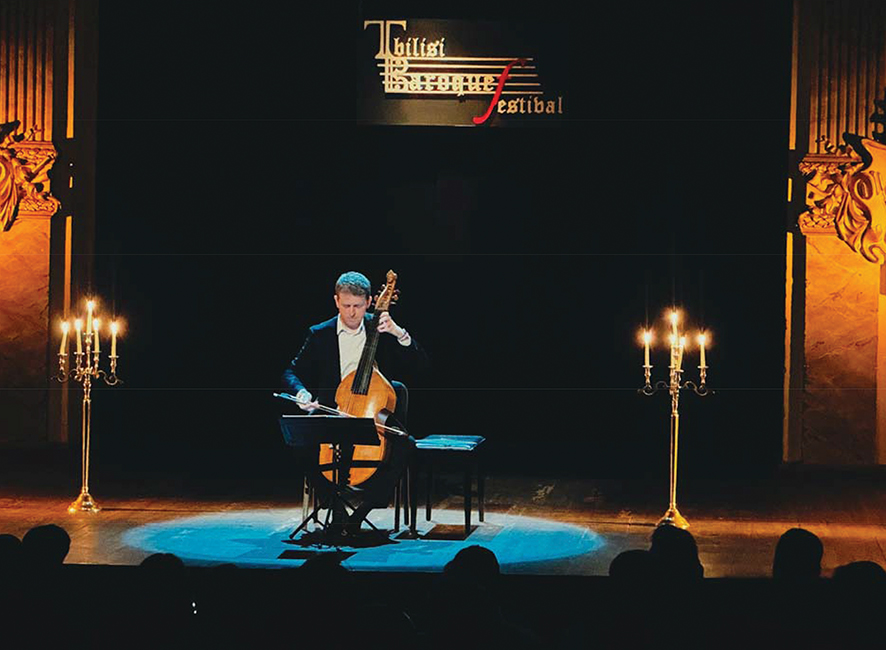
Valentin Tournet’s Two Evenings: The Viol, the Stage, and the Cinematic Imagination
The arrival of Valentin Tournet on November 15 launched one of the festival’s most poetic chapters. His program ‘All the Mornings of the World’ aligned the viola da gamba with the filmic imagination of Corneau and the spectral lineage of Sainte-Colombe and Marais. Tournet constructed a dramatic arc with almost ritual concentration. Les Pleurs emerged as an initiation; La Rêveuse became a suspended interior monologue; the final Tombeau closed the evening with a gravity that carried the entire hall into silence.
Tournet’s second night on November 18 expanded the spectrum into French baroque orchestral color. Georgian Sinfonietta responded with refined attention: Lully’s ceremonial pulse, Boismortier’s luminous dance structures, Rameau’s harmonic delicacies, and Dauvergne’s elegant theatricality created a sequence that moved like an illuminated manuscript. The audience experienced French refinement through a modern Georgian lens.
Dorothee Mields and Christine Busch: Two Portals into Bach and Purcell
Dorothee Mields and Christine Busch shaped two evenings that formed the intellectual and emotional core of the festival.
The Bach cantata program on November 24 explored the “parody principle”—the Baroque practice of recontextualizing musical material—through a carefully assembled dramaturgy. Mields’s voice brought luminous stillness to “Schlummert ein” and a radiant clarity to “Jesus bleibet meine Freude.” Busch’s violin created a counter-line of expressive certainty. Diego Cantalupi’s theorbo added structural warmth, while Georgian Sinfonietta delivered articulate phrasing with a sense of stylistic belonging that marked a new level for the ensemble.
On November 27, Purcell entered the festival with theatrical exuberance. The sequence of masques, court dances, and instrumental fantasies created an anthology of the English baroque. Mields shaped lines from Dido and Aeneas with an inward resonance, while Busch illuminated the instrumental world of Purcell through a palette of refined bow strokes. The program functioned as a gallery of London’s musical imagination across decades of stage practice.
Francesco Cera: A Harpsichord Cartographer of the European Baroque
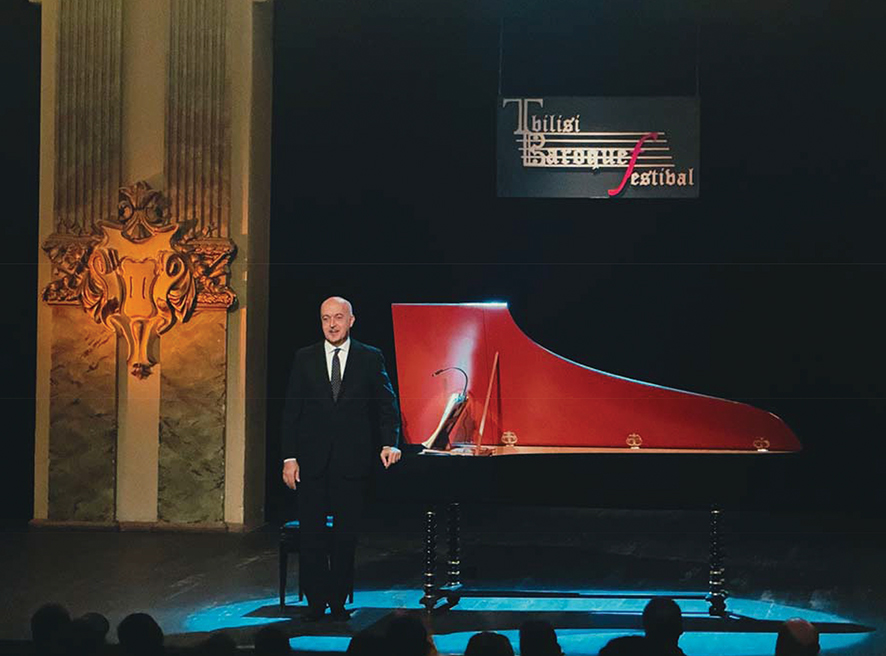
The festival’s final arc featured two major appearances by Francesco Cera, whose authority carried the festival into a culminating phase. His solo recital on November 30 mapped the European keyboard tradition with architectural clarity. Frescobaldi’s Recercare, Scarlatti’s Fuga, Handel’s G-major fugue, and a constellation of Bach’s preludes and fugues formed a polyphonic geography. Cera’s articulation foregrounded the structural intelligence of each piece, creating a lecture in sound rather than a stylistic tour.
On December 2, Cera returned as conductor, harpsichordist, and organist—roles that merged into a unified musical presence. Bach’s A-major Concerto unfolded with energetic pacing; Vivaldi’s L’Estro Armonico emerged with glowing string color; Handel’s Cuckoo and Nightingale offered a moment of pastoral brilliance. Cera shaped the ensemble as a single breathing organism, supported by Cantalupi’s grounded continuo line.
Maayan Licht and a Finale of Vocal Radiance
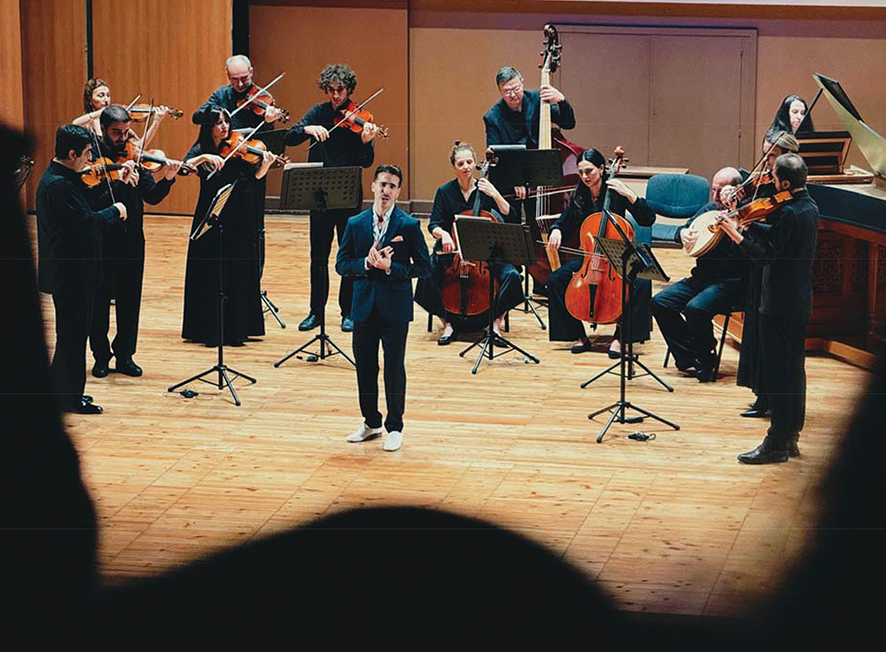
The closing night on December 7 crowned the festival with the incandescent voice of Maayan Licht. His program created an arc across Venetian, Neapolitan, London, and Roman soundscapes. Vivaldi’s arias radiated with agile phrasing; Broschi’s “Son qual nave” delivered a cascade of virtuosic tension. Purcell’s Dido’s Lament gained a sense of suspended lament that settled over the hall with profound stillness.
Handel’s final arias opened a triumphant ascent, highlighting Licht’s control, coloristic breadth, and expressive imagination. Georgian Sinfonietta accompanied with a cultivated baroque instinct and a clarity born from seasons of stylistic evolution.
A Festival that Builds a City’s Inner Archive
The 2025 edition shaped an early-music panorama with multiple artistic vectors: instrument makers as dramaturgs through McNulty’s contribution; stylish northern precision with Schayegh and the Helsinki Baroque Orchestra; French poetic introspection through Tournet; intellectual and vocal radiance in the Bach and Purcell evenings of Mields and Busch, a universal keyboard cartography through Cera, a final blaze of vocal virtuosity with Maayan Licht
The Tbilisi Baroque Festival now functions as a cultural infrastructure as much as an event. Its guests bring specialized traditions; its Georgian partners absorb and transform them; its audiences gain access to a repertoire that expands their sense of musical history. The city receives each edition as another chapter in the slow construction of an early-music culture with international alignment and local personality.
Tbilisi listens more deeply each year. The 2025 edition offered a season of mornings—each clear, each shaped by craft, each forming part of the city’s growing musical memory.
Review by Ivan Nechaev