In Georgia, contemporary music rarely arrives alone. It enters the room accompanied by context—political, social, existential. A concert here is almost never just a concert; it is a gathering, a checkpoint, sometimes a rehearsal for civil courage. Over the past few years, as public space has narrowed and institutional language has grown brittle, sound has become one of the few remaining elastic materials. It bends, absorbs pressure, and survives where declarative speech risks fracture. Within this fragile ecosystem, the Swiss–Georgian festival Close Encounters has evolved from a niche experimental platform into something closer to a cultural instrument: a way of testing how much openness is still possible.
Founded in 2005 by pianist and curator Tamriko Kordzaia together with composer and performer Tobias Gerber, Close Encounters was never designed as a representational project. Its original impulse was disarmingly simple: place Georgian and Swiss musicians—often unfamiliar with each other’s scenes, habits, and assumptions—into the same working conditions and see what kind of music, friction, or misunderstanding might emerge. What followed over two decades was not stylistic synthesis but a sustained practice of encounter: club electronics brought into conservatory halls, post-Soviet avant-garde works resurfacing beside live coding, improvisation coexisting with strict compositional systems.
The 2026 edition of the festival, unfolding between March and May in Zurich, Chur, and Winterthur, might appear geographically distant from Georgia. Yet it is inseparable from the country’s current reality. The festival’s own materials speak openly about the changed political and social landscape, about increasing authoritarian pressure, intimidation, and the precarious position of artists working in Georgia today. In this context, Close Encounters functions as an external extension of Georgia’s cultural bloodstream—a space where ideas, bodies, and sounds can circulate with slightly less friction, then return transformed.
What distinguishes Close Encounters from many European contemporary music festivals is its refusal of stylistic hygiene. There is no unifying aesthetic, no brandable sound. Instead, the 2026 program reads like a catalogue of unstable formats—opera that behaves like a laboratory, games that act as scores, installations that remember, ensembles that operate as stressed systems. This lack of uniformity is not curatorial indecision; it is a position. In a time obsessed with legibility and ideological alignment, the festival insists on complexity.
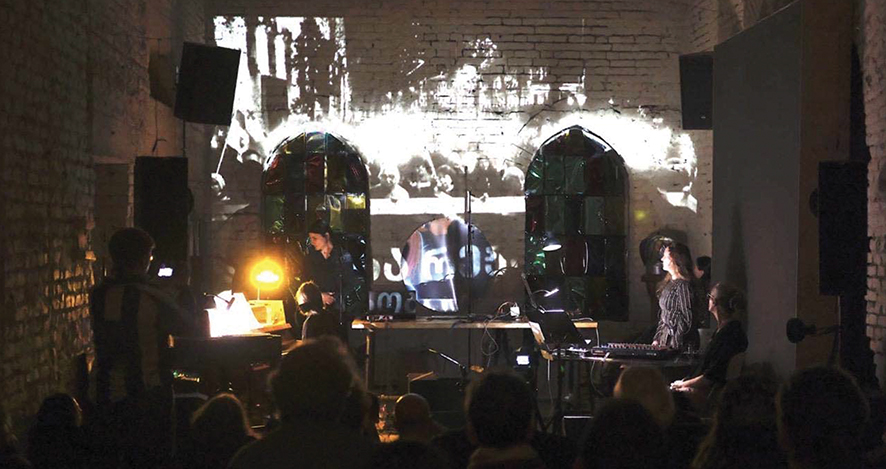
The opening concert at MOODS makes this clear from the first gesture. Homo Freq, an electroacoustic opera project by Tiko Gogoberidze, Nasi Chavchavadze, and Lisa Kereselidze, treats opera less as genre than as soft architecture. Voices slip between extended technique and electronic mediation; the cello dissolves into processed resonance; form remains deliberately porous. Opera’s traditional authority—of narrative, hierarchy, spectacle—is quietly dismantled. What replaces it is a platform for experimentation, where fragility becomes a compositional parameter rather than a weakness.
The same evening introduces Zugzwang by Swiss composer Tomas Korber, a large ensemble work whose title—borrowed from chess—describes a situation in which every possible move worsens one’s position. Saxophones, piano, cello, percussion, sampler, and electronics are locked into feedback systems that demand constant reaction. The music unfolds as a tense ecology of decisions, where agency is unavoidable and neutrality impossible. Without a single explicit political reference, the piece reads unmistakably as a model of life under pressure.
At Kunstraum Walcheturm, the festival pivots toward environment and interface. Giorgi Koberidze’s sound installation MurMur uses handmade clay bells as loudspeakers, creating an intimate acoustic space shaped by loss, decay, and preservation. Sound here does not dominate; it seeps, vibrates, and risks breaking. In sharp contrast—but deep conceptual kinship—comes Alexandre Kordzaia’s Speedrun, a videogame concert-performance in which every action within a custom-built 2D game generates musical material. Player, performer, and composer collapse into a single unstable role, turning agency itself into a sonic question.
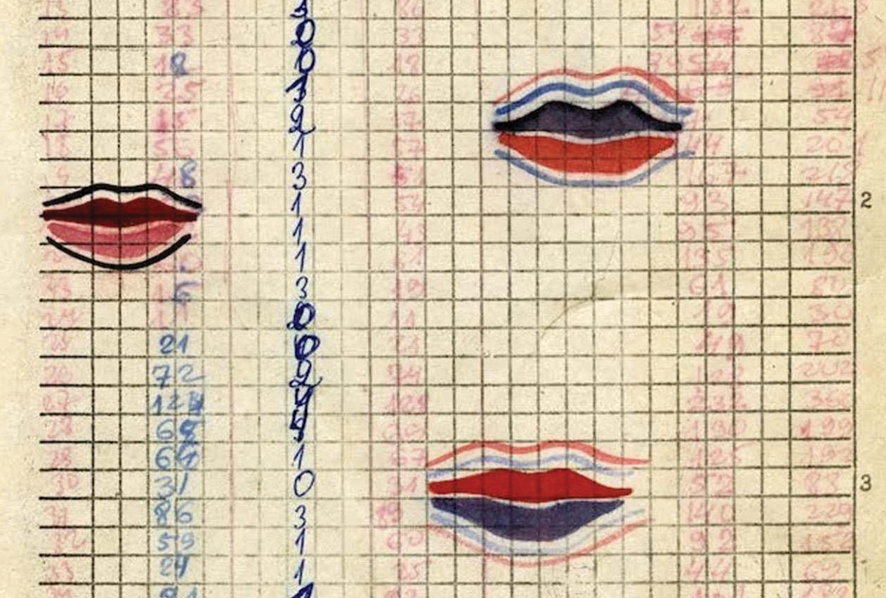
The Chur program at Postremise recombines these works into new constellations, reinforcing Close Encounters’ belief that meaning emerges through recontextualization. Ensemble KIOSK appears here as a hybrid organism—part music theatre, part object-based sound laboratory. Their Swiss premiere of Giwi’s Dream by Georgian composer Zura Dzagnidze introduces a custom-built instrument assembled from springs, blades, rubber bands, and everyday materials. Domestic debris becomes resonant infrastructure, a subtle reminder of how Georgian experimental music has long learned to build futures from leftovers.
The residency presentation at Zeughaus 4 foregrounds process over product. Tiko Gogoberidze’s work unfolds as an open workshop, exposing compositional thinking as provisional, collective, and unfinished. In a cultural economy increasingly obsessed with polished outcomes and instant visibility, this insistence on unfinishedness feels quietly radical.
The festival concludes at Kulturfeilerei with Stones & Pillars, an evening that interweaves works by female composers from Georgia, Armenia, Azerbaijan, and Iran with electroacoustic transformations by the Zurich trio u /r. The Caucasus here is neither exoticized nor flattened into geopolitical symbolism. It emerges instead as a dense field of compositional intensity—contradictory, high-energy, and structurally rigorous. These works refuse to illustrate identity; they insist on proximity.
Taken as a whole, the Close Encounters 2026 program reads like a manual for cultural survival. Roles remain unstable: opera behaves like an installation, games function as scores, ensembles operate as feedback systems. This instability mirrors the lived experience of Georgia’s cultural scene today—adaptive, network-based, and alert. As public institutions grow cautious and ideological pressure increases, culture migrates sideways into independent spaces, festivals, radios, and temporary alliances.
Close Encounters does not promise salvation. It offers something subtler and more durable: circulation. It keeps channels open—between countries, scenes, generations, and modes of listening. In a moment when political language hardens and futures are increasingly scripted elsewhere, the festival insists that sound can still travel, mutate, and return changed.
To listen to these concerts—whether in Zurich, Chur, or Winterthur—is to hear Georgia thinking aloud. Not heroically, not nostalgically, but attentively. In this context, listening itself becomes a civic act. And Close Encounters, twenty years after its founding, remains one of the few spaces where that act is still allowed to unfold in full complexity.
By Ivan Nechaev