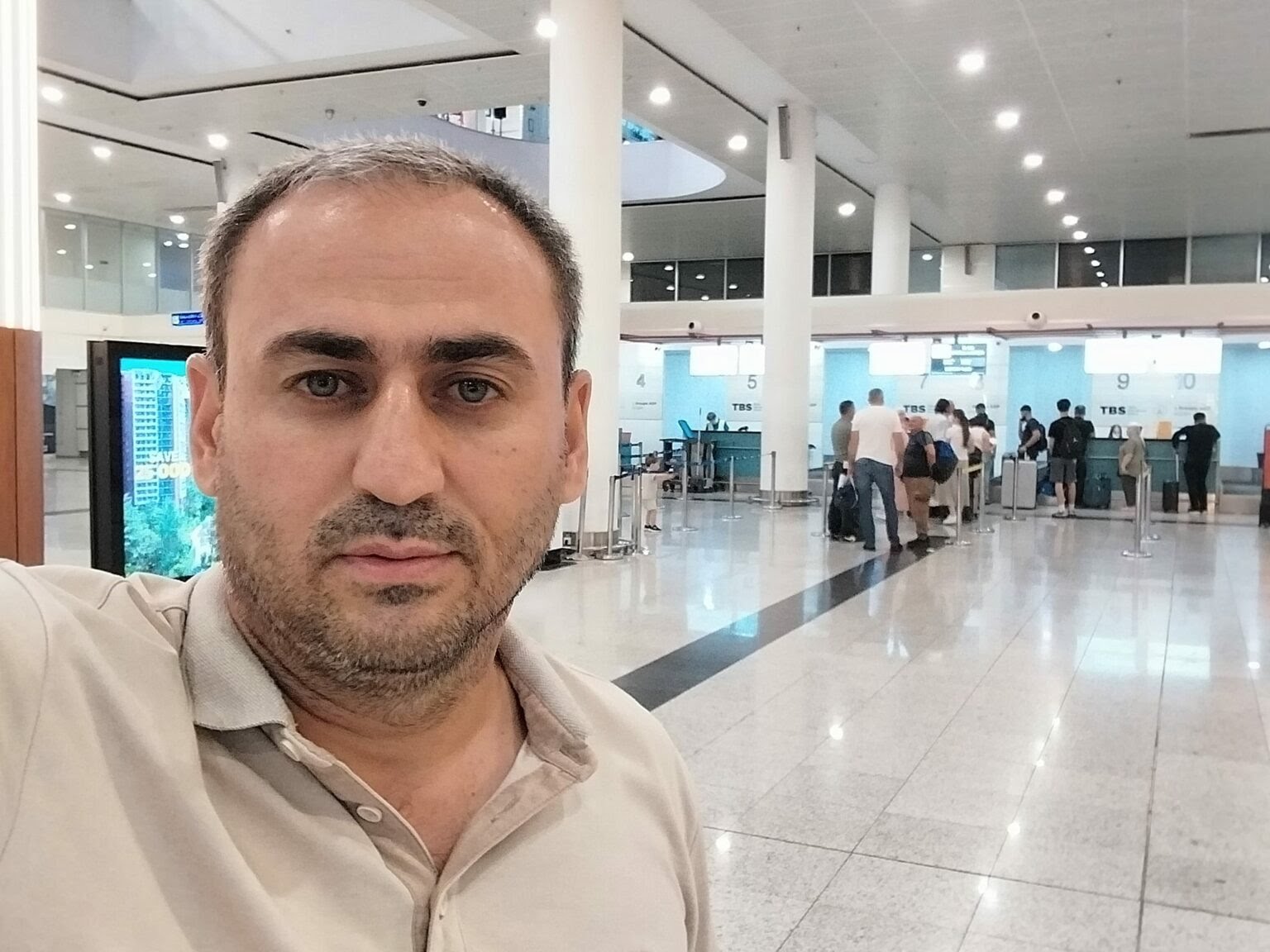
Georgian authorities have deported Azerbaijani investigative journalist Afgan Sadigov to Azerbaijan following a late-night arrest and expedited court hearing that has raised serious legal and human rights concerns, including potential violations of international protections.
Sadigov was detained in Tbilisi late on Saturday night, reportedly at around 22:20, after police accused him of “insulting a police officer” on social media — an administrative offence under controversial legislative amendments introduced in Georgia in 2025. Within hours of his arrest, the case was brought before Tbilisi City Court, where, at approximately 04:00, Judge Tornike Kochkiani ordered his deportation and imposed a three-year entry ban on Georgia.
The speed of the proceedings — from arrest to deportation order within a matter of hours — has drawn sharp criticism from rights advocates and legal experts.
The deportation was carried out on Sunday morning. Georgia’s Interior Ministry confirmed that Sadigov “was deported to his country of origin,” while Azerbaijani media later reported that he had already arrived in Baku. According to the Azerbaijani news agency Qazetci, Sadigov was questioned by the country’s Migration Service upon arrival and subsequently released. He reportedly stated that he had been transferred to Azerbaijani authorities at the Red Bridge border crossing.
The case has sparked particular alarm due to the existence of interim measures imposed by the European Court of Human Rights (ECHR), which had previously barred Sadigov’s extradition to Azerbaijan pending consideration of his case. Azerbaijan has sought his extradition for nearly two years, reportedly accusing him of fraud or extortion — charges widely viewed by supporters as politically motivated.
Following the ECHR ruling in 2025, Sadigov had been released from pre-extradition detention in Tbilisi but remained under bail conditions, including a travel ban.
Legal representatives and human rights groups argue that the deportation — formally carried out under administrative grounds rather than extradition procedures — may constitute a circumvention of the ECHR’s binding interim measures.
Tamta Mikeladze, director of the Social Justice Centre (SJC), which represents Sadigov, described the case as an unprecedented breach of legal norms.
“I have not seen such a violation of the rule of law and the European Convention on Human Rights in any case in recent years. This is a catastrophe,” she said.
Mikeladze also warned that Azerbaijani authorities could pursue new charges against Sadigov in the near future, potentially constructing a separate case independent of existing proceedings.
Sadigov’s wife, Sevinj Sadigova claims that the journalist was detained by plainclothes officers who arrived at their apartment late at night. CCTV footage shared publicly appears to show officers seeking access to the building, though she claims that recordings of the actual arrest were later deleted.
“After opening the door, Afgan was violently taken away without any valid explanation,” she stated.
The Interior Ministry later confirmed that Sadigov had been detained for insulting a police officer online, citing a Facebook post allegedly published on 1 April in which he criticized law enforcement in authoritarian systems.
The offence falls under legislative changes introduced by Georgia’s ruling Georgian Dream party in 2025, which designated “insulting an official” as a distinct administrative violation and allowed for the deportation of foreign nationals on such grounds. Critics have argued that the amendments risk being used to suppress dissent and target politically sensitive individuals.
Defense lawyers said they had requested additional time to submit documentation that would allow Sadigov to leave Georgia voluntarily for a European Union country, where members of his family have been granted political asylum. The request was denied.
The deportation occurred just one day before a planned visit to Georgia by Azerbaijani President Ilham Aliyev, a detail first reported by RFE/RL and widely noted by observers as politically significant.
Additionally, the case file reportedly included a letter from Georgia’s State Security Service (SSG), which classified Sadigov as a potential threat to state security — a designation his legal team disputes.
Sadigov himself has condemned the court’s decision as unlawful, stating that the ECHR ruling had been “blatantly violated” and warning that Georgian authorities would face consequences for the move.
As of now, Sadigov is reportedly staying at a relative’s residence in Azerbaijan, though his legal status and future remain uncertain. Rights organizations have called for close monitoring of his situation, warning of potential legal action against him by Azerbaijani authorities.
The case is likely to intensify scrutiny of Georgia’s adherence to its international human rights obligations and raise broader concerns about the use of administrative procedures to bypass legal safeguards in politically sensitive cases.
Header image: Afgan Sadygov in Tbilisi International Airport; Photo: Afgan Sadygov/Facebook