Opera houses possess long memories. Their walls absorb voices, scandals, revolutions, and applause with equal patience. Every so often a work returns to the repertoire that feels like a reopening of an old wound. Such was the atmosphere surrounding the new production of Pagliacci at the Tbilisi Opera and Ballet Theater, presented in a premiere run between February 26 and March 8.
Ruggero Leoncavallo’s compact verismo tragedy, first performed in Milan in 1892, arrived in Tbilisi almost immediately afterward. Georgia encountered the opera astonishingly early: the first local performance occurred in October 1893. Few operas embed themselves so quickly into a city’s musical bloodstream.
Over the decades Pagliacci has remained an oddly persistent guest in the Georgian repertoire: a work whose brutal theatricality mirrors something essential about the country’s relationship with performance itself.
This new staging, directed by the Italian theater director Federico Grazzini and imported from the Teatro Regio di Parma, arrives at a moment when the Tbilisi opera scene is quietly recalibrating its aesthetic language. Large-scale Italian productions—precisely engineered, visually clean, psychologically legible—stand in productive tension with Georgia’s historically expressive, almost volcanic vocal culture. The result feels like an encounter between two theatrical temperaments: Parma’s architectural discipline and Tbilisi’s emotional excess.
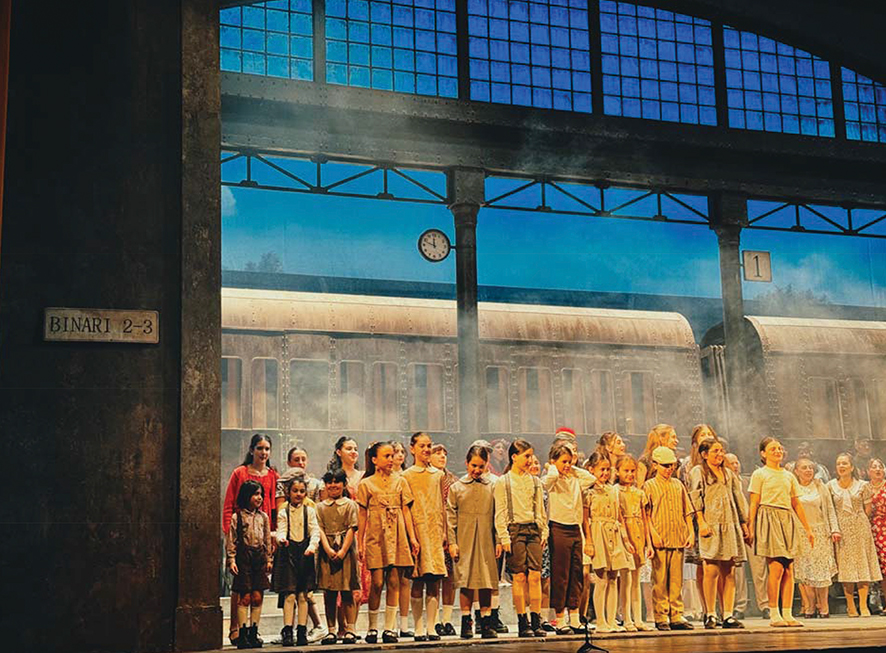
At first glance Pagliacci appears disarmingly simple. A troupe of traveling performers arrives in a village. Jealousy erupts. A stage play dissolves into real violence. Curtain. Yet Leoncavallo’s score, one of the founding documents of operatic verismo, operates with the ruthless precision of a psychological trap. The famous prologue delivered by Tonio dismantles the theatrical illusion before the story even begins. Theater, the opera announces, will not protect anyone. Real people bleed under these costumes.
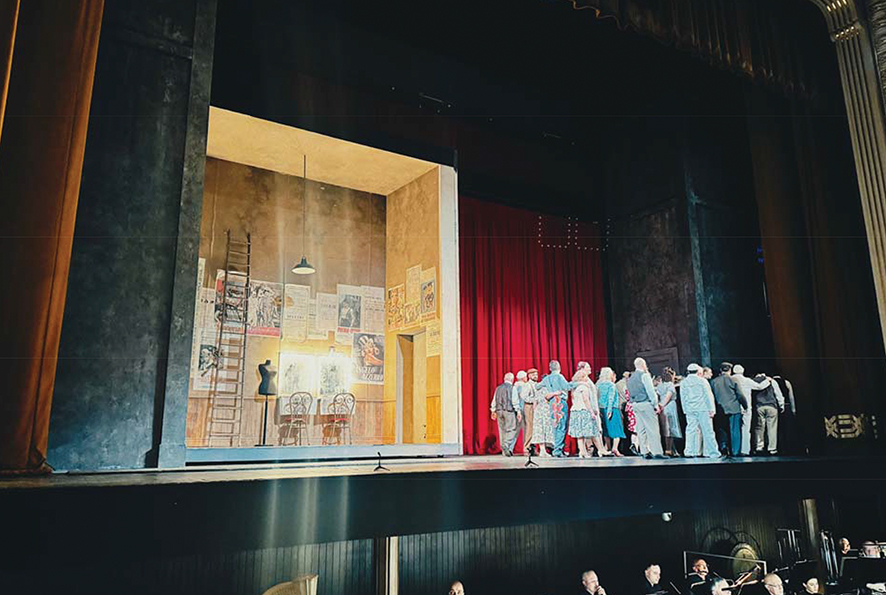
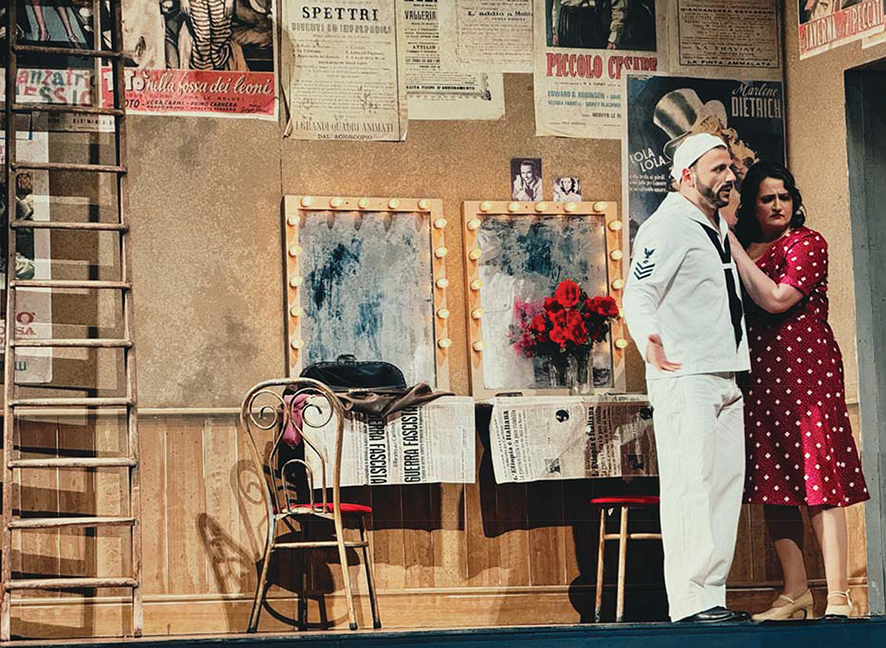
Grazzini’s staging accepts this premise almost literally. Andrea Belli’s set constructs a theatrical environment that feels deliberately artificial: an arena within an arena. Performers enter through exposed backstage corridors. Lighting designer Stefano Gorreri sharpens this self-conscious theatricality with stark illumination that makes every gesture appear observed, documented, perhaps judged. The effect resembles a public autopsy of performance itself. Opera becomes a spectacle about spectatorship.
The central dramatic axis inevitably rests on Canio, sung in this premiere series by the Georgian tenor Konstantine Kipiani. Canio represents one of the most dangerous roles in the Italian repertoire: a singer must balance vocal steel with psychological vulnerability, fury with humiliation.
Kipiani approached the role with a kind of wounded gravity. His Vesti la giubba, that terrifying aria where a betrayed clown prepares to perform comedy, unfolded less as a showpiece than as a slow emotional implosion. Georgian singers possess a characteristic timbral brightness that can cut through orchestral textures like glass. In Kipiani’s hands the sound retained that clarity while acquiring a rasp of exhaustion, the voice of a man who understands too late that the stage has already devoured him.
Opposite him, soprano Irina Taboridze shaped Nedda with an appealing mixture of lyric lightness and restless independence. Her opening aria carried a sense of air and flight: precisely the musical metaphor Leoncavallo writes into the score with those birdlike orchestral figures. Nedda dreams of escape. In verismo opera, such dreams tend to be fatal.
Tonio, the disfigured observer who manipulates the drama from its margins, emerged in the dark baritone of Sulkhan Gvelesiani. The role demands a paradoxical combination of theatrical bravado and psychological bitterness. Gvelesiani leaned into the character’s resentful intelligence, making the Prologue feel less like a formal introduction than a declaration of revenge against the entire apparatus of theater.
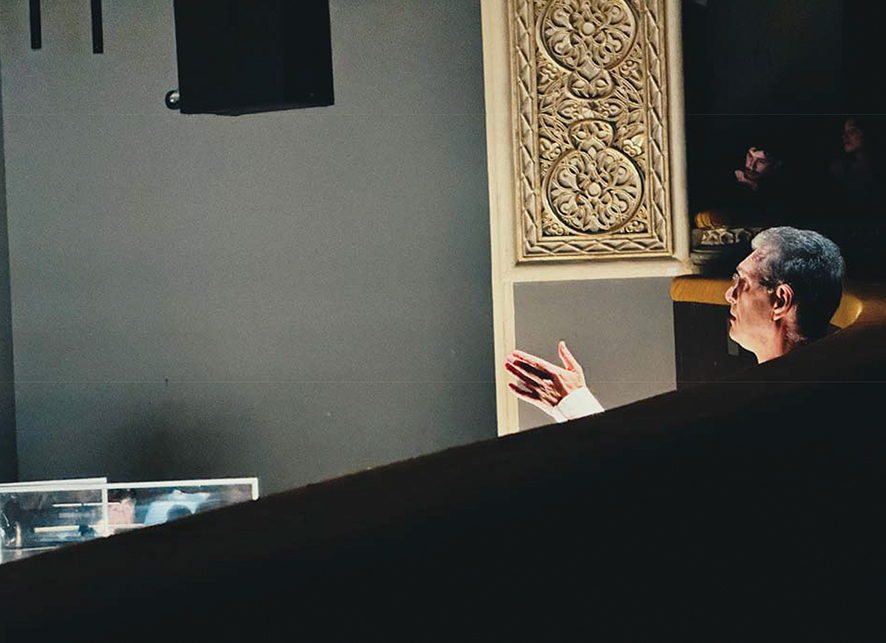
In verismo opera the orchestra behaves almost like a nervous system reacting to emotional shocks. Under the Italian conductor Filippo Conti the orchestra of the Tbilisi Opera and Ballet Theater Orchestra emphasized the score’s cinematic momentum.
Leoncavallo writes with an almost proto-filmic sense of timing: short motifs flash like emotional signals, while sudden orchestral surges trigger dramatic turns with brutal efficiency. Conti maintained a taut tempo structure that prevented the opera’s melodrama from becoming sentimental. Instead the music moved forward with a sense of inevitability, like a mechanism winding toward catastrophe.
The chorus, prepared by Avtandil Chkhenkeli, played a particularly important role in shaping the opera’s atmosphere. In Pagliacci the crowd becomes an active participant in tragedy. Villagers observe the spectacle with cheerful curiosity, unaware that the theatrical game is about to transform into real violence. The chorus therefore functions as a mirror of the audience itself.
Watching them, one senses an uncomfortable implication: opera audiences historically enjoy emotional catastrophe as entertainment. The final moment of the opera famously ends with the line: La commedia è finita! The comedy is finished. In Grazzini’s staging the phrase lands less as a triumphant theatrical punchline than as a bleak observation about spectatorship. The characters stop performing. The audience remains seated.
Why does Pagliacci continue to resonate in Tbilisi more than a century after its first appearance here?
Partly because Georgian opera culture remains deeply vocal and emotionally direct. Verismo thrives in such an environment. The genre values immediacy over philosophical abstraction, visceral expression over symbolic distance. Georgian singers historically excel in precisely this expressive terrain.
Another explanation lies in the opera’s central metaphor: the artist trapped inside the role he must perform. In societies where public life often requires carefully managed masks, political, social, cultural, the tragedy of Canio acquires an unsettling familiarity.
The clown laughs. The clown performs. The clown understands the joke. Then the mask slips. And the audience finally sees the human face underneath.
Review by Ivan Nechaev