Georgia’s Ministry of Economy and Sustainable Development of Georgia is advancing draft legislation that would direct a defined share of property taxes paid by renewable energy power stations to the communities where the projects are located.
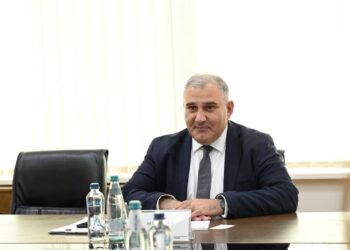
The proposal was discussed at a working meeting between Economy Minister Mariam Kvrivishvili and representatives of the Georgian Renewable Energy Development Association (GREDA). The draft law was prepared jointly by the Ministry and the association.
The bill aims to create a structured support mechanism ensuring that long-term financial benefits generated by renewable energy facilities are used directly, equitably and effectively within host communities.
Under the proposed changes, a designated portion of property tax revenues paid by power stations would be allocated specifically to local development initiatives in the settlement or village where the facility is built.
Officials said the measure is expected not only to strengthen local infrastructure and services but also to improve communication between investors and residents. By providing tangible economic benefits, authorities believe public support for new renewable energy projects could increase.
A main feature of the draft legislation is the creation of a working group from the early stages of a project’s construction. Representatives appointed by the local settlement’s general assembly, along with members of civil society, would participate in this body.
The working group would be responsible for determining how the allocated share of property tax revenues is managed and which local development projects receive funding.
The meeting was attended by Deputy Economy Minister Inga Pkhaladze, Deputy Finance Minister Giorgi Kakauridze, Head of the Energy Policy and Investment Projects Department Aleksandre Sokhadze and Head of the Energy Reforms Department Ana Gogoladze.