The United States and Armenia on Tuesday announced a framework for implementing a strategic transit corridor designed to boost regional trade and connectivity in the South Caucasus, marking a significant step forward following agreements reached at a White House peace summit in August.
The announcement followed talks in Washington between US Secretary of State Marco Rubio and Armenian Foreign Minister Ararat Mirzoyan during which the sides reviewed progress on the corridor project and discussed broader avenues of US–Armenia cooperation, including regional stability, economic development, and infrastructure investment.
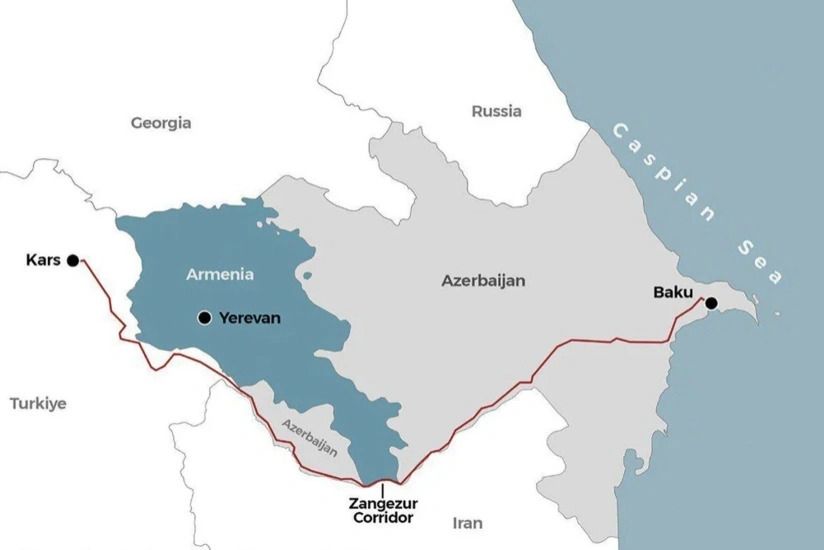
The transit project, officially titled the Trump Route for International Peace and Prosperity (TRIPP), aims to connect mainland Azerbaijan with its Nakhchivan Autonomous Republic by passing through southern Armenia. The initiative is rooted in a declaration signed at the August White House Peace Summit by Armenian Prime Minister Nikol Pashinyan, Azerbaijani President Ilham Aliyev and US President Donald Trump.
Officials say the corridor is intended to facilitate the movement of goods and people while respecting Armenia’s sovereignty and jurisdiction, a point that has been central to political debates surrounding regional transit routes. The framework outlines initial steps for technical planning, security arrangements, and international oversight mechanisms, with the United States expected to play a coordinating and guarantor role.
The project builds on long-standing discussions over reopening transport links in the South Caucasus following decades of conflict between Armenia and Azerbaijan. Proponents argue that improved connectivity could unlock economic growth, reduce regional isolation, and serve as a confidence-building measure between former adversaries. Critics, however, have raised concerns about security, political leverage, and the broader geopolitical implications of the route.
US officials have framed TRIPP as part of a wider effort to promote peace, economic integration, and stability in the region, while Armenian authorities have emphasized that any transit arrangements must align with national law and regional agreements. Further negotiations and technical consultations are expected in the coming months as the parties move from political declarations toward implementation.
Image source: AzerNews