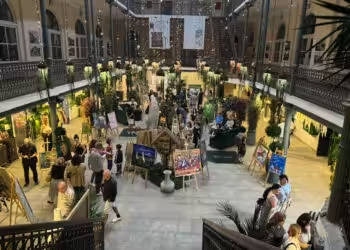
The Evangelical-Baptist Church of Georgia offered a rare kind of stillness on the evening of 23 November, as the first Fireflies Ambient Music Session unfolded inside its nave. A space shaped for devotion became a resonant shell for a new form of secular contemplation. The project seeks a state of heightened perception—a zone where music, architecture, and collective attention fuse into one atmospheric organism. The inaugural program, with four artists working across experimental, electro-acoustic, and multimedia territories, revealed a subtle thesis: ambient music gains force when it breathes inside a place built for ritual.
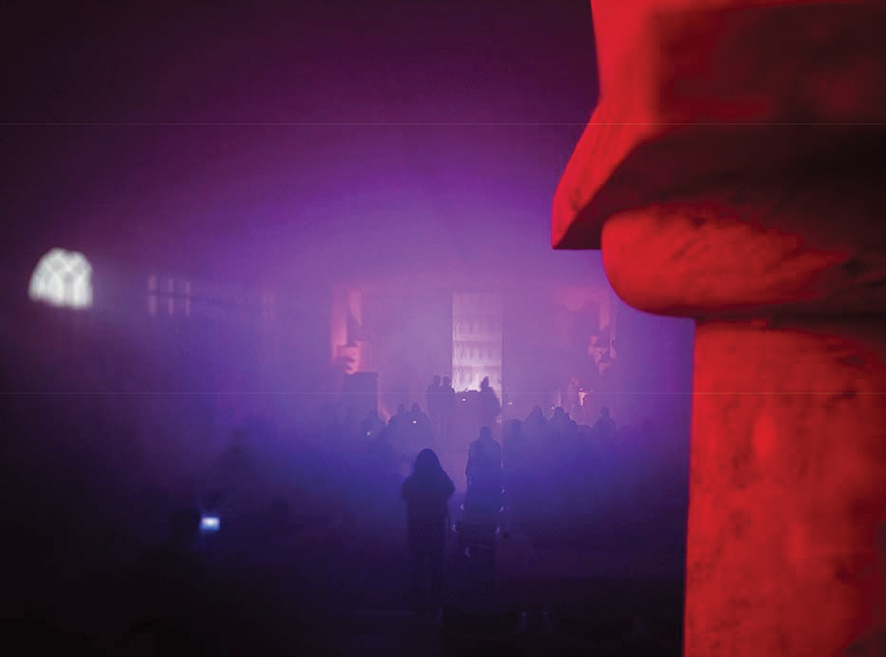
Fireflies framed the church interior as an extension of each performer’s compositional method. Long echoes traced the height of the ceiling. Air-pockets between columns functioned as slow-moving filters. The room softened edges and drew out partials, guiding the audience toward an elongated temporality. Hearing became a parallel practice to meditation, shaped by the concrete presence of stone, wood, and candlelight.
Ambient music thrives in such spaces because its harmonic material grows through resonance. Instead of projecting sound outward, the performers released frequencies that appeared to bloom from the church itself. This sense of architectural collaboration defined the entire evening.
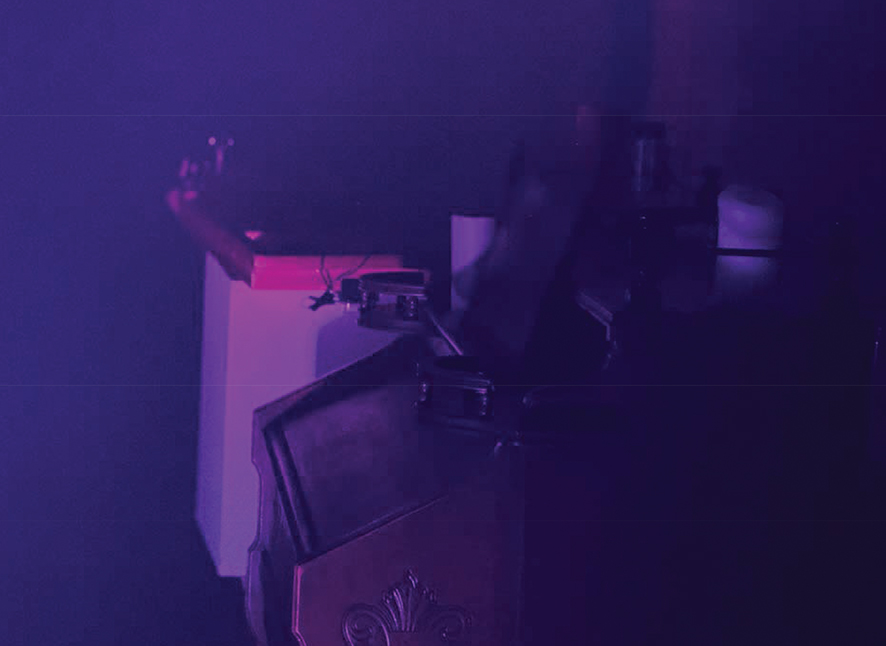
Maro Beriashvili approached the space with a composer’s awareness of sonic behavior. Her language merges electronic synthesis with echoes of choral voicing, and in this sanctuary, the blend acquired a rare psychological weight. She treats sound design as a philosophical question: how does timbre shape emotion, and how does the mind fold meaning into texture?
Her performance opened with nearly-invisible layers—delicate whistle tones hovering just above audibility. They entered the nave like drifting fog. Gradually, she introduced harmonic clusters that evoked the geometry of Georgian polyphonic singing. The tones seemed to rise from multiple directions, a spectral choir without bodies. Beriashvili’s flute-derived articulations functioned as points of breath inside a larger drone organism. Each frequency served as a miniature event, tracing the micro-movements of attention. The result resembled a slow, interior weather system: a shifting atmosphere with no central motif, only continuous transformation.
ELY ANN brought the vocabulary of fashion, glitch, and spatial design into an acoustic environment shaped for purity of tone. Her aesthetic relies on fragility—stretched textures, fractured pulses, and soft distortions that behave like cracks in porcelain. On this evening, the church became a resonator for her philosophy: sound operates as a structure, yet every structure carries the grain of its tensions.
Her set revolved around the concept of a single unfolding gesture. A rhythmic glitch fluttered like a mechanical heartbeat, drifting into vaporized harmonics. She treats imperfection as a source of narrative, and each sonic irregularity functioned like a tear in fabric that allows light to enter. The performance unfolded as an architectural meditation on vulnerability. The high vault of the church amplified her softest gestures, granting them a monumental quietness.
Sacrament Grym worked in a more subterranean register. His palette combines field recordings, droning electronics, and delicate rhythmic residues that hover between presence and disappearance. Inside this space, his soundworld gained a tactile dimension, as if the air itself began to vibrate with fine static.
Grym’s performance developed through gradual accretion. A low frequency entered with the gravity of a distant engine, then dissolved into granular noise. The tension between density and suspension created a state of alert stillness. His textures suggested landscapes without contours—deserts, midnight streets, abandoned industrial zones—yet the environment never felt inhospitable. Instead, it created a meditative threshold, a zone where breath and noise became indistinguishable. The church’s natural reverb shaped each gesture into a resonant afterimage.
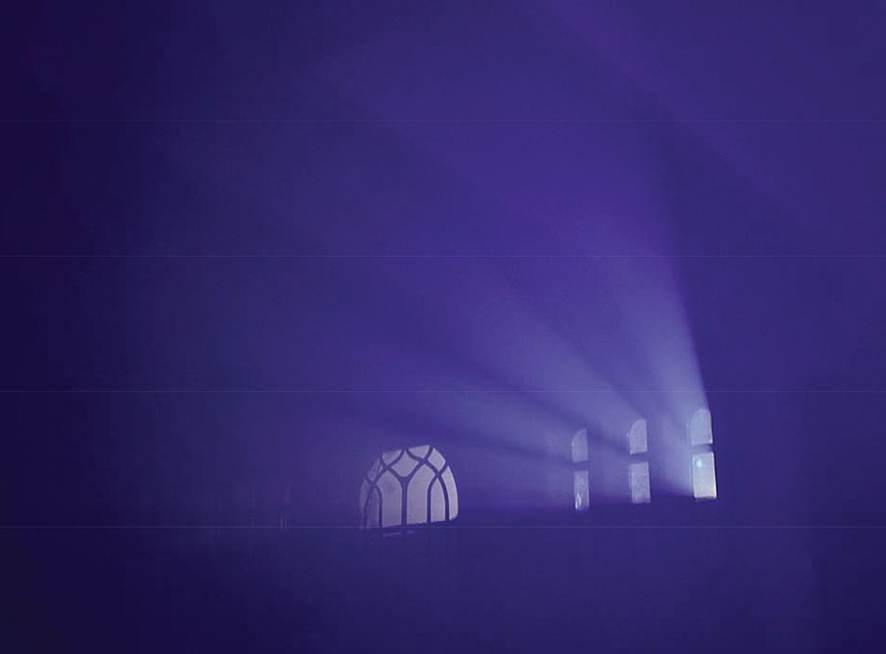
Varar’s appearance introduced timbral color into the evening through the kanun of Mar Margaryan, interwoven with the electronic architecture of Narek Buniatyan. Their collaboration generates a rare synthesis: traditional resonance carried into a future-leaning ambient environment. The kanun’s bright overtone spectrum rippled through the nave with crystalline clarity, forming a lattice of micro-melodies that folded into slow electronic beds.
Their music operates on the threshold between memory and projection. Each plucked note carried a historical trace, while the surrounding electronic environment suspended it in a weightless continuum. The performance created a floating temporality in which the kanun’s ornamentation pierced through the haze like thin beams of light. This interplay between acoustic timbre and synthesized space shaped a gently ecstatic tone.
Fireflies positions ambient music as a contemporary form of communal reflection. The event united compositional strategies rooted in sound art, electronic experimentation, and folk resonance, and the church offered an acoustic laboratory where these lineages could intermingle without conflict. The performers worked with patience and restraint, cultivating textures that rewarded deep listening.
The audience, seated beneath the height of the nave, entered a collective mode of attention that resembled a secular liturgy. Light shifted on the walls. Frequencies moved like living organisms across the room. Time expanded into a spacious continuum. Ambient music gains its power through subtlety, and in this session subtlety became a shared social experience. Fireflies illuminated a path toward a new ritual—one shaped by sound, atmosphere, and an ethics of careful listening.
By Ivan Nechaev