“Sing it again, Datuna. Louder than the wind.”
“But mama, it’s too dark to see the words.”
“You don’t need to see them. Listen to my voice, follow the harmony, and forget the dark. Let the song warm you!”
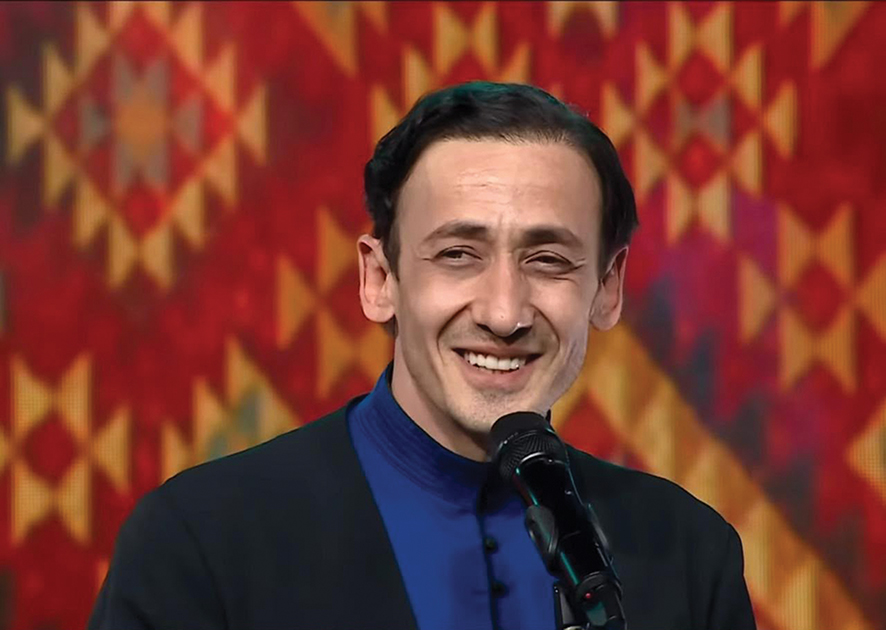
The strongest memory that remains with Dato Kenchiashvili is a scene from his childhood: a stark vignette of post-Soviet Georgia during one of the darkest chapters of its modern history. It is an image of a country wrapped in sudden, heavy darkness: a population standing in endless bread lines, homes left entirely without heat or light. In the biting winters, survival sounded like a mother’s voice cutting through the dark. A mother wraps her young children in heavy blankets, teaching them ancient Georgian harmonies to keep the cold at bay. Outside the house, a war rages in Abkhazia, where their father is repeatedly wounded on the front lines to protect the territorial integrity of his motherland. Inside, music is the only shield they have
Decades later, that little boy’s voice would achieve something nearly impossible in the modern music industry: amassing over one billion views and listens globally, singing traditional ethno-folk music completely devoid of mainstream pop tropes or digital tricks.
Dubbed the “Golden Voice of Georgia,” Kenchiashvili has transformed ancient, battle-scarred folklore into a modern streaming phenomenon. Rooted in the haunting, UNESCO-recognized polyphonic traditions of Georgia and Christian sacral chants, his work bridges a tragic past with a digitized future, turning ancient cultural codes into a universal sanctuary for millions of listeners across the globe.
The celebrated Georgian poet Tariel Kharkhelauri once observed that within Kenchiashvili’s voice “resounds the sorrow of a weary, battle-scarred Georgia,” a nation that historically marches into every crisis with a song on its lips.
His story is not merely the story of one family. It is the story of Georgia itself. It is also the story of the songs through which a wounded homeland healed its scars and found the strength to stand again. Years later, he will accompany that same mother on her final journey with song, honoring the woman who helped her children survive through music. Perhaps that is why his voice carries both profound sorrow and unwavering love, the same love that warmed the darkness of childhood with the hope of survival.
As a composer, multi-instrumentalist, and vocalist, Kenchiashvili has achieved something remarkable: bringing traditional Georgian ethnomusic into the modern streaming era, amassing over one billion views and listens globally. By treating folklore not as a museum piece, but as a living, breathing entity, he has bridged the gap between ancient polyphony and contemporary global audiences.
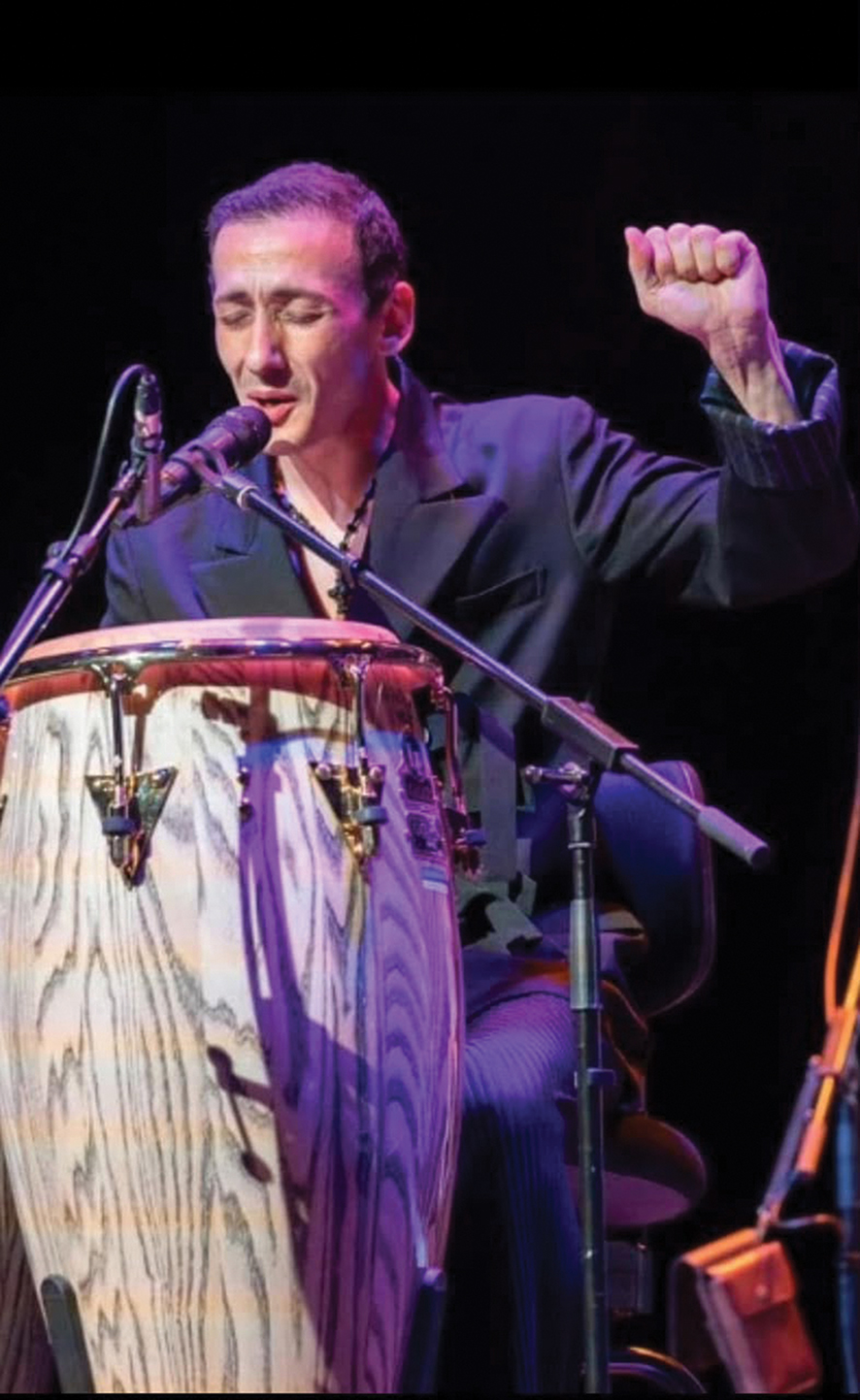
Your listeners have given you such titles as “Georgia’s Golden Voice” and the “Voice of History.” What do you believe gives your voice the unique capability to transcend cultural boundaries and reach listeners so directly?
These titles were given to me by people who love my work. It’s a great feeling to be described in this way, first in Georgia, then across the Caucasus, and eventually around the world.
I have also heard that my voice is considered to have therapeutic qualities. Not every voice can have such an effect. This depends on a person’s inner state. Each of us, consciously or unconsciously, responds to our surroundings, and even our everyday speech reflects our emotional condition.
Perhaps this is why there is such strong demand for my concerts from audiences around the world. Even with today’s remarkable technological advances, no digital platform can reproduce the vibration and emotional connection that people experience during a live performance. Although anyone, anywhere in the world, can now access my music, no technology can replace the genuine exchange of energy that exists between me and my audience during a concert. I give them my most sincere emotions, and they return that energy to me many times over. That is why I always try to come as close as possible to my listeners, wherever they may be. Whether I return to my studio to compose a new song, write lyrics, create music, or work on a film soundtrack, I carry that living emotional experience with me. Every sound and every word contains the genuine love that my audience and I share. My inner state becomes part of every composition, creating something sincere and authentic that reaches people on the deepest emotional level. Artificial intelligence cannot replicate that human experience.
Artificial intelligence can mimic structures, but it cannot replicate the authentic human suffering, love, and resilience that shape an artist’s soul. My work seeks to harmonize the ancestral past with the contemporary present, and I believe people recognize that authenticity.
You work extensively with children. What forms in a child’s subconscious when they grow up surrounded by these positive musical vibrations?
In my experience, teaching a student the technical aspects of singing is the easy part. The real challenge lies in teaching them how to convey the soul of the music. That is the core of my pedagogy.
In this mission, I lean on a vast artistic lineage. I introduce my students to the towering figures of Georgian vocal music: Maro Tarkhnishvili, Hamlet Gonashvili, the Kavsadze brothers, Lela Tataraidze, but I balance this with global masters of expression like Miles Davis, Etta James, Ella Fitzgerald, and Herbie Hancock.
When children are introduced to this world from an early age, their subconscious adapts not only to the routines of everyday life; instead, it turns toward beauty, which plays a decisive role in shaping a complete human being.
A person is not born only once. We are born many times throughout life. One of those births happens when we open the door to the world of art. At that moment, it is fair to say that a person becomes one of the highest expressions of creation.
That is precisely why I named my studio and my children’s ensemble “Taoba,” meaning “Generation.” Our cultural heritage cannot afford to become stagnant. At Taoba, children are not just memorizing notes; they are internalizing a cultural and spiritual code. When we perform centuries-old Georgian sacred chants, we are tapping into the polyphonic architecture and Christian roots that have anchored our survival for over a millennium. When a child opens the door to art, they experience a secondary spiritual birth.
I believe that words possess extraordinary power when they rise sincerely from the heart, much like a prayer. When my students and I perform Georgian sacred chants, we feel the centuries-old tradition resonating through our voices. We experience the spiritual strength and the deep roots that Christianity has nurtured within Georgian culture and that continue to form one of its central pillars. Every positive vibration carries this same power when it comes from the soul. It is this inner depth that continues to nourish authentic artistic expression today.
Your work has received more than a billion views on social media. What is, in your opinion, the unique and unrivaled strength of Georgian ethnoculture in world art?
My work is rooted in Georgia and the Caucasus, but it speaks to audiences around the world. It brings together many musical genres, yet its foundation and central axis is our greatest treasure: folklore. I grew into my artistic voice through these vibrations.
Georgian music’s unrivaled contribution to global art lies in its fierce individuality, its complex polyphony, and its ancient three-part singing tradition. It is a sonic architecture unlike any other in the world.
Georgian music awakened everything within me, and that is why it remains priceless.
People often ask me how a nation as geographically small as Georgia can command such a massive global digital footprint. My response is always that it wasn’t the whole country that initially captured the world’s ear, but rather a small, specific river in eastern Georgia called the Iori. The global breakthrough was sparked by my interpretation of the late, legendary poet and singer Theona Qumsiashvili’s masterpiece, “Ioro.”
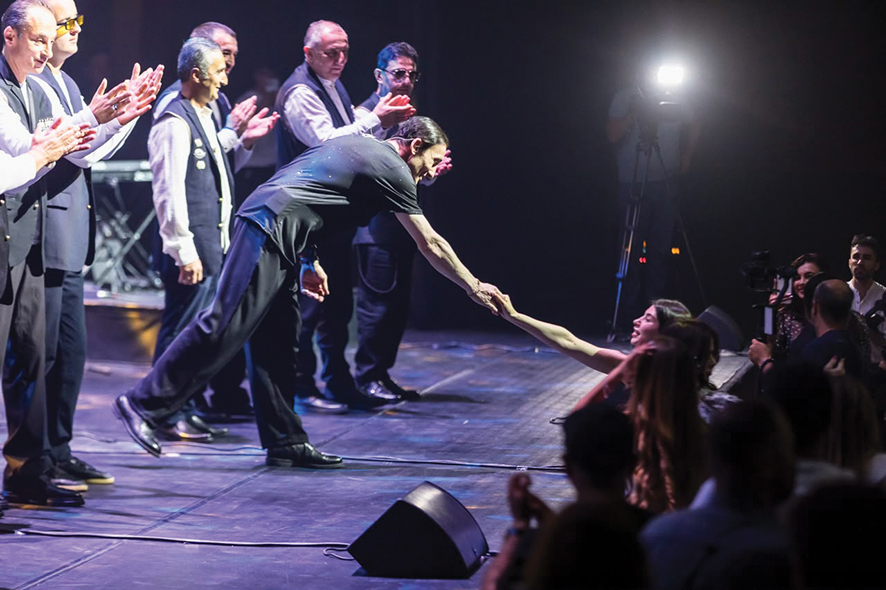
Among your repertoire are many songs that have become enduring favorites, including “Ramdeni Malodine,” “Arkhotis Casavit,” “Isev da Isev,” “Shenma Survilma,” and many others. Yet one song occupies a unique place among them: “Ioro” has moved listeners of every nationality to tears, even when they do not understand a single word of the lyrics. What is the alchemy behind that piece?
“Ioro” is both a remarkable and, at the same time, a natural phenomenon. Ioro transcends linguistics entirely; it speaks the universal language of the human soul. There is an ancient, genetic energy embedded within certain melodies that bypasses intellectual comprehension and strikes the heart directly. In music, emotional fabrications are immediately detected by the listener. Ioro resonates because it carries no pretense: it is pure, unadulterated vulnerability.
In today’s digital world it is almost unimaginable for an artist not to have critics or “haters.” Yet your videos are followed almost entirely by loving comments. What does it mean to you to be an artist who unites people so completely?
This is a rare situation today, especially in Georgia, where social media is often filled with excessive criticism and negativity. When an artist receives only gratitude and love from such a large audience, there are several deep psychological factors behind it.
First of all, sincerity. When you are genuine, listeners, especially Georgian listeners, immediately sense authenticity and also sense falsehood just as quickly. Haters usually find space when they see arrogance, insincerity, or excessive theatricality in an artist.
My work is closely connected to Georgian roots, traditional elements, and the sound that exists within the genetic code of every Georgian. This is not simply entertainment. It is art that brings a person back to their identity. For the vast Georgian diaspora scattered across the globe, these songs are a vital umbilical cord to their homeland.
“Many emigrants have written to tell me that my music acts as a spiritual refuge. Surrounded by a foreign culture and a colder environment, these tracks offer a safe emotional space where they can weep, remember, and heal.”
When your art becomes a vehicle for relieving someone’s pain, homesickness or grief, there is simply no room left for online cynicism and hatred. Not because there are no flaws, but because the environment itself becomes different.
That is the greatest honor I could receive, and it is worth far more to me than any industry award.
This remarkable musical talent and vocal timbre run in your family. How difficult and how much of a responsibility is it to carry this genetic legacy?
An inherited legacy is both a profound gift and an immense weight of expectation. When you come from a lineage of distinct musical voices, the public standard is set exceptionally high from day one. The challenge is ensuring you don’t become a mere echo of the past. You must honor your bloodline while carving out your own contemporary identity and resisting transient commercial trends.
Passing this code on to future generations is even more delicate and demanding because it involves several important dimensions.
The first is the weight of expectations and the challenge of discovering your own artistic voice. When you inherit such a legacy, society immediately sets a very high standard. You are not expected to be simply good. People expect excellence.
The greatest challenge is ensuring that this inherited talent never loses its individuality. You must preserve what comes through your blood while discovering your own artistic message, your own sound, and your own identity, rather than becoming merely a reflection of those who came before you.
Another responsibility is resisting temporary trends and refusing to exchange depth for superficial popularity. You become the guardian of a treasure that must be preserved in its original purity and passed forward with dignity.
Carrying this genetic code is like carrying a burning torch. It illuminates your path, but you must never allow its flame to fade. Instead, you must pass it to the next generation burning even brighter.
This is a responsibility toward the past, the present, and the future.
When you perform with your sister, Tatia, how does the energy of shared blood and shared heritage influence your creativity?
When Tatia and I sing together, the music enters an entirely different, nearly telepathic dimension. There is an invisible connection between us that comes from shared blood and shared life, giving us a unique musical understanding.
We are only eleven months apart in age. Whether we perform on stage or record in the studio, we do not need visual cues, hand gestures, or verbal agreements to modulate our voices or phrase a melody. It feels as though a single organism is breathing through two distinct sets of vocal cords. The creative energy doesn’t just double; it expands exponentially and that shared force reaches every listener in the audience.
When we sing together, it is never simply two performers standing side by side. It is the harmony of two branches of the same family tree, awakening ancestral memory and passing that energy directly to the audience.
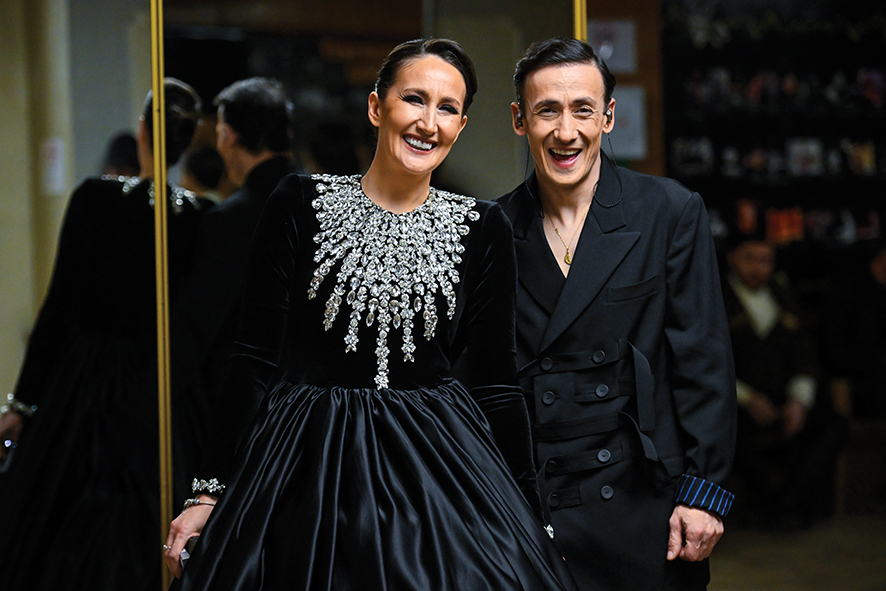
Standing between a centuries-old past and future generations, what message do you most want to leave behind, and what legacy would you like to leave in people’s memory?
When I stand between these two dimensions, the centuries-old past and the future, my work cannot be just music. It becomes a bridge, a responsibility, and a mission.
My work rests firmly upon three existential pillars. I want every song to provoke the listener to ask: Who are we? Where do we come from? And where are we going?
In a hyper-globalized world, the erosion of cultural identity is one of humanity’s quietest crises. My mission is to demonstrate that our roots, our traditional polyphony, and our distinct Georgian spirit are not dust-covered artifacts relegated to history books. They are living, courageous, and fiercely beautiful forces capable of commanding the modern world stage.
My message to the future is simple: Do not lose your cultural code. Within your specific roots lies your ultimate strength and your unique contribution to the global tapestry of human art.
The greatest legacy any person can leave behind is the sincere love reflected in the hearts of others.
For me, that love is visible every day in the messages and comments I receive from listeners across the world.
My mission is to preserve this centuries-old cultural treasure, enrich it through my own artistic voice, and pass it on to future generations as a symbol of resilience, survival, identity, and pride.
This is a legacy that time itself cannot diminish.
***
Dato Kenchiashvili synthesizes ancestral polyphonic structures with the fluid accessibility of the digital age and offers a profound counter-narrative to modern alienation.
His music reminds us that folklore is never truly about the past. It is about survival. And every time he steps up to the microphone, it is as if he is gently leaning into the global freeze, repeating the lesson whispered to him under the hiss of a kerosene lamp so many years ago: Listen to the harmony and forget the dark.
INTERVIEW BY KESARIA KATCHARAVA