A senior Russian military official responsible for ammunition supplies was reportedly killed in a car bombing near Moscow, as Ukraine’s long-range drone campaign continued to target Russia’s energy infrastructure and fuel logistics.
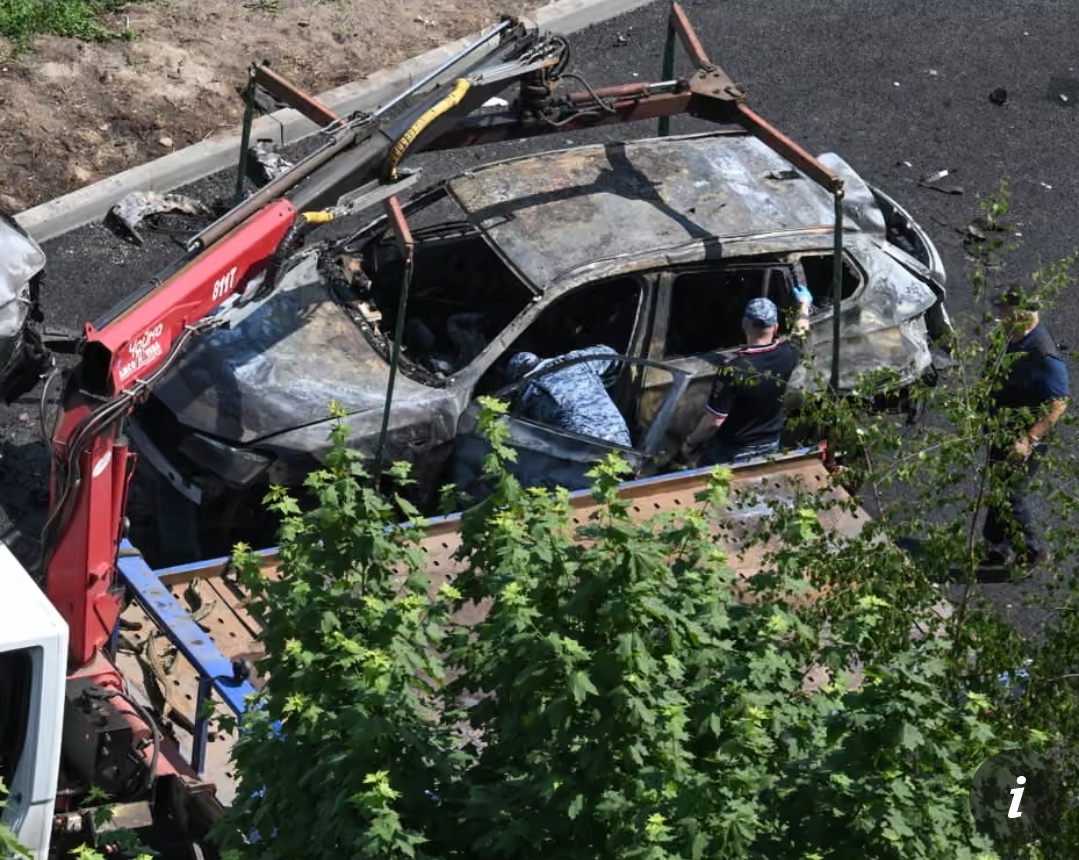
Russian media reports say a car exploded in the Moscow suburb of Balashikha, killing its driver, identified as Damir Davydov, the head of the Russian Defense Ministry’s missile and artillery ammunition directorate. Reports also said authorities later discovered and carried out a controlled detonation of a second car bomb in southwestern Moscow.
The incident is the latest in a series of high-profile attacks targeting individuals linked to Russia’s war effort. Throughout the conflict, several senior Russian military and security figures have been killed in assassinations that Moscow has often blamed on Ukrainian intelligence services.
Meanwhile, Ukrainian strikes on fuel and energy infrastructure continued to cause disruptions across southern Russia. Authorities in the Krasnodar region reported panic buying of gasoline after fuel supply problems intensified following recent attacks.
Governor Veniamin Kondratyev said residents rushed to stockpile fuel amid concerns over shortages, creating what he described as “artificial panic buying.” The situation follows a Ukrainian drone strike that ignited a major fire at an oil depot in Ust-Labinsk over the weekend. Emergency crews reportedly extinguished the blaze only on Tuesday.
Additional attacks were reported overnight in Russia’s Rostov region, where a Ukrainian drone strike sparked a fire at a fuel storage facility in the Millerovsky district near the Ukrainian border. Regional Governor Yuri Slyusar said there were no immediate reports of casualties.
In Russia’s Dagestan region, explosions were reported in the town of Kizilyurt after a gas pipeline reportedly exploded, setting fire to a gas distribution facility.
Drone activity was also reported in Russia’s Samara region, where authorities temporarily closed airspace after drones targeted the city of Novokuibyshevsk. The area hosts a major oil refinery operated by Russian state energy giant Rosneft.
On the diplomatic front, the European Union unveiled details of a proposed new sanctions package against Russia. The measures would target banks, cryptocurrency firms, oil traders and additional vessels involved in transporting Russian oil. Brussels also plans to lower and extend the price cap on Russian oil and, for the first time, introduce restrictions on imports of Russian fish products.
European Commission President Ursula von der Leyen also confirmed that accession talks with Ukraine and Moldova are expected to advance next week, with the opening of the first negotiation chapters focused on rule of law and democratic reforms. She said Ukraine had made “extraordinary progress” toward meeting EU membership requirements.
Ukrainian President Volodymyr Zelensky visited Estonia on Tuesday for talks with Nordic and Baltic leaders, focusing on regional security and protection against drone threats. Zelensky pledged to share Ukraine’s experience in developing low-cost air defense solutions.
Elsewhere, Bulgaria’s newly appointed Defense Minister, Dimitar Stoyanov, indicated that Sofia would no longer provide weapons to Ukraine and called for direct negotiations between Moscow and Kyiv to end the war.
The Kremlin, meanwhile, said there were currently no plans for a telephone conversation between Russian President Vladimir Putin and US President Donald Trump. Kremlin spokesman Dmitry Peskov also dismissed the European Union’s potential role as a mediator, arguing that mediation efforts cannot begin with conditions imposed on Russia.
The latest developments highlight Ukraine’s continued strategy of targeting Russia’s military logistics and energy infrastructure far from the front lines, while diplomatic efforts to end the war remain stalled amid deep disagreements between Moscow, Kyiv and their international partners.