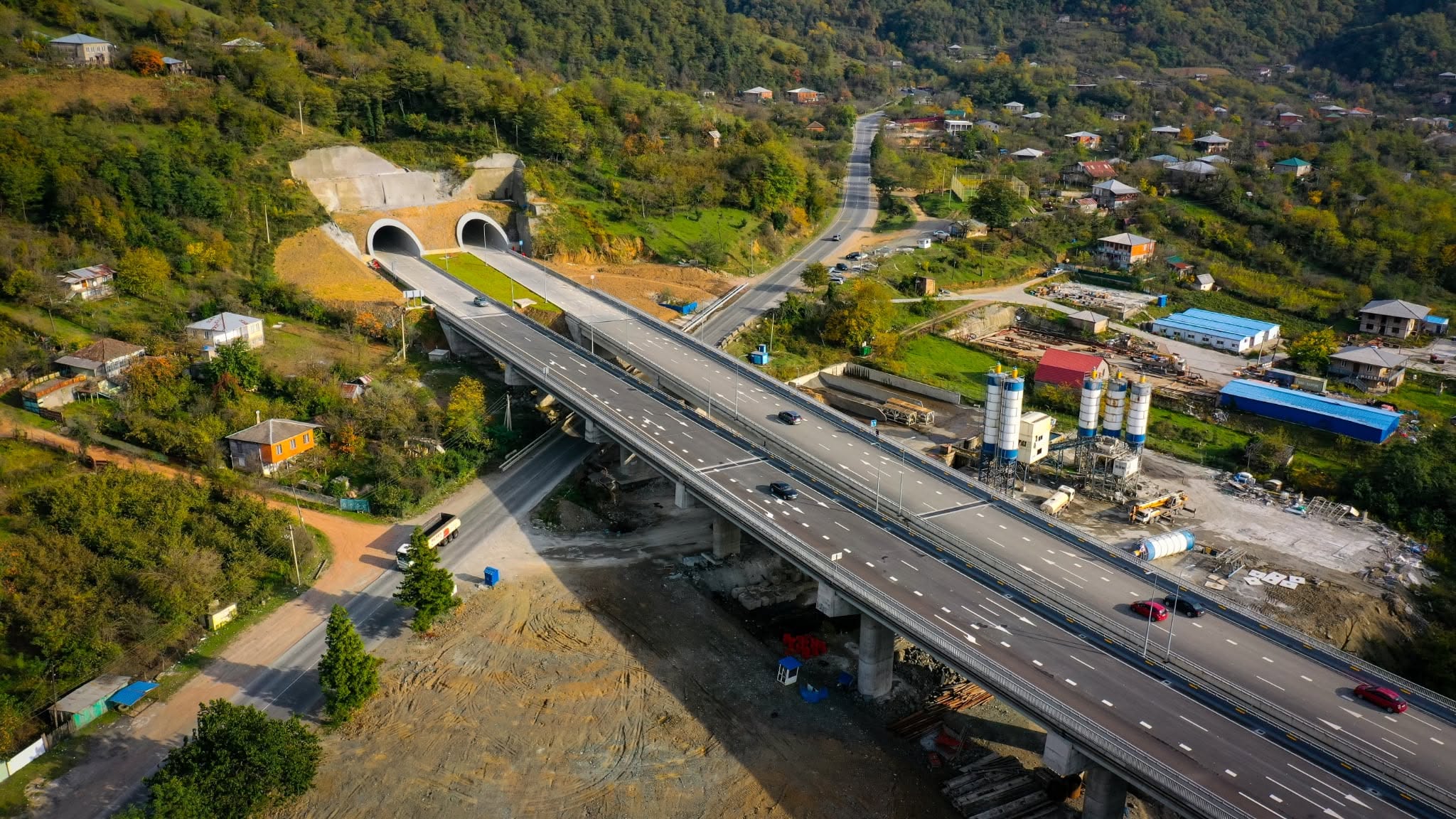
The Ministry of Infrastructure has prepared a package of legislative changes envisaging the creation of a legal entity under private law that will carry out the maintenance of highways.
The draft law, registered on June 3, 2026, is set to be considered in an expedited manner..
Under the proposal, the Ministry will transfer responsibility for the maintenance of highways and sections of international and domestic importance to the new entity, either fully or partially.
The initial capital investment is estimated at around 63 million GEL, excluding VAT, while the company is expected to employ 163 people.
At a briefing on June 9, the Prime Minister of Georgia Irakli Kobakhidze said the initiative aims to create a “stable resource” and improve service quality.
“We want to create a stable resource that will also be a guarantee of quality,” Kobakhidze said.
He said the initiative serves a “double effect,” including ensuring stable resources for road maintenance and providing specialised equipment to respond to natural events.
Kobakhidze also said that in his assessment, previous private contractors had not delivered satisfactory quality, adding that the new state-run model could perform better.
The explanatory note says that the initial capital expenditure amounts to approximately 63 million GEL and will be used to establish the technical base, infrastructure, and technological systems.
The investment includes around 30.9 million GEL for 65 units of winter maintenance equipment, 16.4 million GEL for 54 units for summer maintenance, and 15.6 million GEL for infrastructure, IT systems, and initial supplies.
Annual operating costs are estimated at around 30 million GEL, including salaries for 163 employees (around 7 million GEL), fuel and materials, equipment maintenance, depreciation, and administrative expenses.
The government says the costs will be covered through the state budget via optimisation and redistribution of resources.
The legislative package also tightens rules under the Law on Motorways, aiming to prevent unauthorised construction and improve protection of road infrastructure.
The Ministry says violations such as non-compliant construction in roadside zones and breaches of technical conditions remain common despite existing legal restrictions, creating risks for road safety and infrastructure.